Goodeniaceae
Fan Flower: Ground Cover Plant
Scaevola
Grows best in full sun to light shade with well-draining soil and moderate watering, letting the top of the soil dry slightly between waterings. Heat and drought tolerant once established, but sensitive to overly wet soil, which promotes root rot.
Every 5 days
Bright indirect
15° - 32°C
% - %
Categories
What is Fan Flower?
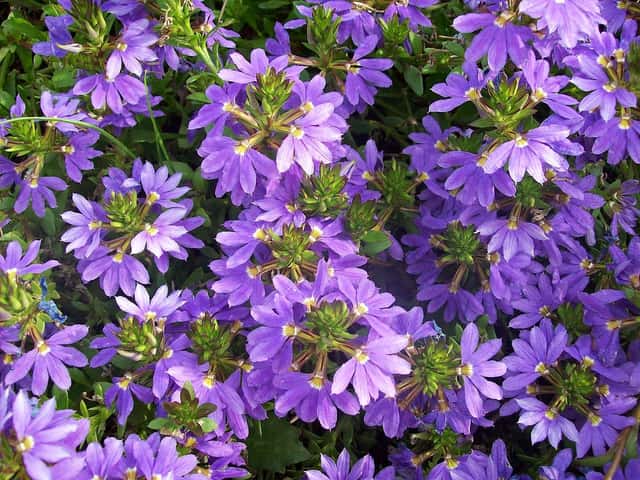
Fan Flower (Scaevola) is a easy-care plant from the Goodeniaceae family. Scaevola is a genus in the family Goodeniaceae, native to arid and semi-arid regions of Australia. The most widely cultivated species, Scaevola aemula, is a trailing, mounding plant popular in hanging baskets and containers, prized for its distinctive fan-shaped blue or purple flowers with petals ar...
Fan Flower grows up to 46cm, spread of 90cm, watering every 5 days, 15°C – 32°C. It is not suitable for indoor environments and safe for pets.
Unlike many tropical plants, Fan Flower tolerates watering mistakes. Best for beginners. Unlike many popular species, Fan Flower is safe to keep around pets.
How to Care for Fan Flower?
TLDR: Fan Flower needs Bright indirect, watering every 5 days, and temperatures between 15-32°C with 40-70% humidity.
How Often Should You Water Fan Flower?
Water when the top inch of soil feels dry, keeping the soil evenly moist but never soggy. Container plants dry out faster than garden beds and need more frequent attention.
How Much Light Does Fan Flower Need?
Provide at least 6 hours of direct sun daily for the best bloom; in very hot climates, afternoon dappled shade helps prevent stress.
What Is the Best Soil for Fan Flower?
Use a light, well-draining potting mix or sandy loam. Compacted or waterlogged soil encourages root and crown rot.
What Pot Should You Use for Fan Flower?
Hanging baskets or wide containers with ample drainage holes suit its trailing, spreading growth habit.
What Is Fan Flower and Where Does It Come From?
Scaevola is a genus in the family Goodeniaceae, native to arid and semi-arid regions of Australia. The most widely cultivated species, Scaevola aemula, is a trailing, mounding plant popular in hanging baskets and containers, prized for its distinctive fan-shaped blue or purple flowers with petals arranged on one side.
How to Propagate Fan Flower?
Seed propagation
Germination can be uneven; keep the mix consistently lightly moist.
- 1 Sow in light, moist potting mix in early spring
- 2 Keep in bright indirect light at 20-25C (68-77F)
- 3 Transplant seedlings once they have 2-3 true leaves
Materials needed:
Stem cutting
Use clean tools and keep humidity high around the cutting until roots form.
- 1 Take a 8-10 cm (3-4 in) cutting from a healthy, non-flowering stem
- 2 Remove lower leaves and apply rooting hormone
- 3 Plant in a light potting mix and keep moist until rooted
Materials needed:
How Big Does Fan Flower Grow?
TLDR: Fan Flower can reach up to 46cm tall with Medium growth rate.
Max height
46cm
Spread
90cm
Growth rate
Medium
Foliage
Evergreen
Plant Uses
Ornamental
Great for decoration
Ground Cover
Soil coverage
Is your plant showing symptoms?
Click on the symptom to discover possible causes:
What Diseases Commonly Affect Fan Flower?
TLDR: Fan Flower is susceptible to 9 known diseases. Monitor regularly for early detection.
Whiteflies
Whiteflies are small, soft-bodied, winged insects closely related to aphids and mealybugs. They are moth-like in appearance, about 1/16 inch long, triangular in shape, and gray-white in color. These sap-sucking pests feed on plant tissue, causing yellowing, stunted growth, and wilting. They also excrete honeydew, which attracts ants and promotes sooty mold growth. Whiteflies can transmit serious plant viruses.
Aphids
Aphids are small, soft-bodied, pear-shaped insects (1/16 to 1/8 inch long) that feed by sucking nutrient-rich sap from plants. They reproduce rapidly and can quickly weaken plants, causing distorted growth and transmitting plant viruses. Aphids come in various colors including green, black, red, yellow, brown, and gray. They secrete honeydew, a sticky substance that attracts ants and encourages sooty mold growth.
Root Rot
Root rot is a serious fungal disease that affects the root system of plants, causing them to decay and die. It is primarily caused by overwatering, poor drainage, or soil-borne fungi such as Pythium, Phytophthora, Rhizoctonia, and Fusarium. The disease thrives in waterlogged conditions where roots are deprived of oxygen, making them susceptible to fungal infection.
Overwatering
Overwatering occurs when plants receive too much water, depriving roots of oxygen and causing root rot. This environmental stress is one of the most common causes of houseplant death, as waterlogged soil prevents roots from breathing and functioning properly.
Compare with similar plants
| Attribute | Difficulty | Light | Watering | Pet Safe |
|---|---|---|---|---|
| Field Maple | Easy | Bright indirect | 14d | ✓ |
| Silver Birch | Easy | Direct sun | 14d | ✓ |
| Cushion Bush | Easy | Direct sun | 14d | ✓ |
| Peruvian peppertree | Easy | Direct sun | 14d | ⚠️ |





