Rosaceae
Goat's Beard (Aruncus dioicus) – The Ultimate Care Guide
Aruncus dioicus
Goat's Beard thrives in partial to full shade with consistently moist, humus-rich soil. Water regularly to prevent the foliage from browning. This robust perennial is largely pest- and disease-free, requiring minimal intervention once established. Cut back dead stems in late autumn or early spring. Divide large clumps every 4-5 years to maintain vigor.
Every 7 days
Partial shade
-29° - 35°C
50% - 80%
Categories
What is Goat's Beard?
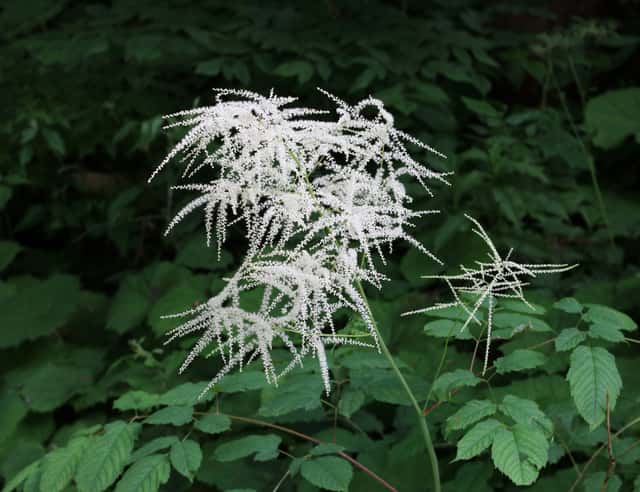
Goat's Beard (Aruncus dioicus) is a easy-care plant from the Rosaceae family. Aruncus dioicus, commonly known as Goat's Beard, is a bold and graceful shade-loving perennial native to moist woodlands across the Northern Hemisphere. It produces dramatic, feathery plumes of creamy-white flowers in late spring to early summer, rising above deeply divided, fern-like foliage. A dio...
Goat's Beard grows up to 2.0m, spread of 270cm, watering every 7 days, -29°C – 35°C, 50–80% humidity. It is not suitable for indoor environments and safe for pets.
Unlike many tropical plants, Goat's Beard tolerates watering mistakes. Best for beginners. Unlike many popular species, Goat's Beard is safe to keep around pets.
How to Care for Goat's Beard?
TLDR: Goat's Beard needs Partial shade, watering every 7 days, and temperatures between -29-35°C with 50-80% humidity.
How Often Should You Water Goat's Beard?
Water consistently to keep soil evenly moist. Goat's Beard is sensitive to drought — if the soil dries out, the leaf margins will brown and become crispy. During hot, dry spells, water every 5-7 days or more frequently. Avoid waterlogging, but never let the root zone fully dry out.
How Much Light Does Goat's Beard Need?
Prefers partial to full shade. In northern climates it tolerates full sun if given ample moisture, but in warmer or southern regions it requires shade protection, especially from hot afternoon sun. Deep shade results in sparser flowering. Aim for dappled light or 2-4 hours of morning sun.
What Is the Best Soil for Goat's Beard?
Plant in moist, humus-rich loamy soil with good drainage. Enrich planting holes generously with compost or aged leaf mold. Soil pH should be slightly acidic to neutral (5.5–7.5). Avoid sandy or dry soils. Goat's Beard performs well near water features and in naturally moist woodland areas.
What Pot Should You Use for Goat's Beard?
Large containers or garden beds work well. If grown in pots, choose a large, deep container (at least 40cm wide) that retains moisture. Use a heavy, loam-based compost mix. Ensure the pot is placed in a shaded spot and does not dry out between waterings.
What Is Goat's Beard and Where Does It Come From?
Aruncus dioicus, commonly known as Goat's Beard, is a bold and graceful shade-loving perennial native to moist woodlands across the Northern Hemisphere. It produces dramatic, feathery plumes of creamy-white flowers in late spring to early summer, rising above deeply divided, fern-like foliage. A dioecious species, male plants bear showier upright flower plumes while female plants produce more pendulous clusters that develop into attractive seed heads. This long-lived, low-maintenance perennial thrives in partial to full shade and consistently moist, humus-rich soils, making it an outstanding choice for woodland gardens, shaded borders, stream banks, and rain gardens.
How to Propagate Goat's Beard?
Root Division
Division is best done in early spring or autumn. Avoid dividing in summer heat. Keep divisions well-watered for the first season.
- 1 Dig up the entire clump in early spring before new growth emerges
- 2 Use a sharp spade or knife to divide the rootstock, ensuring each section has at least one growing eye
- 3 Replant divisions at the same depth in moist, humus-rich soil
- 4 Water thoroughly after planting and keep consistently moist until established
Materials needed:
Seed Propagation
Fresh seed germinates best. Stored seed may benefit from cold stratification. Note that seedlings will be a mix of male and female plants.
- 1 Collect fresh seed from female plants in late summer
- 2 Surface sow on a warm seedbed or in trays without covering
- 3 Keep moist and in a sheltered position; germination takes 2-3 weeks
- 4 Prick out seedlings when large enough and grow on before planting out
Materials needed:
How Big Does Goat's Beard Grow?
TLDR: Goat's Beard can reach up to 2.0m tall with Medium growth rate.
Max height
2.0m
Spread
2.7m
Growth rate
Medium
Foliage
Deciduous
Plant Uses
Ornamental
Great for decoration
Medicinal
Medicinal properties
Medicinal Uses
- Traditionally the root has been used in Native American medicine to treat fevers, bee stings, bleeding after childbirth, and joint inflammation. Root tea and salves were prepared for these purposes.
Culinary Uses
- Young leaves and shoots of Aruncus dioicus are edible when cooked. They have been consumed as a vegetable in some cultures, particularly when harvested in early spring.
Is your plant showing symptoms?
Click on the symptom to discover possible causes:
What Diseases Commonly Affect Goat's Beard?
TLDR: Goat's Beard is susceptible to 4 known diseases. Monitor regularly for early detection.
Powdery Mildew
Powdery mildew is a common fungal disease caused by various fungi species including Erysiphe, Podosphaera, Oïdium, and Leveillula. It affects over 10,000 plant species worldwide. The disease thrives in warm, dry climates with high humidity and appears as a distinctive white powdery coating on plant surfaces.
Rust
Rust is a common fungal disease caused by fungi in the order Pucciniales that affects a wide variety of plants. The disease gets its name from the characteristic orange, yellow, or reddish-brown pustules that appear on leaves, resembling metal rust. This obligate fungal parasite requires living plants to survive and can cause significant economic losses in agricultural crops.
Leaf Spot
Leaf spot is a common fungal disease caused by various pathogens including Alternaria, Ascochyta, Colletotrichum, Septoria, and Venturia. It primarily affects leaves, causing discolored spots that can lead to premature leaf drop if left untreated.
Slugs and Snails
Slugs and snails are mollusks that feed on plant tissue, causing irregular holes in leaves and damage to young seedlings. They are most active at night and in moist conditions, leaving characteristic silvery slime trails. These pests can quickly devastate gardens, especially during wet seasons.
Meaning & Symbolism
Goat's Beard symbolizes grace, wildness, and the quiet beauty of shaded woodland places. Its towering plumes evoke an untamed elegance, representing resilience and the ability to flourish in overlooked, shadowed spaces.
Fun Facts
Aruncus dioicus is a dioecious plant — individual plants are either male or female, with male plants producing showier, more upright flower plumes.
Despite its impressive size, Goat's Beard is extremely long-lived and rarely needs dividing — established clumps can thrive for decades.
The species is a larval host plant for the Dusky Azure butterfly (Celastrina nigra), making it a valuable plant for biodiversity.
Native Americans used root preparations of Aruncus dioicus to treat fevers, bee stings, and post-childbirth bleeding.
Frequently asked questions
How often should I water Goat's Beard?
Does Goat's Beard grow in full shade?
Is Goat's Beard toxic to pets or children?
How do I propagate Goat's Beard?
How tall does Goat's Beard grow?
Compare with similar plants
| Attribute | Difficulty | Light | Watering | Pet Safe |
|---|---|---|---|---|
| Field Maple | Easy | Bright indirect | 14d | ✓ |
| Silver Birch | Easy | Direct sun | 14d | ✓ |
| Cushion Bush | Easy | Direct sun | 14d | ✓ |
| Peruvian peppertree | Easy | Direct sun | 14d | ⚠️ |