Araceae
Water Lettuce (Pistia stratiotes): Complete Care Guide
Pistia stratiotes
Water Lettuce is easy to grow in aquatic environments. It needs full sun or very bright light, clean nutrient-rich water, and temperatures between 15-35°C (59-95°F). It propagates naturally through stolons, quickly forming daughter plants.
Every 3 days
Direct sun
15° - 35°C
70% - 95%
Categories
What is Water Lettuce?
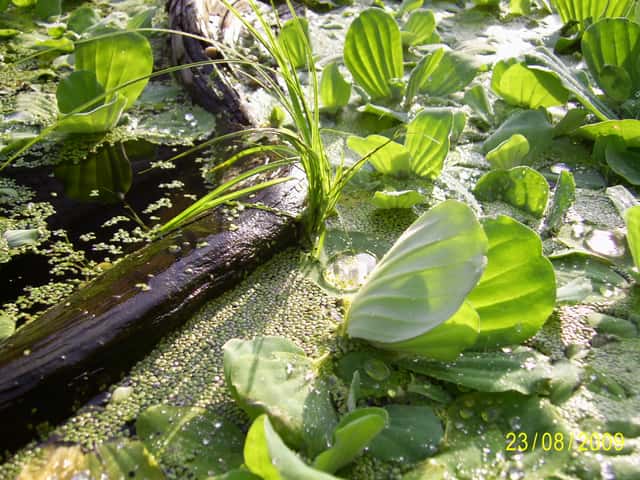
Water Lettuce (Pistia stratiotes) is a easy-care plant from the Araceae family. Water Lettuce (Pistia stratiotes) is a free-floating aquatic plant in the Araceae family, native to pantropical regions. Its velvety rosette leaves resemble a small head of lettuce, hence the common name. It is widely cultivated in ornamental ponds, aquariums, and water features where it plays a key...
Water Lettuce grows up to 15cm, spread of 45cm, watering every 3 days, 15°C – 35°C, 70–95% humidity. It is suitable for indoor environments and not safe for pets.
Unlike many tropical plants, Water Lettuce tolerates watering mistakes. Best for beginners. Without precautions, ingestion can cause irritation in pets. Keep out of reach of cats and dogs. Without adequate drainage, root rot can develop within 7 days.
How to Care for Water Lettuce?
TLDR: Water Lettuce needs Direct sun, watering every 3 days, and temperatures between 15-35°C with 70-95% humidity.
How Often Should You Water Water Lettuce?
As a free-floating aquatic plant, Water Lettuce requires no conventional watering. Keep it in clean, well-oxygenated water. Renew or filter the water every 3-5 days in closed containers to prevent algae buildup and maintain water quality.
How Much Light Does Water Lettuce Need?
Prefers full sun or intense brightness — at least 6 hours of direct sunlight daily. Indoors, use full-spectrum LED aquarium lighting. Gradually acclimate nursery plants to strong light to avoid leaf burn.
What Is the Best Soil for Water Lettuce?
No conventional substrate is needed as Water Lettuce floats on the water surface. Its roots absorb nutrients directly from the water. In aquariums, a nutrient-rich substrate can improve mineral availability.
What Pot Should You Use for Water Lettuce?
Wide, shallow containers or basins are ideal for ornamental ponds and tanks. For aquariums, prefer open-top containers that allow free floating. Avoid deep pots.
Care Schedule
Fertilize
Every 30 days
Misting
Every 3 days
Repot
Every 365 days
What Is Water Lettuce and Where Does It Come From?
Water Lettuce (Pistia stratiotes) is a free-floating aquatic plant in the Araceae family, native to pantropical regions. Its velvety rosette leaves resemble a small head of lettuce, hence the common name. It is widely cultivated in ornamental ponds, aquariums, and water features where it plays a key role in natural water filtration by absorbing excess nutrients.
How to Propagate Water Lettuce?
Daughter Plant Separation
Propagation is very simple and occurs naturally. Under favorable conditions, the plant can double its population within weeks. Remove excess plants regularly to prevent complete coverage of the water surface.
- 1 Observe the stolons (horizontal stems) connecting the mother plant to daughter plants
- 2 Wait until daughter plants have at least 3-4 developed leaves
- 3 Cut the connecting stolon with clean scissors
- 4 Transfer the daughter plants to another container with water
Materials needed:
How Big Does Water Lettuce Grow?
TLDR: Water Lettuce can reach up to 15cm tall with Fast growth rate.
Max height
15cm
Spread
45cm
Growth rate
Fast
Foliage
Evergreen
Warning: Toxic Plant
This plant can be toxic if ingested. Keep out of reach of:
Plant Uses
Ornamental
Great for decoration
Is your plant showing symptoms?
Click on the symptom to discover possible causes:
What Diseases Commonly Affect Water Lettuce?
TLDR: Water Lettuce is susceptible to 6 known diseases. Monitor regularly for early detection.
Aphids
Aphids are small, soft-bodied, pear-shaped insects (1/16 to 1/8 inch long) that feed by sucking nutrient-rich sap from plants. They reproduce rapidly and can quickly weaken plants, causing distorted growth and transmitting plant viruses. Aphids come in various colors including green, black, red, yellow, brown, and gray. They secrete honeydew, a sticky substance that attracts ants and encourages sooty mold growth.
Mealybugs
Mealybugs are small, soft-bodied insects covered with a white, waxy, cottony material. They are common pests of houseplants and outdoor plants in mild climates. These sap-sucking insects feed on plant tissue, causing damage, stunted growth, and can lead to plant death if left untreated. They produce sticky honeydew which attracts sooty mold.
Spider Mites
Spider mites are tiny arachnids (less than 1/20 inch long) related to spiders and ticks that feed on plant sap. They thrive in hot, dry conditions and can cause significant damage to ornamental and vegetable plants. During severe infestations, crop losses can reach 14% or higher as these pests disrupt vital plant processes including photosynthesis, carbon dioxide absorption, and transpiration.
Downy Mildew
Downy mildew is a fungal-like disease caused by oomycetes (water molds) that thrives in cool, wet conditions. It affects a wide range of plants, causing yellowing leaves with fuzzy white-gray growth underneath, leading to defoliation and reduced yields if left untreated.
Meaning & Symbolism
Symbolizes chastity, protection, and love, and is associated with water purification.
Fun Facts
Water Lettuce can double its population in just one week under ideal conditions.
Its submerged roots form a true habitat for small fish and fry.
It is considered an invasive plant in many tropical countries due to its rapid spread.
It helps purify water by absorbing excess nitrogen and phosphorus.
Frequently asked questions
How do I grow Water Lettuce at home?
Is Water Lettuce toxic to pets?
How often should I change the water?
Does Water Lettuce flower?
Compare with similar plants
| Attribute | Difficulty | Light | Watering | Pet Safe |
|---|---|---|---|---|
| Field Maple | Easy | Bright indirect | 14d | ✓ |
| Silver Birch | Easy | Direct sun | 14d | ✓ |
| Common Blanketflower | Easy | Direct sun | 10d | ✓ |
| Cushion Bush | Easy | Direct sun | 14d | ✓ |





