Fabaceae
Acacia (Wattle) Care Guide
Acacia
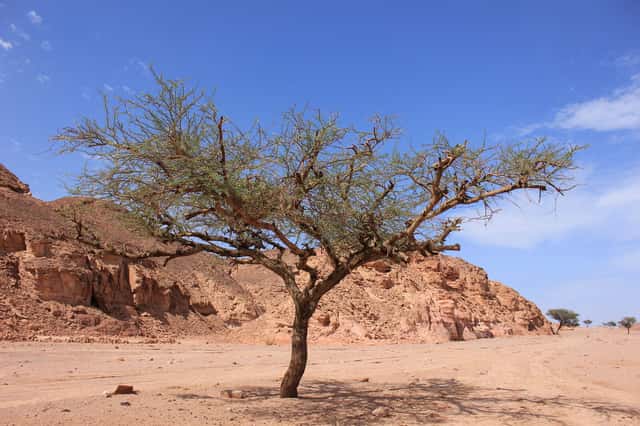
Acacias are sun-loving, drought-tolerant plants once established. They need full direct sun, well-draining (ideally sandy) soil, and minimal watering after their first year. Most are fast growers valued for their fragrant yellow or white puffball flowers.
Every 14 days
Direct sun
° - °C
% - %
Categories
What is Wattle?
Wattle (Acacia) is a easy-care plant from the Fabaceae family. Acacia is a large genus of roughly 1,000+ species of shrubs and trees in the pea family (Fabaceae), commonly known as wattles (especially in Australia, where most species are native) or thorntrees in Africa. This profile represents general care guidance for the genus as a whole; individual species v...
Wattle grows up to 30.0m, watering every 14 days. It is not suitable for indoor environments and safe for pets.
Unlike many tropical plants, Wattle tolerates watering mistakes. Best for beginners. Unlike many popular species, Wattle is safe to keep around pets.
How to Care for Wattle?
TLDR: Wattle needs Direct sun, watering every 14 days, and temperatures between 15-30°C with 40-70% humidity.
How Often Should You Water Wattle?
Water deeply but infrequently, letting the soil dry out between waterings. Young plants need weekly water during establishment; mature specimens are largely self-sufficient on rainfall.
How Much Light Does Wattle Need?
Provide at least 6 hours of direct sun daily. Acacias do not thrive in shade.
What Is the Best Soil for Wattle?
Use sandy, well-draining soil. Heavy, waterlogged clay soils promote root rot.
What Pot Should You Use for Wattle?
Terracotta or unglazed pots with excellent drainage; avoid waterlogged containers.
What Is Wattle and Where Does It Come From?
Acacia is a large genus of roughly 1,000+ species of shrubs and trees in the pea family (Fabaceae), commonly known as wattles (especially in Australia, where most species are native) or thorntrees in Africa. This profile represents general care guidance for the genus as a whole; individual species vary widely in size, hardiness, and specific needs, so always check the requirements for your particular Acacia species.
How to Propagate Wattle?
Seed propagation with scarification
Use fresh seed for the best germination rates and avoid overwatering seedlings, which are prone to damping off.
- 1 Nick or sand the hard seed coat, or pour near-boiling water over the seeds and let them soak for 24 hours
- 2 Discard any seeds that float, as they are usually not viable
- 3 Sow scarified seeds in a well-draining seed-raising mix
- 4 Keep the mix consistently moist and place in a warm spot (around 25-30C) with bright light
- 5 Transplant seedlings into larger pots once they are large enough to handle
Materials needed:
Semi-hardwood stem cuttings
Use sterilized tools and keep cuttings in bright, indirect light while they root.
- 1 Take 5-15 cm semi-hardwood cuttings just below a node, ideally after flowering
- 2 Remove lower leaves and any flowers or buds
- 3 Dip the cut end in rooting hormone
- 4 Insert into moist, well-draining potting mix
- 5 Cover with plastic or place in a propagator to maintain humidity until roots form
Materials needed:
How Big Does Wattle Grow?
TLDR: Wattle can reach up to 30.0m tall with Fast growth rate.
Max height
30.0m
Growth rate
Fast
Foliage
Evergreen
Plant Uses
Ornamental
Great for decoration
Edible
Can be consumed
Medicinal
Medicinal properties
Medicinal Uses
- Gum arabic (from Acacia senegal) used as a demulcent and in traditional digestive remedies
- Bark and leaf extracts used in some traditional medicine systems for wound care
Culinary Uses
- Gum arabic (E414) used as a food stabilizer and thickener
- Flowers of some species used to flavor syrups and confections (e.g., Acacia farnesiana)
Is your plant showing symptoms?
Click on the symptom to discover possible causes:
What Diseases Commonly Affect Wattle?
TLDR: Wattle is susceptible to 7 known diseases. Monitor regularly for early detection.
Root Rot
Root rot is a serious fungal disease that affects the root system of plants, causing them to decay and die. It is primarily caused by overwatering, poor drainage, or soil-borne fungi such as Pythium, Phytophthora, Rhizoctonia, and Fusarium. The disease thrives in waterlogged conditions where roots are deprived of oxygen, making them susceptible to fungal infection.
Phytophthora Root Rot
Disease caused by fungus-like organisms (oomycetes) that live in soil and can survive for years. It affects roots, stem, and crown of plants, being especially severe in waterlogged or poorly drained soils. It is the second most common cause of root rot in trees and shrubs.
Powdery Mildew
Powdery mildew is a common fungal disease caused by various fungi species including Erysiphe, Podosphaera, Oïdium, and Leveillula. It affects over 10,000 plant species worldwide. The disease thrives in warm, dry climates with high humidity and appears as a distinctive white powdery coating on plant surfaces.
Leaf Spot
Leaf spot is a common fungal disease caused by various pathogens including Alternaria, Ascochyta, Colletotrichum, Septoria, and Venturia. It primarily affects leaves, causing discolored spots that can lead to premature leaf drop if left untreated.
Meaning & Symbolism
Across many cultures the acacia symbolizes immortality, resurrection, and endurance. It is a central emblem in Freemasonry representing the incorruptibility of the soul, and acacia wood is described in the Hebrew Bible as the material used for the Ark of the Covenant.
Fun Facts
The genus Acacia contains roughly 1,000-1,085 species, the vast majority native to Australia, where they are known as wattles.
Acacia gum (gum arabic), harvested from species like Acacia senegal, is used worldwide as a food additive (E414) and in adhesives.
Acacia wood is described in the Hebrew Bible as the material used to build the Ark of the Covenant.
Golden Wattle (Acacia pycnantha) is the national floral emblem of Australia.
Frequently asked questions
How much sun does an Acacia need?
How often should I water an Acacia?
Is Acacia toxic to pets?
What are the most common problems with Acacia?
How fast do acacias grow?
Compare with similar plants
| Attribute | Difficulty | Light | Watering | Pet Safe |
|---|---|---|---|---|
| Field Maple | Easy | Bright indirect | 14d | ✓ |
| Silver Birch | Easy | Direct sun | 14d | ✓ |
| Common Blanketflower | Easy | Direct sun | 10d | ✓ |
| Cushion Bush | Easy | Direct sun | 14d | ✓ |
Choose & Compare
Sources & References
- Acacia - Expert Tips for Gardening Success (Gardenia.net)
- Acacia (Wikipedia)
- Top Pests & Diseases of Acacia Trees (My Garden NZ)
- Acacia Seed Propagation (Gardening Know How)
- Acacia Cutting Propagation (Gardening Know How)
- Acacia | Description, Trees, Savanna, Major Species, & Facts (Britannica)
- Toxic and Non-Toxic Plants (ASPCA)





