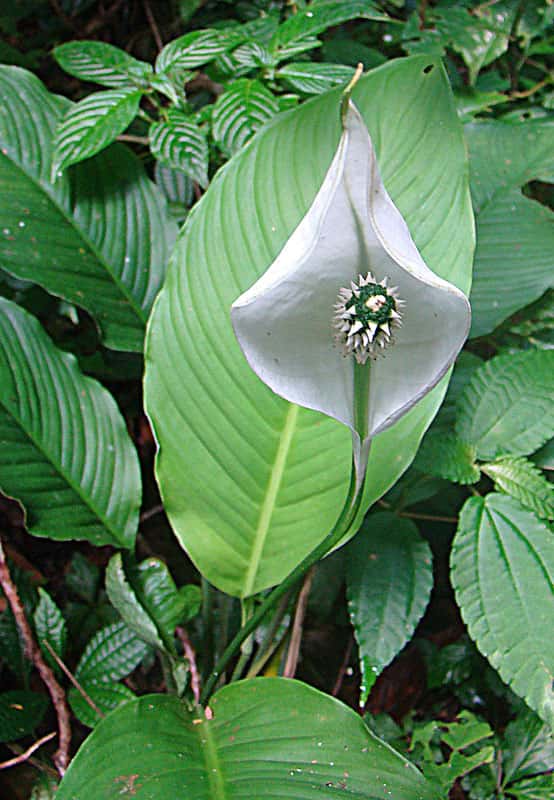
Araceae
Peace Lily (Spathiphyllum wendlandii)
Spathiphyllum wendlandii
Moderate-maintenance indoor plant. Prefers bright indirect light, consistently moist but well-draining soil, and high humidity. Avoid direct sun and waterlogged conditions. Fertilize monthly during spring and summer.
Every 8 days
Partial shade
18° - 29°C
50% - 80%
Categories
What is Peace Lily?
Peace Lily (Spathiphyllum wendlandii) is a medium-care plant from the Araceae family. Spathiphyllum wendlandii, commonly known as the Peace Lily, is a tropical evergreen perennial native to Central America — Costa Rica, Honduras, and Panama. With its lush dark-green leaves and graceful white spathe flowers, it is one of the most beloved indoor plants worldwide. It is also NASA-certif...
Peace Lily grows up to 60cm, spread of 45cm, watering every 8 days, 18°C – 29°C, 50–80% humidity. It is suitable for indoor environments and not safe for pets.
Without precautions, ingestion can cause irritation in pets. Keep out of reach of cats and dogs. Without adequate drainage, root rot can develop within 16 days.
How to Care for Peace Lily?
TLDR: Peace Lily needs Partial shade, watering every 8 days, and temperatures between 18-29°C with 50-80% humidity.
How Often Should You Water Peace Lily?
Water every 7–10 days when the top inch of soil is dry. The plant droops visibly when thirsty — a reliable signal. Use room-temperature water and never allow the pot to sit in standing water.
How Much Light Does Peace Lily Need?
Place in bright indirect light — near a filtered window or in a well-lit room away from direct sun. It tolerates low light but flowers less. Direct sunlight causes yellowing and brown leaf spots.
What Is the Best Soil for Peace Lily?
Use a peat-based mix (peat moss, perlite, and loam) with excellent drainage. Ideal pH is 5.5–6.5. Avoid compacted soils that retain excess moisture.
What Pot Should You Use for Peace Lily?
Use ceramic or plastic pots with drainage holes. Avoid oversized pots — Peace Lilies prefer snug roots. Repot only when roots are visibly crowded or escaping the drainage holes.
Care Schedule
Fertilize
Every 30 days
Misting
Every 3 days
Repot
Every 365 days
What Is Peace Lily and Where Does It Come From?
Spathiphyllum wendlandii, commonly known as the Peace Lily, is a tropical evergreen perennial native to Central America — Costa Rica, Honduras, and Panama. With its lush dark-green leaves and graceful white spathe flowers, it is one of the most beloved indoor plants worldwide. It is also NASA-certified as an effective air purifier, removing benzene, formaldehyde, and trichloroethylene from indoor environments.
How to Propagate Peace Lily?
Root division
Divide in spring during active growth. Use sterilized tools to prevent disease.
- 1 Remove the plant from its pot and gently shake off excess soil
- 2 Divide the root ball into 2-3 sections, ensuring each has at least 2-3 healthy leaves
- 3 Plant each division in fresh, moist potting mix
- 4 Keep in a humid spot with indirect light until established
Materials needed:
How Big Does Peace Lily Grow?
TLDR: Peace Lily can reach up to 60cm tall with Medium growth rate.
Max height
60cm
Spread
45cm
Growth rate
Medium
Foliage
Evergreen
Warning: Toxic Plant
This plant can be toxic if ingested. Keep out of reach of:
Plant Uses
Ornamental
Great for decoration
Air Purifying
Improves air quality
Is your plant showing symptoms?
Click on the symptom to discover possible causes:
What Diseases Commonly Affect Peace Lily?
TLDR: Peace Lily is susceptible to 9 known diseases. Monitor regularly for early detection.
Root Rot
Root rot is a serious fungal disease that affects the root system of plants, causing them to decay and die. It is primarily caused by overwatering, poor drainage, or soil-borne fungi such as Pythium, Phytophthora, Rhizoctonia, and Fusarium. The disease thrives in waterlogged conditions where roots are deprived of oxygen, making them susceptible to fungal infection.
Overwatering
Overwatering occurs when plants receive too much water, depriving roots of oxygen and causing root rot. This environmental stress is one of the most common causes of houseplant death, as waterlogged soil prevents roots from breathing and functioning properly.
Low Humidity Stress
Low humidity stress occurs when indoor air becomes too dry, causing plants to lose moisture faster than they can absorb it through their roots. This is especially common during winter heating periods, near radiators and heating vents, or in air-conditioned spaces. Tropical plants are particularly susceptible to low humidity damage.
Spider Mites
Spider mites are tiny arachnids (less than 1/20 inch long) related to spiders and ticks that feed on plant sap. They thrive in hot, dry conditions and can cause significant damage to ornamental and vegetable plants. During severe infestations, crop losses can reach 14% or higher as these pests disrupt vital plant processes including photosynthesis, carbon dioxide absorption, and transpiration.
Meaning & Symbolism
Symbol of peace, purity, and hope. Widely used in funeral arrangements and condolence ceremonies as a representation of tranquility and spiritual renewal.
Fun Facts
NASA included the Peace Lily in its 1989 Clean Air Study as one of the top air-purifying plants
The white 'flower' is actually a spathe — a modified leaf — while the true flowers are on the central spadix
In the wild, it grows along tropical riverbanks in permanently moist soils
The genus name Spathiphyllum comes from Greek: spathe (spathe) + phyllon (leaf)
Frequently asked questions
How often should I water my Peace Lily?
Is Peace Lily toxic to cats?
Why is my Peace Lily not blooming?
How much humidity does a Peace Lily need?
Compare with similar plants
| Attribute | Difficulty | Light | Watering | Pet Safe |
|---|---|---|---|---|
| Dark Fieldcap | Medium | Low light | 2d | ⚠️ |
| Azalea | Medium | Partial shade | 3d | ⚠️ |
| Bougainvillea | Medium | Direct sun | 7d | ⚠️ |
| Wild Lettuce | Medium | Direct sun | 7d | ⚠️ |



