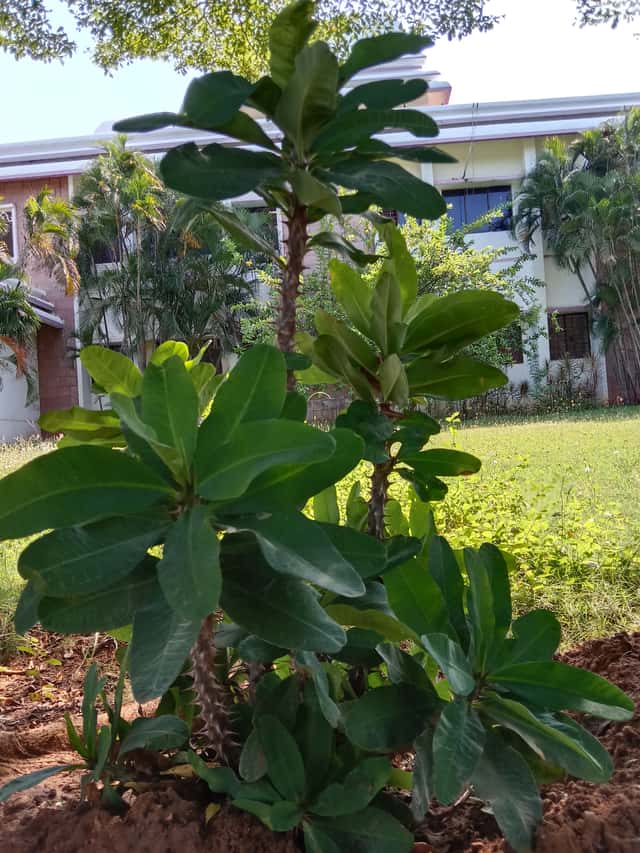
Apocynaceae
White Frangipani (Plumeria alba)
Plumeria alba
Grow in full sun with extremely well-draining soil. Water moderately during the growing season, letting the soil dry out between waterings, and reduce watering significantly in winter during dormancy. Highly drought tolerant but sensitive to waterlogged roots.
Every 10 days
Direct sun
15° - 35°C
40% - 70%
Categories
What is White Frangipani?
White Frangipani (Plumeria alba) is a medium-care plant from the Apocynaceae family. Plumeria alba, commonly known as white frangipani or West Indian jasmine, is a small deciduous tree in the Apocynaceae family, native to Puerto Rico and the Lesser Antilles in the Caribbean. It grows up to 7.5 meters tall, with thick, succulent branches that release a milky sap when cut. Its fragran...
White Frangipani grows up to 7.6m, spread of 500cm, watering every 10 days, 15°C – 35°C, 40–70% humidity. It is not suitable for indoor environments and not safe for pets.
Without precautions, ingestion can cause irritation in pets. Keep out of reach of cats and dogs.
How to Care for White Frangipani?
TLDR: White Frangipani needs Direct sun, watering every 10 days, and temperatures between 15-35°C with 40-70% humidity.
How Often Should You Water White Frangipani?
Water deeply only when the soil is completely dry to the touch; cut back drastically in winter.
How Much Light Does White Frangipani Need?
Needs full sun, at least 6-8 hours of direct light daily for reliable blooming.
What Is the Best Soil for White Frangipani?
Use a light, extremely well-draining substrate, such as a cactus mix with coarse sand or perlite.
What Pot Should You Use for White Frangipani?
Terracotta pot with generous drainage holes
Care Schedule
Fertilize
Every 60 days
Repot
Every 730 days
What Is White Frangipani and Where Does It Come From?
Plumeria alba, commonly known as white frangipani or West Indian jasmine, is a small deciduous tree in the Apocynaceae family, native to Puerto Rico and the Lesser Antilles in the Caribbean. It grows up to 7.5 meters tall, with thick, succulent branches that release a milky sap when cut. Its fragrant white flowers with yellow centers bloom in clusters at the branch tips.
How to Propagate White Frangipani?
Stem cutting
Avoid watering the fresh cut to prevent rot; water only after the callus forms. Use rooting hormone to speed up the process.
- 1 Cut a healthy 30-60 cm branch with clean pruning shears
- 2 Let the cutting callus in a dry, ventilated spot for 5-7 days
- 3 Plant in well-draining substrate, burying about 5 cm
- 4 Water lightly and keep in indirect light until roots form
Materials needed:
How Big Does White Frangipani Grow?
TLDR: White Frangipani can reach up to 7.6m tall with Fast growth rate.
Max height
7.6m
Spread
5.0m
Growth rate
Fast
Foliage
Deciduous
Warning: Toxic Plant
This plant can be toxic if ingested. Keep out of reach of:
Plant Uses
Ornamental
Great for decoration
Aromatic
Pleasant fragrance
Culinary Uses
- Flowers are edible and eaten as fritters in some cultures
Is your plant showing symptoms?
Click on the symptom to discover possible causes:
What Diseases Commonly Affect White Frangipani?
TLDR: White Frangipani is susceptible to 6 known diseases. Monitor regularly for early detection.
Rust
Rust is a common fungal disease caused by fungi in the order Pucciniales that affects a wide variety of plants. The disease gets its name from the characteristic orange, yellow, or reddish-brown pustules that appear on leaves, resembling metal rust. This obligate fungal parasite requires living plants to survive and can cause significant economic losses in agricultural crops.
Mealybugs
Mealybugs are small, soft-bodied insects covered with a white, waxy, cottony material. They are common pests of houseplants and outdoor plants in mild climates. These sap-sucking insects feed on plant tissue, causing damage, stunted growth, and can lead to plant death if left untreated. They produce sticky honeydew which attracts sooty mold.
Scale Insects
Scale insects are small sap-sucking pests that appear as brown, shell-like bumps on plant stems and leaves. There are over 25 species, divided into armored (hard) and unarmored (soft) scales. They feed by piercing plant tissue and extracting sap, which weakens the plant and can lead to yellowing, stunted growth, and even death if left untreated. They also excrete honeydew, which attracts ants and promotes sooty mold growth.
Whiteflies
Whiteflies are small, soft-bodied, winged insects closely related to aphids and mealybugs. They are moth-like in appearance, about 1/16 inch long, triangular in shape, and gray-white in color. These sap-sucking pests feed on plant tissue, causing yellowing, stunted growth, and wilting. They also excrete honeydew, which attracts ants and promotes sooty mold growth. Whiteflies can transmit serious plant viruses.
Meaning & Symbolism
Symbolizes renewal, protection, and the divine in Caribbean and Southeast Asian traditions; used in Hawaiian leis and Cambodian temple offerings.
Fun Facts
Branches release a milky sap when cut
Widely used in Hawaiian leis
Can live over 50 years under proper conditions
Frequently asked questions
Is white frangipani toxic to pets?
How often should I water my Plumeria alba?
How do I propagate white frangipani?
Why is my Plumeria dropping its leaves?
Compare with similar plants
| Attribute | Difficulty | Light | Watering | Pet Safe |
|---|---|---|---|---|
| Dark Fieldcap | Medium | Low light | 2d | ⚠️ |
| Azalea | Medium | Partial shade | 3d | ⚠️ |
| Bougainvillea | Medium | Direct sun | 7d | ⚠️ |
| Wild Lettuce | Medium | Direct sun | 7d | ⚠️ |



