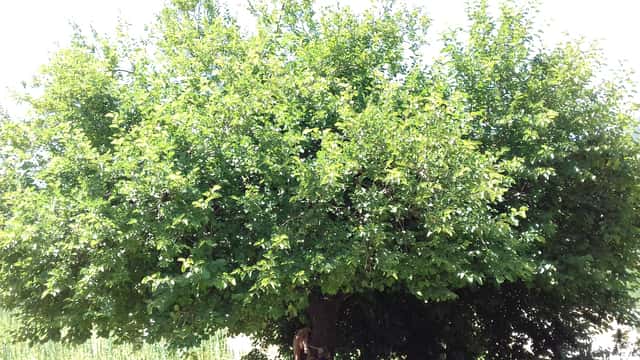
Moraceae
White mulberry: Edible Plant
Morus alba
White mulberries are exceptionally hardy and adaptable trees that thrive in full sun and well-drained soil. They require minimal maintenance once established, primarily needing annual pruning to manage size and fruit production.
Every 10 days
Direct sun
-20° - 38°C
30% - 50%
Categories
What is White mulberry?
White mulberry (Morus alba) is a easy-care plant from the Moraceae family. Morus alba, known as white mulberry, is a fast-growing, small to medium-sized tree that typically reaches 10 to 20 meters in height. Native to northern China, it is historically significant as the primary food source for silkworms. The tree features highly variable leaf shapes, often exhibiting deep...
White mulberry grows up to 20.0m, spread of 1500cm, watering every 10 days, -20°C – 38°C, 30–50% humidity. It is not suitable for indoor environments and not safe for pets.
Unlike many tropical plants, White mulberry tolerates watering mistakes. Best for beginners. Without precautions, ingestion can cause irritation in pets. Keep out of reach of cats and dogs.
How to Care for White mulberry?
TLDR: White mulberry needs Direct sun, watering every 10 days, and temperatures between -20-38°C with 30-50% humidity.
How Often Should You Water White mulberry?
Water deeply and regularly during the first two growing seasons to establish a deep root system. Mature trees are drought-tolerant.
How Much Light Does White mulberry Need?
For the best fruit production and growth, ensure the tree receives at least 6 to 8 hours of direct sunlight daily.
What Is the Best Soil for White mulberry?
Adaptable to most soil types, including clay and sand, provided there is adequate drainage to prevent root rot.
What Pot Should You Use for White mulberry?
While best suited for open ground, dwarf varieties can be grown in very large, heavy wooden barrels or air-pots to prevent root circling.
Care Schedule
Fertilize
Every 90 days
What Is White mulberry and Where Does It Come From?
Morus alba, known as white mulberry, is a fast-growing, small to medium-sized tree that typically reaches 10 to 20 meters in height. Native to northern China, it is historically significant as the primary food source for silkworms. The tree features highly variable leaf shapes, often exhibiting deep lobes on younger branches. The fruit is a collective drupe that transitions from white or green to pink or dark purple when fully ripe, offering a sweet flavor profile.
How to Propagate White mulberry?
Softwood or Semi-hardwood Cuttings
- Keep the cuttings in bright, indirect light until roots are established.
- Ensure the soil remains consistently moist but never waterlogged.
- 1 Take Cuttings
Cut a 15-20cm section of healthy stem from the current year's growth.
- 2 Prepare Stem
Remove the lower leaves and dip the cut end into rooting hormone powder.
- 3 Planting
Insert the cutting into a moist, well-draining potting mix and cover with a plastic dome to maintain humidity.
Materials needed:
Seed Propagation
- Cold stratification is essential for high germination rates.
- Protect young seedlings from direct, scorching sun for the first few months.
- 1 Seed Extraction
Extract seeds from fully ripe fruit and wash away all pulp.
- 2 Stratification
Place seeds in a damp paper towel inside a sealed bag and refrigerate for 60-90 days to break dormancy.
- 3 Sowing
Sow seeds shallowly in a seed-starting mix and keep at room temperature.
Materials needed:
How Big Does White mulberry Grow?
TLDR: White mulberry can reach up to 20.0m tall with Fast growth rate.
Max height
20.0m
Spread
15.0m
Growth rate
Fast
Foliage
Deciduous
Warning: Toxic Plant
This plant can be toxic if ingested. Keep out of reach of:
Plant Uses
Edible
Can be consumed
Ornamental
Great for decoration
Medicinal Uses
- Blood sugar regulation
- Anti-inflammatory treatments
- Cough and sore throat relief
Culinary Uses
- Fresh berries
- Dried fruit
- Mulberry jam
- Mulberry leaf tea
Is your plant showing symptoms?
Click on the symptom to discover possible causes:
What Diseases Commonly Affect White mulberry?
TLDR: White mulberry is susceptible to 12 known diseases. Monitor regularly for early detection.
Powdery Mildew
Powdery mildew is a common fungal disease caused by various fungi species including Erysiphe, Podosphaera, Oïdium, and Leveillula. It affects over 10,000 plant species worldwide. The disease thrives in warm, dry climates with high humidity and appears as a distinctive white powdery coating on plant surfaces.
Leaf Spot
Leaf spot is a common fungal disease caused by various pathogens including Alternaria, Ascochyta, Colletotrichum, Septoria, and Venturia. It primarily affects leaves, causing discolored spots that can lead to premature leaf drop if left untreated.
Root Rot
Root rot is a serious fungal disease that affects the root system of plants, causing them to decay and die. It is primarily caused by overwatering, poor drainage, or soil-borne fungi such as Pythium, Phytophthora, Rhizoctonia, and Fusarium. The disease thrives in waterlogged conditions where roots are deprived of oxygen, making them susceptible to fungal infection.
Bacterial Blight
Bacterial blight is a serious plant disease caused by pathogenic bacteria that enters plants through wounds or natural openings. It spreads rapidly in warm, wet conditions and can cause significant damage to leaves, stems, and flowers. The bacteria are transmitted by water splash, contaminated tools, and insects.
Meaning & Symbolism
In various cultures, the mulberry tree represents wisdom, patience, and the industrious nature of the silk trade.
Compare with similar plants
| Attribute | Difficulty | Light | Watering | Pet Safe |
|---|---|---|---|---|
| Small Scabious | Easy | Direct sun | 7d | ✓ |
| Field Maple | Easy | Bright indirect | 14d | ✓ |
| Silver Birch | Easy | Direct sun | 14d | ✓ |
| Red valerian | Easy | Direct sun | 10d | ✓ |



