Salicaceae
Purple Willow: Ground Cover Plant
Salix purpurea
Give purple willow full sun and consistently moist, even boggy, soil. It thrives with minimal fuss, tolerating heavy clay and periodic flooding, and rewards an annual hard prune (coppicing) with vigorous new colorful growth.
Every 3 days
Direct sun
-30° - 35°C
40% - 70%
Categories
What is Purple Willow?
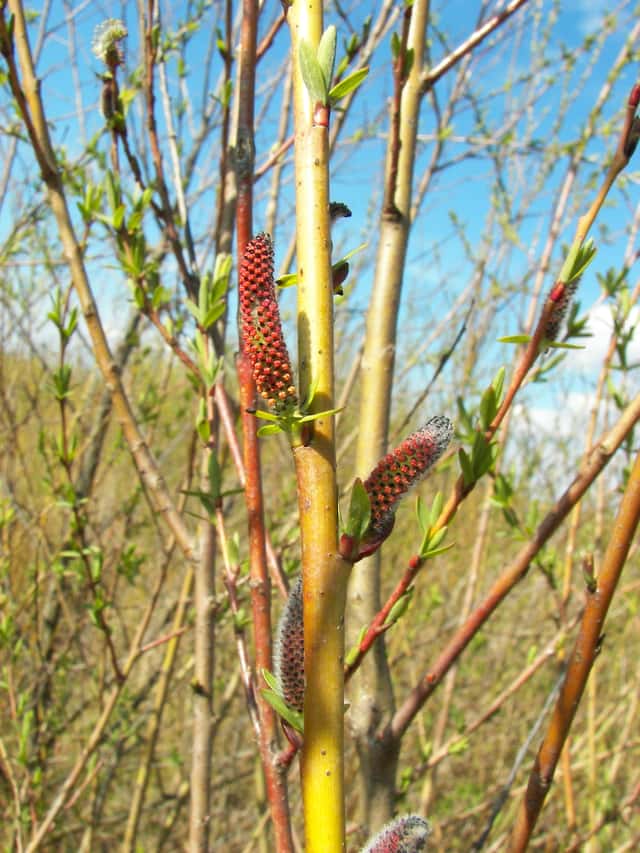
Purple Willow (Salix purpurea) is a easy-care plant from the Salicaceae family. Salix purpurea, the purple willow or purple osier, is a fast-growing deciduous shrub native to Europe, North Africa, and temperate Asia. It forms dense thickets of slender, purple-tinted stems and narrow grey-green leaves arranged in an unusual near-opposite pattern for a willow. Purple-red catkins...
Purple Willow grows up to 4.0m, spread of 300cm, watering every 3 days, -30°C – 35°C, 40–70% humidity. It is not suitable for indoor environments and safe for pets.
Unlike many tropical plants, Purple Willow tolerates watering mistakes. Best for beginners. Unlike many popular species, Purple Willow is safe to keep around pets.
How to Care for Purple Willow?
TLDR: Purple Willow needs Direct sun, watering every 3 days, and temperatures between -30-35°C with 40-70% humidity.
How Often Should You Water Purple Willow?
Keep the soil consistently moist; purple willow struggles in dry conditions and does best near ponds, streams, or in low-lying, damp garden spots.
How Much Light Does Purple Willow Need?
Plant in full sun for the best stem color and densest growth; it tolerates light shade but becomes leggy.
What Is the Best Soil for Purple Willow?
Adapts to most soils, including heavy clay, as long as moisture is consistent; slightly acidic to neutral pH is ideal.
What Pot Should You Use for Purple Willow?
Best grown in the ground; if container-grown, use a large, sturdy pot with drainage and keep the compost consistently moist.
What Is Purple Willow and Where Does It Come From?
Salix purpurea, the purple willow or purple osier, is a fast-growing deciduous shrub native to Europe, North Africa, and temperate Asia. It forms dense thickets of slender, purple-tinted stems and narrow grey-green leaves arranged in an unusual near-opposite pattern for a willow. Purple-red catkins appear on bare branches in early spring before the leaves emerge, turning golden as they release pollen. Long prized by basket weavers for its flexible, colorful osier rods, it is equally valued in modern landscapes for erosion control along streambanks and as a fast, low-maintenance ornamental hedge or screen.
How to Propagate Purple Willow?
Hardwood cutting
Purple willow roots very easily from cuttings, even placed directly in water or moist ground; no rooting hormone is needed.
- 1 Take 20-30cm hardwood cuttings from dormant stems in late winter
- 2 Insert two-thirds of the cutting into moist soil or a container of damp sand
- 3 Keep consistently moist until roots and shoots develop, usually within a few weeks
- 4 Transplant to final position once well rooted
Materials needed:
How Big Does Purple Willow Grow?
TLDR: Purple Willow can reach up to 4.0m tall with Fast growth rate.
Max height
4.0m
Spread
3.0m
Growth rate
Fast
Foliage
Deciduous
Plant Uses
Ornamental
Great for decoration
Medicinal
Medicinal properties
Ground Cover
Soil coverage
Medicinal Uses
- Bark traditionally used as a natural source of salicin, a compound related to aspirin, for pain and fever relief
Is your plant showing symptoms?
Click on the symptom to discover possible causes:
What Diseases Commonly Affect Purple Willow?
TLDR: Purple Willow is susceptible to 5 known diseases. Monitor regularly for early detection.
Anthracnose
Anthracnose is a fungal disease caused by fungi in the genus Colletotrichum that affects many plants, including vegetables, fruits, and trees. The disease thrives in cool, wet conditions, causing dark, sunken lesions on leaves, stems, flowers, and fruits.
Rust
Rust is a common fungal disease caused by fungi in the order Pucciniales that affects a wide variety of plants. The disease gets its name from the characteristic orange, yellow, or reddish-brown pustules that appear on leaves, resembling metal rust. This obligate fungal parasite requires living plants to survive and can cause significant economic losses in agricultural crops.
Canker
Canker is a disease caused by various fungi and bacteria that create necrotic, sunken areas on bark of branches, stems, and trunks. Pathogens enter through wounds and natural openings, especially when plants are stressed. Canker can gradually weaken or kill branches by disrupting water and nutrient flow.
Aphids
Aphids are small, soft-bodied, pear-shaped insects (1/16 to 1/8 inch long) that feed by sucking nutrient-rich sap from plants. They reproduce rapidly and can quickly weaken plants, causing distorted growth and transmitting plant viruses. Aphids come in various colors including green, black, red, yellow, brown, and gray. They secrete honeydew, a sticky substance that attracts ants and encourages sooty mold growth.
Meaning & Symbolism
A symbol of flexibility, resilience, and renewal, echoing the willow's long association with adaptability and the craft traditions of basket weaving.
Compare with similar plants
| Attribute | Difficulty | Light | Watering | Pet Safe |
|---|---|---|---|---|
| Field Maple | Easy | Bright indirect | 14d | ✓ |
| Silver Birch | Easy | Direct sun | 14d | ✓ |
| Cushion Bush | Easy | Direct sun | 14d | ✓ |
| Peruvian peppertree | Easy | Direct sun | 14d | ⚠️ |





