Ranunculaceae
Rocket Larkspur: Full Sun Plant
Delphinium ajacis
Rocket Larkspur requires full sun (at least 6 hours a day), fertile and well-drained soil, and regular but moderate watering. It grows quickly and blooms from June to September. As an annual plant, it does not require transplanting. All parts are poisonous — wear gloves when handling and protect children and pets.
Every 7 days
Direct sun
7° - 24°C
40% - 60%
Categories
What is Rocket Larkspur?
Rocket Larkspur (Delphinium ajacis) is a medium-care plant from the Ranunculaceae family. Rocket Larkspur (Delphinium ajacis, syn. Consolida ajacis) is an annual flowering plant in the buttercup family (Ranunculaceae), native to the Mediterranean and Eurasia. It reaches a height of up to 130 cm and forms slender, upright stems with deeply divided leaves. During summer, it produces dense...
Rocket Larkspur grows up to 1.3m, spread of 45cm, watering every 7 days, 7°C – 24°C, 40–60% humidity. It is not suitable for indoor environments and not safe for pets.
Without precautions, ingestion can cause irritation in pets. Keep out of reach of cats and dogs.
How to Care for Rocket Larkspur?
TLDR: Rocket Larkspur needs Direct sun, watering every 7 days, and temperatures between 7-24°C with 40-60% humidity.
How Often Should You Water Rocket Larkspur?
Water once every 5–7 days when the top layer of soil (approx. 2–3 cm) dries out. Avoid waterlogging the soil — larkspur is sensitive to root rot. During long dry periods, shorten the interval to 3–4 days. Do not pour water directly onto the leaves or flowers.
How Much Light Does Rocket Larkspur Need?
Place in a full sun location — at least 6 hours of direct sunlight per day. In warmer regions, slight afternoon shade is advisable to prevent the flowers from overheating. Lack of light causes the stems to become leggy and results in poor flowering.
What Is the Best Soil for Rocket Larkspur?
It prefers fertile, deep, well-drained soil (sandy-loam) with a pH value of 6.5–7.5. Incorporate compost or well-rotted manure before planting. Lighten heavy clay soil with perlite or sand. Good drainage is key to preventing rot.
What Pot Should You Use for Rocket Larkspur?
Rocket Larkspur is an annual garden plant typically grown directly in flower beds, not in pots. If planted in a container, choose a deep pot (min. 30 cm) with good drainage holes and a heavy base so the tall stems do not tip the container over.
Care Schedule
Fertilize
Every 21 days
What Is Rocket Larkspur and Where Does It Come From?
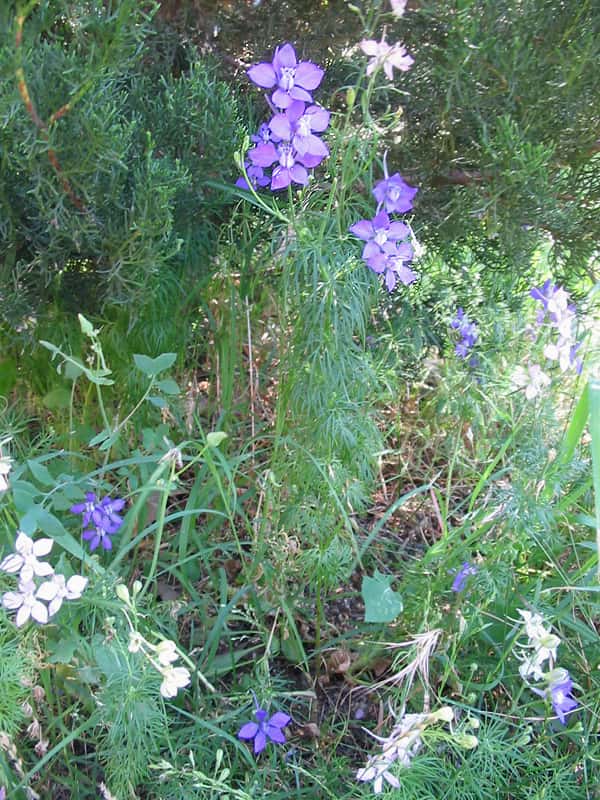
Rocket Larkspur (Delphinium ajacis, syn. Consolida ajacis) is an annual flowering plant in the buttercup family (Ranunculaceae), native to the Mediterranean and Eurasia. It reaches a height of up to 130 cm and forms slender, upright stems with deeply divided leaves. During summer, it produces dense racemes of flowers in shades of blue, purple, pink, and white. It is a classic garden plant suitable for flower beds, borders, and cut flowers. WARNING: All parts of the plant are poisonous — they contain diterpene alkaloids, including the highly toxic methyllycaconitine, which is dangerous to humans, cats, and dogs.
How to Propagate Rocket Larkspur?
How Big Does Rocket Larkspur Grow?
TLDR: Rocket Larkspur can reach up to 1.3m tall with Fast growth rate.
Max height
1.3m
Spread
45cm
Growth rate
Fast
Foliage
Deciduous
Warning: Toxic Plant
This plant can be toxic if ingested. Keep out of reach of:
Plant Uses
Ornamental
Great for decoration
Medicinal Uses
- Historically, some species of the genus Consolida were used in folk medicine to treat lice and skin parasites (seed tincture). Today, they are not used in medicine due to high toxicity.
Culinary Uses
- The plant is not edible. All its parts are poisonous, and consumption is dangerous for both humans and animals.
Is your plant showing symptoms?
Click on the symptom to discover possible causes:
What Diseases Commonly Affect Rocket Larkspur?
TLDR: Rocket Larkspur is susceptible to 9 known diseases. Monitor regularly for early detection.
Powdery Mildew
Powdery mildew is a common fungal disease caused by various fungi species including Erysiphe, Podosphaera, Oïdium, and Leveillula. It affects over 10,000 plant species worldwide. The disease thrives in warm, dry climates with high humidity and appears as a distinctive white powdery coating on plant surfaces.
Root Rot
Root rot is a serious fungal disease that affects the root system of plants, causing them to decay and die. It is primarily caused by overwatering, poor drainage, or soil-borne fungi such as Pythium, Phytophthora, Rhizoctonia, and Fusarium. The disease thrives in waterlogged conditions where roots are deprived of oxygen, making them susceptible to fungal infection.
Gray Mold (Botrytis Blight)
Gray mold, caused by the fungus Botrytis cinerea, is one of the most common fungal diseases in plants. It affects over 200 plant species, including ornamentals, vegetables, fruits, and houseplants. The disease thrives in cool, humid conditions with poor air circulation, causing grayish spots and soft rot on infected tissues.
Leaf Spot
Leaf spot is a common fungal disease caused by various pathogens including Alternaria, Ascochyta, Colletotrichum, Septoria, and Venturia. It primarily affects leaves, causing discolored spots that can lead to premature leaf drop if left untreated.
Meaning & Symbolism
In the Victorian language of flowers, larkspur symbolizes lightness, airiness, and an open heart, but also fickleness and a strong bond. The blue color of the flowers is associated with the sky, freedom, and peace. In English tradition, larkspur (the July birth flower) is given for birthdays in July.
Compare with similar plants
| Attribute | Difficulty | Light | Watering | Pet Safe |
|---|---|---|---|---|
| Dark Fieldcap | Medium | Low light | 2d | ⚠️ |
| Azalea | Medium | Partial shade | 3d | ⚠️ |
| Bougainvillea | Medium | Direct sun | 7d | ⚠️ |
| Wild Lettuce | Medium | Direct sun | 7d | ⚠️ |



