Rutaceae
Willowleaf Mandarin Care Guide
Citrus × aurantium f. deliciosa
A rewarding but slightly demanding citrus tree that thrives in full sun with regular deep watering, well-draining acidic soil, and consistent feeding during the growing season. Protect from hard frost and watch for common citrus pests like scale and spider mites.
Every 7 days
Direct sun
2° - 35°C
40% - 70%
Categories
What is Willowleaf Mandarin?
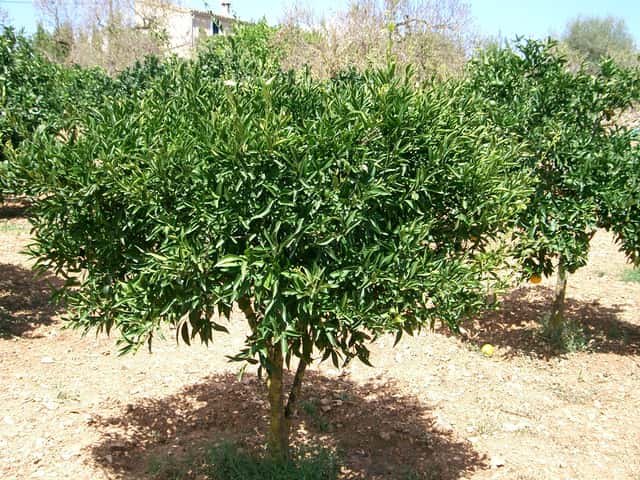
Willowleaf Mandarin (Citrus × aurantium f. deliciosa) is a medium-care plant from the Rutaceae family. The willowleaf mandarin is a compact evergreen citrus tree native to the Mediterranean basin, first documented in Italy in the early 1800s. It gets its name from its narrow, willow-like leaves and produces small, intensely fragrant white flowers followed by sweet, easy-peel orange fruit with a disti...
Willowleaf Mandarin grows up to 4.5m, spread of 500cm, watering every 7 days, 2°C – 35°C, 40–70% humidity. It is suitable for indoor environments and not safe for pets.
Without precautions, ingestion can cause irritation in pets. Keep out of reach of cats and dogs. Without adequate drainage, root rot can develop within 14 days.
How to Care for Willowleaf Mandarin?
TLDR: Willowleaf Mandarin needs Direct sun, watering every 7 days, and temperatures between 2-35°C with 40-70% humidity.
How Often Should You Water Willowleaf Mandarin?
Water deeply when the top 3-5 cm of soil feels dry, allowing water to drain freely; avoid letting the pot sit in standing water, which quickly causes root rot.
How Much Light Does Willowleaf Mandarin Need?
Give it as much direct sun as possible - at least 6-8 hours daily; a south-facing window or bright patio spot works best.
What Is the Best Soil for Willowleaf Mandarin?
Plant in a well-draining, slightly acidic potting mix (pH 6.0-7.0) formulated for citrus; add perlite or coarse sand to improve drainage.
What Pot Should You Use for Willowleaf Mandarin?
Use a terracotta or unglazed ceramic pot at least 40-45 cm wide with generous drainage holes to keep roots healthy and prevent waterlogging.
Care Schedule
Fertilize
Every 60 days
Rotate
Every 14 days
Repot
Every 730 days
What Is Willowleaf Mandarin and Where Does It Come From?
The willowleaf mandarin is a compact evergreen citrus tree native to the Mediterranean basin, first documented in Italy in the early 1800s. It gets its name from its narrow, willow-like leaves and produces small, intensely fragrant white flowers followed by sweet, easy-peel orange fruit with a distinctive aromatic rind.
How to Propagate Willowleaf Mandarin?
Grafting onto rootstock
Use sharp, sterilized tools and graft during active spring growth for the best success rate.
- 1 Select a healthy, disease-free rootstock seedling such as trifoliate orange
- 2 Take a bud or scion wood from a mature, fruiting willowleaf mandarin branch
- 3 Make a T-cut or whip graft on the rootstock and insert the scion
- 4 Wrap the graft union tightly with grafting tape to seal it
- 5 Keep the grafted plant in a warm, humid, shaded spot until the union heals
Materials needed:
Air layering (marcotting)
This method preserves the exact genetics of the parent tree and produces fruit sooner than seed-grown trees.
- 1 Choose a healthy, pencil-thick branch and remove a ring of bark about 2-3 cm wide
- 2 Apply rooting hormone to the exposed cut
- 3 Wrap moist sphagnum moss around the wound and cover with plastic film
- 4 Keep the moss consistently moist until roots are visible through the plastic
- 5 Cut the rooted branch below the new roots and pot it up
Materials needed:
How Big Does Willowleaf Mandarin Grow?
TLDR: Willowleaf Mandarin can reach up to 4.5m tall with Medium growth rate.
Max height
4.5m
Spread
5.0m
Growth rate
Medium
Foliage
Evergreen
Warning: Toxic Plant
This plant can be toxic if ingested. Keep out of reach of:
Plant Uses
Edible
Can be consumed
Ornamental
Great for decoration
Aromatic
Pleasant fragrance
Medicinal Uses
- Peel used in traditional teas to ease digestion
Culinary Uses
- Fresh eating
- Marmalades and preserves
- Zest for baking and desserts
- Flavoring for drinks and liqueurs
Is your plant showing symptoms?
Click on the symptom to discover possible causes:
What Diseases Commonly Affect Willowleaf Mandarin?
TLDR: Willowleaf Mandarin is susceptible to 10 known diseases. Monitor regularly for early detection.
Spider Mites
Spider mites are tiny arachnids (less than 1/20 inch long) related to spiders and ticks that feed on plant sap. They thrive in hot, dry conditions and can cause significant damage to ornamental and vegetable plants. During severe infestations, crop losses can reach 14% or higher as these pests disrupt vital plant processes including photosynthesis, carbon dioxide absorption, and transpiration.
Scale Insects
Scale insects are small sap-sucking pests that appear as brown, shell-like bumps on plant stems and leaves. There are over 25 species, divided into armored (hard) and unarmored (soft) scales. They feed by piercing plant tissue and extracting sap, which weakens the plant and can lead to yellowing, stunted growth, and even death if left untreated. They also excrete honeydew, which attracts ants and promotes sooty mold growth.
Mealybugs
Mealybugs are small, soft-bodied insects covered with a white, waxy, cottony material. They are common pests of houseplants and outdoor plants in mild climates. These sap-sucking insects feed on plant tissue, causing damage, stunted growth, and can lead to plant death if left untreated. They produce sticky honeydew which attracts sooty mold.
Aphids
Aphids are small, soft-bodied, pear-shaped insects (1/16 to 1/8 inch long) that feed by sucking nutrient-rich sap from plants. They reproduce rapidly and can quickly weaken plants, causing distorted growth and transmitting plant viruses. Aphids come in various colors including green, black, red, yellow, brown, and gray. They secrete honeydew, a sticky substance that attracts ants and encourages sooty mold growth.
Meaning & Symbolism
In Mediterranean tradition, citrus blossoms symbolize purity, hospitality, and good fortune, while the sweet fruit represents abundance during the winter harvest.
Fun Facts
The willowleaf mandarin is believed to be the very first mandarin variety introduced to the United States, brought from Italy via New Orleans in the 1840s.
Its narrow, willow-shaped leaves give the tree its common name and set it apart from other mandarin varieties.
The tree tends toward alternate bearing, producing a heavy crop one year and a lighter one the next.
Frequently asked questions
How often should I water my willowleaf mandarin?
Is the willowleaf mandarin toxic to pets?
How much sunlight does it need?
Can I grow a willowleaf mandarin indoors?
Compare with similar plants
| Attribute | Difficulty | Light | Watering | Pet Safe |
|---|---|---|---|---|
| Dark Fieldcap | Medium | Low light | 2d | ⚠️ |
| Azalea | Medium | Partial shade | 3d | ⚠️ |
| Bougainvillea | Medium | Direct sun | 7d | ⚠️ |
| Wild Lettuce | Medium | Direct sun | 7d | ⚠️ |



