Argophyllaceae
Corokia cotoneaster (Wire-netting Bush) Care Guide
Corokia cotoneaster
Easy-care and forgiving, the wire-netting bush thrives in full sun to light shade with well-drained soil. Water regularly while establishing, then only during extended dry spells. Avoid soggy soil, which can cause root rot. Minimal fertilizing and an occasional trim to maintain shape are all it needs.
Every 10 days
Bright indirect
-7° - 35°C
30% - 70%
Categories
What is Wire-netting Bush?
Wire-netting Bush (Corokia cotoneaster) is a easy-care plant from the Argophyllaceae family. Corokia cotoneaster, commonly known as the wire-netting bush or korokio, is a small evergreen shrub endemic to New Zealand. Prized for its distinctive divaricating growth habit — a dense tangle of wiry, interlacing branches — it produces small silver-grey, ovate leaves with felted undersides that sh...
Wire-netting Bush grows up to 3.0m, spread of 300cm, watering every 10 days, -7°C – 35°C, 30–70% humidity. It is not suitable for indoor environments and safe for pets.
Unlike many tropical plants, Wire-netting Bush tolerates watering mistakes. Best for beginners. Unlike many popular species, Wire-netting Bush is safe to keep around pets.
How to Care for Wire-netting Bush?
TLDR: Wire-netting Bush needs Bright indirect, watering every 10 days, and temperatures between -7-35°C with 30-70% humidity.
How Often Should You Water Wire-netting Bush?
Water deeply but infrequently, letting the soil dry out between waterings. Established plants are drought-tolerant and only need supplemental water during prolonged dry periods.
How Much Light Does Wire-netting Bush Need?
Position in full sun for the best flowering and compact form; it also tolerates partial shade, though growth may become looser.
What Is the Best Soil for Wire-netting Bush?
Use well-draining soil — sandy, loamy, or gritty mixes all work well. Avoid heavy, waterlogged clay that can lead to root rot.
What Pot Should You Use for Wire-netting Bush?
A wide, well-draining terracotta or ceramic pot with ample drainage holes suits container growing and bonsai training.
What Is Wire-netting Bush and Where Does It Come From?
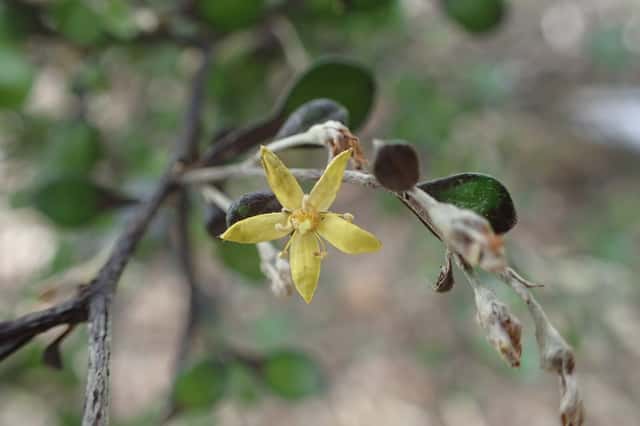
Corokia cotoneaster, commonly known as the wire-netting bush or korokio, is a small evergreen shrub endemic to New Zealand. Prized for its distinctive divaricating growth habit — a dense tangle of wiry, interlacing branches — it produces small silver-grey, ovate leaves with felted undersides that shimmer in the breeze. In spring and summer, star-shaped yellow flowers appear along the branches, followed by ornamental red, orange, or yellow berries that persist into winter. Slow-growing and remarkably tough, it tolerates coastal exposure, wind, drought, and frost, making it a favorite for hedging, rock gardens, containers, and bonsai.
How to Propagate Wire-netting Bush?
Semi-hardwood Cuttings
Bottom heat and a propagation tray with a clear lid speed up rooting and prevent the wiry stems from drying out.
- 1 Select a healthy semi-hardwood shoot about 10-15cm long in mid-to-late summer
- 2 Remove the lower leaves and dip the cut end in rooting hormone
- 3 Insert into a free-draining mix of sand and perlite
- 4 Keep in a shaded, humid spot and mist regularly until roots form
Materials needed:
Seed Propagation
Seed propagation is unpredictable and slow; cuttings are the preferred method for reliable results.
- 1 Collect ripe berries in autumn and remove the pulp to extract seeds
- 2 Sow seeds in a free-draining seed mix
- 3 Keep moist but not waterlogged in a cool, shaded location
- 4 Germination is slow and can take several months to over a year
Materials needed:
How Big Does Wire-netting Bush Grow?
TLDR: Wire-netting Bush can reach up to 3.0m tall with Slow growth rate.
Max height
3.0m
Spread
3.0m
Growth rate
Slow
Foliage
Evergreen
Plant Uses
Ornamental
Great for decoration
Aromatic
Pleasant fragrance
Medicinal Uses
- Historically used in Maori traditional medicine for stomach ailments (historical use, not medically validated)
Is your plant showing symptoms?
Click on the symptom to discover possible causes:
What Diseases Commonly Affect Wire-netting Bush?
TLDR: Wire-netting Bush is susceptible to 5 known diseases. Monitor regularly for early detection.
Root Rot
Root rot is a serious fungal disease that affects the root system of plants, causing them to decay and die. It is primarily caused by overwatering, poor drainage, or soil-borne fungi such as Pythium, Phytophthora, Rhizoctonia, and Fusarium. The disease thrives in waterlogged conditions where roots are deprived of oxygen, making them susceptible to fungal infection.
Scale Insects
Scale insects are small sap-sucking pests that appear as brown, shell-like bumps on plant stems and leaves. There are over 25 species, divided into armored (hard) and unarmored (soft) scales. They feed by piercing plant tissue and extracting sap, which weakens the plant and can lead to yellowing, stunted growth, and even death if left untreated. They also excrete honeydew, which attracts ants and promotes sooty mold growth.
Mealybugs
Mealybugs are small, soft-bodied insects covered with a white, waxy, cottony material. They are common pests of houseplants and outdoor plants in mild climates. These sap-sucking insects feed on plant tissue, causing damage, stunted growth, and can lead to plant death if left untreated. They produce sticky honeydew which attracts sooty mold.
Sooty Mold
Sooty mold is a fungal disease that develops on surfaces coated with honeydew, a sticky sweet substance secreted by sap-sucking insects like aphids, scale insects, and whiteflies. While it does not directly infect plant tissue, it reduces photosynthetic capacity by blocking sunlight and diminishes the plant's aesthetic appearance.
Meaning & Symbolism
In Maori tradition the korokio was valued for its tough, springy wood, historically used for fish hooks and as kindling — a quiet symbol of resilience and adaptability.
Fun Facts
Its tangled, zig-zagging branch pattern is called divaricating growth — an adaptation many New Zealand plants evolved, possibly to deter browsing moa.
The Maori name korokio refers to the plant's tough, wiry stems, once used for fish hooks and fire-starting tinder.
Despite its species name cotoneaster, this plant is unrelated to the true Cotoneaster genus — the name simply nods to a resemblance in growth habit.
Frequently asked questions
How often should I water a wire-netting bush?
Is Corokia cotoneaster toxic to pets?
Can I grow Corokia cotoneaster as bonsai?
Does Corokia cotoneaster need pruning?
Compare with similar plants
| Attribute | Difficulty | Light | Watering | Pet Safe |
|---|---|---|---|---|
| Field Maple | Easy | Bright indirect | 14d | ✓ |
| Silver Birch | Easy | Direct sun | 14d | ✓ |
| Common Blanketflower | Easy | Direct sun | 10d | ✓ |
| Cushion Bush | Easy | Direct sun | 14d | ✓ |





