Cactaceae
Opuntia tomentosa: Woollyjoint Prickly Pear Care Guide
Opuntia tomentosa
Give this cactus full, direct sun and a sandy, very well-draining substrate. Water deeply but infrequently, letting the soil dry out completely between waterings, and cut back almost entirely in winter. It tolerates heat well but is not frost-hardy, so protect young plants below 10C. Feed lightly during the warm growing season and prune outward-spreading pads occasionally to keep an attractive tree-like shape.
Every 21 days
Direct sun
10° - 38°C
20% - 40%
Categories
What is Woollyjoint Prickly Pear?
Woollyjoint Prickly Pear (Opuntia tomentosa) is a easy-care plant from the Cactaceae family. Opuntia tomentosa, the woollyjoint prickly pear, is a tree-forming cactus native to central Mexico's semi-arid highlands. Over years it develops a short, thick trunk topped with broad, velvety green pads covered in fine, felt-like hairs (hence 'tomentosa'), eventually reaching 3-6 m and occasionally...
Woollyjoint Prickly Pear grows up to 5.0m, spread of 300cm, watering every 21 days, 10°C – 38°C, 20–40% humidity. It is suitable for indoor environments and safe for pets.
Unlike many tropical plants, Woollyjoint Prickly Pear tolerates watering mistakes. Best for beginners. Unlike many popular species, Woollyjoint Prickly Pear is safe to keep around pets. Without adequate drainage, root rot can develop within 42 days.
How to Care for Woollyjoint Prickly Pear?
TLDR: Woollyjoint Prickly Pear needs Direct sun, watering every 21 days, and temperatures between 10-38°C with 20-40% humidity.
How Often Should You Water Woollyjoint Prickly Pear?
Water only when the soil is bone dry, roughly every 2-3 weeks in the growing season and far less in winter -- overwatering is the main cause of root and stem rot.
How Much Light Does Woollyjoint Prickly Pear Need?
Provide at least 6-8 hours of direct sun daily; a south- or west-facing spot outdoors or in a bright window is ideal.
What Is the Best Soil for Woollyjoint Prickly Pear?
Use a sandy, mineral cactus mix with excellent drainage -- equal parts potting soil, coarse sand and perlite works well.
What Pot Should You Use for Woollyjoint Prickly Pear?
A wide, heavy terracotta pot with drainage holes suits this cactus best, providing stability for its eventual trunk and allowing excess moisture to evaporate quickly.
Care Schedule
Fertilize
Every 60 days
Repot
Every 730 days
What Is Woollyjoint Prickly Pear and Where Does It Come From?
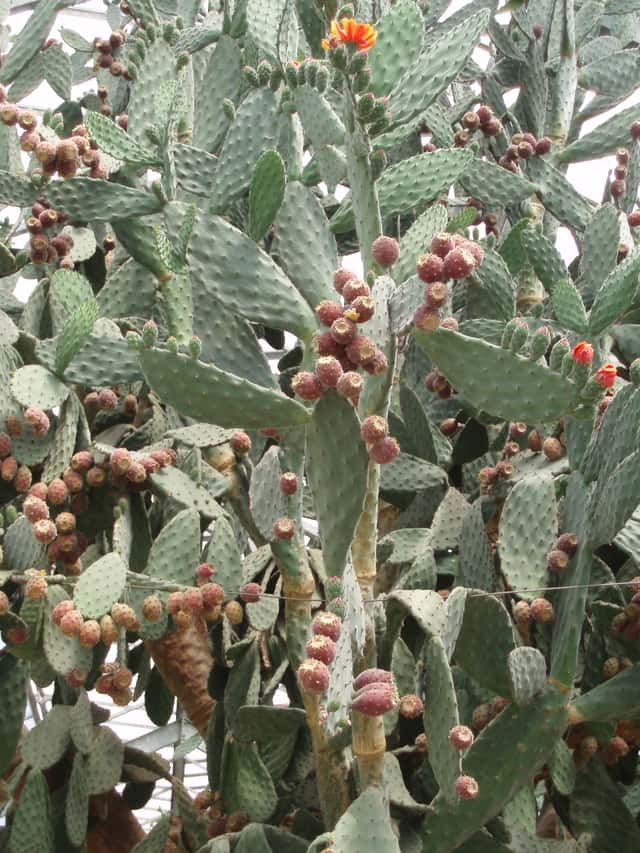
Opuntia tomentosa, the woollyjoint prickly pear, is a tree-forming cactus native to central Mexico's semi-arid highlands. Over years it develops a short, thick trunk topped with broad, velvety green pads covered in fine, felt-like hairs (hence 'tomentosa'), eventually reaching 3-6 m and occasionally up to 8 m in the wild. In spring and summer it bears yellow-to-orange, sometimes red-tinged flowers followed by sweet, edible reddish-purple fruit ('tunas'). Extremely drought tolerant once established, it thrives in full sun and sandy, fast-draining soil, and is grown both ornamentally and for its edible pads and fruit.
How to Propagate Woollyjoint Prickly Pear?
Pad (Stem) Cutting
Always let the wound dry and callous before planting to prevent rot.
- 1 Cut or twist off a healthy, mature pad using clean tools or gloved hands
- 2 Let the cut end callous over in a dry, shaded spot for 3-7 days
- 3 Set the calloused end in well-draining cactus soil
- 4 Water lightly once roots form, then follow normal watering
Materials needed:
Seed Propagation
Seeds germinate slowly and unevenly; be patient.
- 1 Extract seeds from ripe fruit and rinse off pulp
- 2 Sow seeds on the surface of sandy, well-draining soil
- 3 Keep lightly moist and warm (25-30C) until germination
- 4 Provide bright, indirect light for seedlings
Materials needed:
How Big Does Woollyjoint Prickly Pear Grow?
TLDR: Woollyjoint Prickly Pear can reach up to 5.0m tall with Medium growth rate.
Max height
5.0m
Spread
3.0m
Growth rate
Medium
Foliage
Evergreen
Plant Uses
Ornamental
Great for decoration
Edible
Can be consumed
Medicinal
Medicinal properties
Medicinal Uses
- Pad pulp used traditionally as a poultice to reduce inflammation
- Soluble fiber and mucilage studied for helping regulate blood sugar and cholesterol
Culinary Uses
- Ripe fruit ('tuna') eaten raw for its sweet flavor or made into jams and drinks
- Young pads ('nopales') cooked or eaten raw in salads, stews and traditional Mexican dishes
Is your plant showing symptoms?
Click on the symptom to discover possible causes:
What Diseases Commonly Affect Woollyjoint Prickly Pear?
TLDR: Woollyjoint Prickly Pear is susceptible to 7 known diseases. Monitor regularly for early detection.
Root Rot
Root rot is a serious fungal disease that affects the root system of plants, causing them to decay and die. It is primarily caused by overwatering, poor drainage, or soil-borne fungi such as Pythium, Phytophthora, Rhizoctonia, and Fusarium. The disease thrives in waterlogged conditions where roots are deprived of oxygen, making them susceptible to fungal infection.
Anthracnose
Anthracnose is a fungal disease caused by fungi in the genus Colletotrichum that affects many plants, including vegetables, fruits, and trees. The disease thrives in cool, wet conditions, causing dark, sunken lesions on leaves, stems, flowers, and fruits.
Bacterial Soft Rot
Bacterial soft rot is a destructive plant disease caused primarily by bacteria from the genera Pectobacterium (formerly Erwinia) and Dickeya. These bacteria produce enzymes that break down plant cell walls, causing rapid and foul-smelling tissue decomposition. It mainly affects succulent tissues such as tubers, fruits, stems, and bulbs, being especially problematic in warm and humid conditions.
Mosaic Virus
Mosaic virus is a group of plant viruses that cause mottled, patchy patterns on leaves and can affect a wide variety of plants. The virus creates characteristic yellow, white, and green mosaic patterns, often accompanied by stunted growth and deformed plant parts. This highly contagious disease spreads rapidly through insect vectors and contaminated tools.
Meaning & Symbolism
In Mexican culture, Opuntia (nopal) symbolizes resilience, sustenance and identity -- it even appears on the national coat of arms.
Fun Facts
Its dense covering of tiny felt-like hairs gives the species its name 'tomentosa', meaning 'downy' or 'woolly' in Latin
Unlike most prickly pears, older specimens lose their spines and develop a smooth, tree-like woody trunk
It is one of several Opuntia species that appear on Mexico's national coat of arms as the perch for the emblematic eagle
Frequently asked questions
Is Opuntia tomentosa edible?
Is Opuntia tomentosa toxic to pets?
How often should I water Opuntia tomentosa?
How cold-hardy is Opuntia tomentosa?
How tall does Opuntia tomentosa grow?
Compare with similar plants
| Attribute | Difficulty | Light | Watering | Pet Safe |
|---|---|---|---|---|
| Field Maple | Easy | Bright indirect | 14d | ✓ |
| Silver Birch | Easy | Direct sun | 14d | ✓ |
| Common Blanketflower | Easy | Direct sun | 10d | ✓ |
| Cushion Bush | Easy | Direct sun | 14d | ✓ |





