Zingiberaceae
Ginger: Aromatic Plant
Zingiber
Grow ginger in bright indirect light to partial shade, in rich, organic, well-draining soil. Water regularly to keep the soil lightly moist during active growth, cutting back sharply during winter dormancy when foliage yellows and dies back naturally. It prefers warmth and high humidity, and is sensitive to cold with no frost tolerance.
Every 3 days
Partial shade
13° - 35°C
60% - 80%
Categories
What is Ginger?
Ginger (Zingiber) is a medium-care plant from the Zingiberaceae family. Zingiber is the botanical genus of true ginger, in the family Zingiberaceae, native to tropical Asia. It comprises dozens of rhizomatous perennial herb species, cultivated for millennia for their aromatic, edible, and medicinal rhizomes. Plants form clumps of narrow, linear leaves rising from a fles...
Ginger grows up to 1.5m, spread of 90cm, watering every 3 days, 13°C – 35°C, 60–80% humidity. It is suitable for indoor environments and safe for pets.
Unlike many popular species, Ginger is safe to keep around pets. Without adequate drainage, root rot can develop within 7 days.
How to Care for Ginger?
TLDR: Ginger needs Partial shade, watering every 3 days, and temperatures between 13-35°C with 60-80% humidity.
How Often Should You Water Ginger?
Keep soil evenly moist during active growth but never waterlogged — excess water on a dormant rhizome causes rot.
How Much Light Does Ginger Need?
Bright indirect light to partial shade is ideal; intense direct sun can scorch the leaves, while deep shade reduces vigor.
What Is the Best Soil for Ginger?
Use a rich, loose, well-draining organic soil mix; waterlogged soil promotes rhizome rot.
What Pot Should You Use for Ginger?
Wide, shallow pots with ample drainage holes suit the rhizome's horizontal spreading growth.
What Is Ginger and Where Does It Come From?
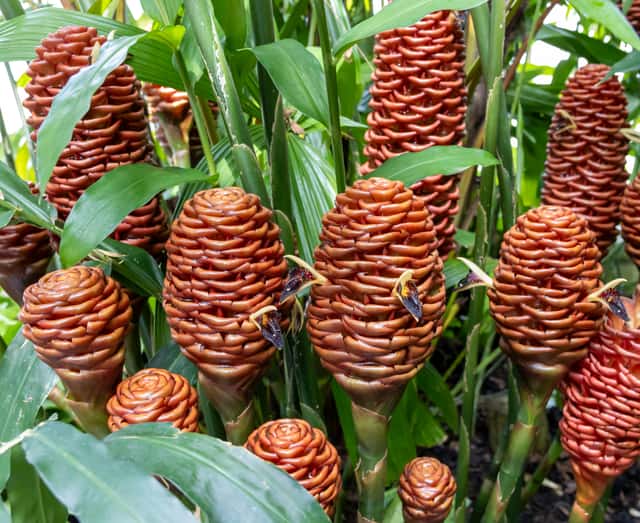
Zingiber is the botanical genus of true ginger, in the family Zingiberaceae, native to tropical Asia. It comprises dozens of rhizomatous perennial herb species, cultivated for millennia for their aromatic, edible, and medicinal rhizomes. Plants form clumps of narrow, linear leaves rising from a fleshy underground rhizome, and produce cone-shaped flower spikes on separate stalks. This is a general genus-level profile representative of typical species such as Zingiber officinale (culinary ginger).
How to Propagate Ginger?
Rhizome division
- Choose healthy rhizome pieces with at least one visible bud (eye)
- Let cut surfaces callus for 1-2 days before planting
- Plant in warm, moist soil to speed sprouting
- 1 Select the rhizome
Choose a firm rhizome free of rot, with visible buds ("eyes").
- 2 Divide
Cut into 3-5 cm pieces, each with at least one bud.
- 3 Cure the cut
Let pieces dry in shade for 1-2 days to callus over.
- 4 Plant
Plant horizontally 2-5 cm deep in rich, well-draining soil.
Materials needed:
How Big Does Ginger Grow?
TLDR: Ginger can reach up to 1.5m tall with Medium growth rate.
Max height
1.5m
Spread
90cm
Growth rate
Medium
Foliage
Deciduous
Plant Uses
Edible
Can be consumed
Medicinal
Medicinal properties
Aromatic
Pleasant fragrance
Ornamental
Great for decoration
Medicinal Uses
- Nausea and motion-sickness relief
- Digestive aid
- Traditional anti-inflammatory
- Relief of rheumatic pain
Culinary Uses
- Rhizome used fresh, dried, or powdered as a spice
- Teas and infusions
- Candied ginger confections
- Aromatic essential oil extraction
Is your plant showing symptoms?
Click on the symptom to discover possible causes:
What Diseases Commonly Affect Ginger?
TLDR: Ginger is susceptible to 11 known diseases. Monitor regularly for early detection.
Bacterial Wilt
Bacterial wilt is a fatal vascular disease caused by bacteria (Erwinia tracheiphila, Ralstonia solanacearum, Xanthomonas spp.) that infects the water-conducting tissue of plants. The bacteria multiply and block the flow of water and nutrients, causing rapid wilting and plant death within 1-2 weeks.
Fusarium Wilt
Fusarium wilt is a serious fungal disease caused by the soil-borne fungus Fusarium oxysporum. The fungus invades roots and blocks the water-conducting vessels (xylem) of the plant, causing progressive wilting and eventual death. Host-specific forms of the pathogen exist that attack different plant species.
Root Rot
Root rot is a serious fungal disease that affects the root system of plants, causing them to decay and die. It is primarily caused by overwatering, poor drainage, or soil-borne fungi such as Pythium, Phytophthora, Rhizoctonia, and Fusarium. The disease thrives in waterlogged conditions where roots are deprived of oxygen, making them susceptible to fungal infection.
Bacterial Soft Rot
Bacterial soft rot is a destructive plant disease caused primarily by bacteria from the genera Pectobacterium (formerly Erwinia) and Dickeya. These bacteria produce enzymes that break down plant cell walls, causing rapid and foul-smelling tissue decomposition. It mainly affects succulent tissues such as tubers, fruits, stems, and bulbs, being especially problematic in warm and humid conditions.
Compare with similar plants
| Attribute | Difficulty | Light | Watering | Pet Safe |
|---|---|---|---|---|
| Dark Fieldcap | Medium | Low light | 2d | ⚠️ |
| Azalea | Medium | Partial shade | 3d | ⚠️ |
| Bougainvillea | Medium | Direct sun | 7d | ⚠️ |
| Wild Lettuce | Medium | Direct sun | 7d | ⚠️ |
Choose & Compare
Sources & References
- NC State Extension - Zingiber (Ginger Root) General Profile
- NC State Extension - Zingiber officinale Plant Profile
- UF/IFAS Gardening Solutions - Ginger
- PFAF Database - Zingiber officinale
- ASPCA Poison Control - Ginger Toxicity
- Gardening Know How - Ginger Plant Diseases
- UF/IFAS Extension - Gardening with Ginger and Turmeric
- IntechOpen - Diseases of Ginger
- Wisconsin Horticulture - Zingiber officinale



