Lamiaceae
Lolly Bush (Clerodendrum floribundum)
Clerodendrum floribundum
Grow in full sun to part shade in well-draining, organically rich soil. Water regularly but avoid waterlogging; light pruning keeps the plant compact and encourages more abundant flowering.
Every 7 days
Bright indirect
10° - 35°C
% - %
Categories
What is Lolly Bush?
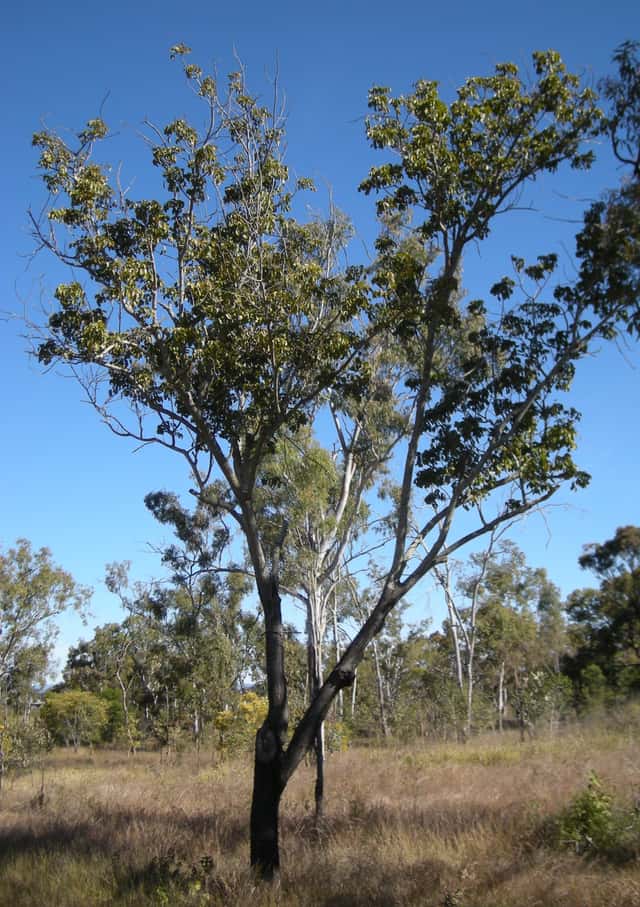
Lolly Bush (Clerodendrum floribundum) is a easy-care plant from the Lamiaceae family. A shrub or small tree native to Australia and New Guinea, found at the margins of coastal rainforests as well as in rocky sites, gorges and creek beds across northern and eastern Australia. It produces fragrant white flowers in cymes from September to December, followed by glossy black drupes seated...
Lolly Bush grows up to 10.0m, watering every 7 days, 10°C – 35°C. It is not suitable for indoor environments and safe for pets.
Unlike many tropical plants, Lolly Bush tolerates watering mistakes. Best for beginners. Unlike many popular species, Lolly Bush is safe to keep around pets.
How to Care for Lolly Bush?
TLDR: Lolly Bush needs Bright indirect, watering every 7 days, and temperatures between 10-35°C with 40-70% humidity.
How Often Should You Water Lolly Bush?
Keep soil lightly moist during active growth; allow the top couple of centimetres to dry between waterings to prevent root rot.
How Much Light Does Lolly Bush Need?
Prefers full sun to partial shade; 6-8 hours of direct light encourages the best flowering.
What Is the Best Soil for Lolly Bush?
Well-draining soil rich in organic matter, pH 6.0-7.0; tolerates sandy to clay soils as long as drainage is good.
What Pot Should You Use for Lolly Bush?
A large, well-draining container works for young plants before they are moved to open ground.
What Is Lolly Bush and Where Does It Come From?
A shrub or small tree native to Australia and New Guinea, found at the margins of coastal rainforests as well as in rocky sites, gorges and creek beds across northern and eastern Australia. It produces fragrant white flowers in cymes from September to December, followed by glossy black drupes seated on an enlarged red fleshy calyx — the origin of its common name "lolly bush" — though the fruit itself is not edible. A hardy, easy-to-grow plant that adapts to a wide range of soils.
How to Propagate Lolly Bush?
Seed propagation
Fresh seeds germinate best; stored seeds quickly lose viability.
- 1 Collect fresh seeds from ripe fruit
- 2 Remove the pulp and wash the seeds
- 3 Sow in light, moist potting mix
- 4 Keep warm with bright indirect light until germination
Materials needed:
Stem cutting
Keep the mix moist and the cutting shaded until roots form.
- 1 Take a 10-15 cm semi-hardwood cutting
- 2 Remove the lower leaves
- 3 Apply rooting hormone to the base
- 4 Plant in moist, well-draining potting mix
Materials needed:
How Big Does Lolly Bush Grow?
TLDR: Lolly Bush can reach up to 10.0m tall with Fast growth rate.
Max height
10.0m
Growth rate
Fast
Plant Uses
Ornamental
Great for decoration
Aromatic
Pleasant fragrance
Is your plant showing symptoms?
Click on the symptom to discover possible causes:
What Diseases Commonly Affect Lolly Bush?
TLDR: Lolly Bush is susceptible to 7 known diseases. Monitor regularly for early detection.
Root Rot
Root rot is a serious fungal disease that affects the root system of plants, causing them to decay and die. It is primarily caused by overwatering, poor drainage, or soil-borne fungi such as Pythium, Phytophthora, Rhizoctonia, and Fusarium. The disease thrives in waterlogged conditions where roots are deprived of oxygen, making them susceptible to fungal infection.
Aphids
Aphids are small, soft-bodied, pear-shaped insects (1/16 to 1/8 inch long) that feed by sucking nutrient-rich sap from plants. They reproduce rapidly and can quickly weaken plants, causing distorted growth and transmitting plant viruses. Aphids come in various colors including green, black, red, yellow, brown, and gray. They secrete honeydew, a sticky substance that attracts ants and encourages sooty mold growth.
Spider Mites
Spider mites are tiny arachnids (less than 1/20 inch long) related to spiders and ticks that feed on plant sap. They thrive in hot, dry conditions and can cause significant damage to ornamental and vegetable plants. During severe infestations, crop losses can reach 14% or higher as these pests disrupt vital plant processes including photosynthesis, carbon dioxide absorption, and transpiration.
Whiteflies
Whiteflies are small, soft-bodied, winged insects closely related to aphids and mealybugs. They are moth-like in appearance, about 1/16 inch long, triangular in shape, and gray-white in color. These sap-sucking pests feed on plant tissue, causing yellowing, stunted growth, and wilting. They also excrete honeydew, which attracts ants and promotes sooty mold growth. Whiteflies can transmit serious plant viruses.
Fun Facts
The name "lolly bush" comes from the bright red fleshy calyx that holds the black fruit, resembling a candy.
Aboriginal Australians used the presence of this tree as a sign that water could be found nearby.
Its branches were traditionally used to start fires by friction.
Despite the "lolly" (candy) in its name, the fruit is not edible.
Frequently asked questions
How often should I water the Lolly Bush?
Is the Lolly Bush toxic?
When does it flower?
What soil does it need?
Compare with similar plants
| Attribute | Difficulty | Light | Watering | Pet Safe |
|---|---|---|---|---|
| Field Maple | Easy | Bright indirect | 14d | ✓ |
| Silver Birch | Easy | Direct sun | 14d | ✓ |
| Common Blanketflower | Easy | Direct sun | 10d | ✓ |
| Cushion Bush | Easy | Direct sun | 14d | ✓ |
Choose & Compare
Sources & References
- Clerodendrum floribundum - Wikipedia
- Clerodendrum floribundum (Lolly Bush) - Society for Kimberley Indigenous Plants and Animals
- Lolly Bush (Clerodendrum floribundum) - Botanical Realm
- Clerodendrum floribundum | lolly bush - RHS
- Clerodendrum Clerodendrum Pests and Problems - Folia
- Clerodendrums (Clerodendrum) Plant Care Guide - Plantiary





