Rosaceae
Silverweed: Ground Cover Plant
Argentina anserina
A hardy and easy-to-grow plant, suitable for naturalistic gardens and ground cover. It prefers sunny or filtered light positions with moist, well-drained soil. It is resistant to very low temperatures (down to -30 °C) and tolerates short droughts once established. It requires regular watering in summer and light pruning in late autumn to control its spread.
Every 5 days
Bright indirect
-30° - 30°C
40% - 80%
Categories
What is Silverweed?
Silverweed (Argentina anserina) is a easy-care plant from the Rosaceae family. Argentina anserina, commonly known as silverweed, is a perennial herbaceous plant belonging to the Rosaceae family. It grows at low altitudes, forming low-growing mats thanks to creeping red stolons that can reach up to 80 cm in length. The pinnate leaves, 10–20 cm long, are covered with a dense, si...
Silverweed grows up to 20cm, spread of 90cm, watering every 5 days, -30°C – 30°C, 40–80% humidity. It is not suitable for indoor environments and safe for pets.
Unlike many tropical plants, Silverweed tolerates watering mistakes. Best for beginners. Unlike many popular species, Silverweed is safe to keep around pets.
How to Care for Silverweed?
TLDR: Silverweed needs Bright indirect, watering every 5 days, and temperatures between -30-30°C with 40-80% humidity.
How Often Should You Water Silverweed?
Keep the soil consistently moist, especially during the hot season. The plant tolerates brief periods of waterlogging but not prolonged drought. Water every 5–7 days in summer, significantly reducing frequency in winter.
How Much Light Does Silverweed Need?
Expose to full sun or partial shade. In overly shaded positions, flowering is reduced and the plant tends to weaken. Ideal in bright sites with at least 4–6 hours of direct sunlight per day.
What Is the Best Soil for Silverweed?
Prefers fresh, organic-rich soils, typically clay or loamy and well-drained. It also tolerates sandy or gravelly soils as long as they are not completely dry. Optimal pH between 5.5 and 7.5.
Care Schedule
Fertilize
Every 90 days
What Is Silverweed and Where Does It Come From?
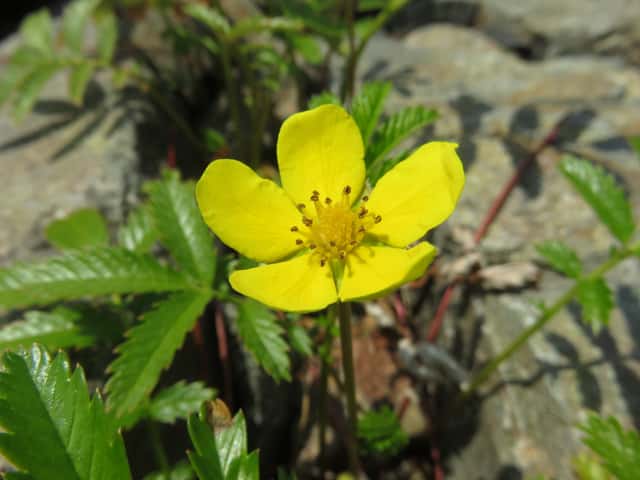
Argentina anserina, commonly known as silverweed, is a perennial herbaceous plant belonging to the Rosaceae family. It grows at low altitudes, forming low-growing mats thanks to creeping red stolons that can reach up to 80 cm in length. The pinnate leaves, 10–20 cm long, are covered with a dense, silvery silky down that gives the plant its characteristic shimmering appearance. In summer, it produces bright yellow five-petaled flowers about 2 cm in diameter on erect stems of 5–15 cm. It spreads rapidly in moist, sandy, or clay soils, often colonizing meadows, roadsides, and coastal areas.
How to Propagate Silverweed?
How Big Does Silverweed Grow?
TLDR: Silverweed can reach up to 20cm tall with Fast growth rate.
Max height
20cm
Spread
90cm
Growth rate
Fast
Foliage
Deciduous
Plant Uses
Edible
Can be consumed
Medicinal
Medicinal properties
Ground Cover
Soil coverage
Medicinal Uses
- Anti-inflammatory
- Antispasmodic
- Astringent
- Diuretic
- Tonic
- Soothing for digestive disorders and diarrhea
Culinary Uses
- Roots are consumed cooked like parsnips or sweet potatoes
- Young leaves are used in salads or soups
- Herbal tea made with dried leaves for digestion
- Roots can be roasted or boiled
Is your plant showing symptoms?
Click on the symptom to discover possible causes:
What Diseases Commonly Affect Silverweed?
TLDR: Silverweed is susceptible to 10 known diseases. Monitor regularly for early detection.
Root Rot
Root rot is a serious fungal disease that affects the root system of plants, causing them to decay and die. It is primarily caused by overwatering, poor drainage, or soil-borne fungi such as Pythium, Phytophthora, Rhizoctonia, and Fusarium. The disease thrives in waterlogged conditions where roots are deprived of oxygen, making them susceptible to fungal infection.
Powdery Mildew
Powdery mildew is a common fungal disease caused by various fungi species including Erysiphe, Podosphaera, Oïdium, and Leveillula. It affects over 10,000 plant species worldwide. The disease thrives in warm, dry climates with high humidity and appears as a distinctive white powdery coating on plant surfaces.
Downy Mildew
Downy mildew is a fungal-like disease caused by oomycetes (water molds) that thrives in cool, wet conditions. It affects a wide range of plants, causing yellowing leaves with fuzzy white-gray growth underneath, leading to defoliation and reduced yields if left untreated.
Rust
Rust is a common fungal disease caused by fungi in the order Pucciniales that affects a wide variety of plants. The disease gets its name from the characteristic orange, yellow, or reddish-brown pustules that appear on leaves, resembling metal rust. This obligate fungal parasite requires living plants to survive and can cause significant economic losses in agricultural crops.
Meaning & Symbolism
The name anserina comes from the Latin 'anser' (goose), as geese are particularly attracted to this herb. In some Christian traditions, it is called 'Footsteps of the Lord' due to the marks left by fallen petals on the ground. In France, it was called 'richette,' a symbol of wealth through the silver and gold colors present in the plant.
Compare with similar plants
| Attribute | Difficulty | Light | Watering | Pet Safe |
|---|---|---|---|---|
| Field Maple | Easy | Bright indirect | 14d | ✓ |
| Silver Birch | Easy | Direct sun | 14d | ✓ |
| Cushion Bush | Easy | Direct sun | 14d | ✓ |
| Peruvian peppertree | Easy | Direct sun | 14d | ⚠️ |