Gesneriaceae
Hot Water Plant: Fast Growing
Achimenes grandiflora
Grow in bright, indirect light and keep the soil evenly moist with lukewarm water throughout the growing season, letting it dry out and rest almost completely once the foliage dies back in autumn. Provide high humidity without wetting the leaves, warmth around 15-26°C, and a light, well-draining, slightly acidic mix to keep the delicate rhizomes from rotting.
Every 3 days
Partial shade
15° - 26°C
60% - 90%
Categories
What is Hot Water Plant?
Hot Water Plant (Achimenes grandiflora) is a medium-care plant from the Gesneriaceae family. Achimenes grandiflora is a tender, rhizomatous perennial in the Gesneriaceae family, native to the mountainous regions of Mexico and Central America. Known as the "hot water plant" for its dislike of cold irrigation, it is the largest-flowered species in its genus, producing velvety, deep reddish-pu...
Hot Water Plant grows up to 60cm, spread of 20cm, watering every 3 days, 15°C – 26°C, 60–90% humidity. It is suitable for indoor environments and safe for pets.
Unlike many popular species, Hot Water Plant is safe to keep around pets. Without adequate drainage, root rot can develop within 7 days.
How to Care for Hot Water Plant?
TLDR: Hot Water Plant needs Partial shade, watering every 3 days, and temperatures between 15-26°C with 60-90% humidity.
How Often Should You Water Hot Water Plant?
Water generously with tepid or lukewarm water whenever the topsoil starts to feel dry during active growth, but never let the pot sit in water — soggy soil quickly rots the rhizomes. Stop watering almost entirely once the leaves yellow and die back in fall, keeping the dormant rhizomes just barely damp until spring.
How Much Light Does Hot Water Plant Need?
Give bright, filtered light such as an east- or west-facing window; a little gentle morning sun encourages flowering, but shield the plant from intense midday sun, which scorches its thin leaves.
What Is the Best Soil for Hot Water Plant?
Pot in a light, fast-draining mix — equal parts peat-free potting soil, coarse sand or perlite, and organic matter (an African-violet mix works well) — with a slightly acidic to neutral pH, so excess water drains away from the shallow rhizomes.
What Pot Should You Use for Hot Water Plant?
Use a wide, shallow pot or bulb pan rather than a deep container — Achimenes rhizomes spread horizontally near the surface, and a shallow, well-draining pot keeps the root zone from staying wet.
Care Schedule
Fertilize
Every 14 days
Rotate
Every 7 days
Repot
Every 365 days
What Is Hot Water Plant and Where Does It Come From?
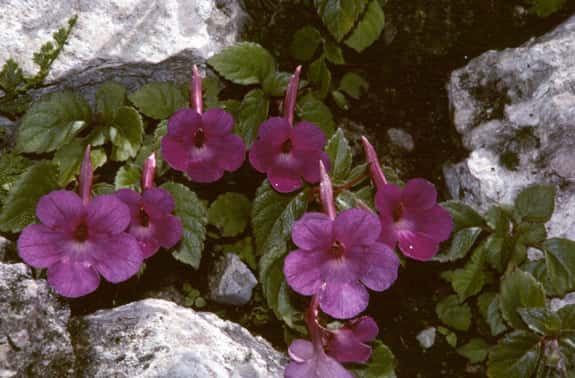
Achimenes grandiflora is a tender, rhizomatous perennial in the Gesneriaceae family, native to the mountainous regions of Mexico and Central America. Known as the "hot water plant" for its dislike of cold irrigation, it is the largest-flowered species in its genus, producing velvety, deep reddish-purple to carmine-pink blooms with a contrasting white throat above dark green, hairy foliage with purplish-red undersides. Multiple upright, slightly hairy stems arise each spring from small scaly rhizomes, flowering profusely from summer into fall before dying back to dormancy in winter.
How to Propagate Hot Water Plant?
Rhizome Division
- Handle rhizomes gently — they snap easily.
- Do not overwater before shoots emerge or the rhizomes may rot.
- 1 Divide
In spring, separate the small scaly rhizomes that formed at the base of the previous season's plant.
- 2 Disinfect
Briefly soak the rhizomes in a weak potassium permanganate solution to reduce the risk of fungal rot.
- 3 Plant
Lay rhizomes horizontally about 2 in (5 cm) apart and cover with 1 in (2.5 cm) of light potting mix.
- 4 Sprout
Keep lightly moist and warm (around 21-24°C) until new shoots appear, then resume regular watering.
Materials needed:
Stem Cuttings
- Take cuttings from healthy, non-flowering stems for best results.
- 1 Cut
In early summer, take a 3 in (8 cm) stem-tip cutting, cutting just below a leaf node.
- 2 Root
Insert the cutting into a light, moist rooting medium and keep warm and humid.
- 3 Transplant
Once roots form in 2-3 weeks, pot up the young plant into its own container.
Materials needed:
How Big Does Hot Water Plant Grow?
TLDR: Hot Water Plant can reach up to 60cm tall with Fast growth rate.
Max height
60cm
Spread
20cm
Growth rate
Fast
Foliage
Deciduous
Plant Uses
Ornamental
Great for decoration
Is your plant showing symptoms?
Click on the symptom to discover possible causes:
What Diseases Commonly Affect Hot Water Plant?
TLDR: Hot Water Plant is susceptible to 8 known diseases. Monitor regularly for early detection.
Root Rot
Root rot is a serious fungal disease that affects the root system of plants, causing them to decay and die. It is primarily caused by overwatering, poor drainage, or soil-borne fungi such as Pythium, Phytophthora, Rhizoctonia, and Fusarium. The disease thrives in waterlogged conditions where roots are deprived of oxygen, making them susceptible to fungal infection.
Crown Rot
Crown rot is a serious fungal disease that attacks the crown (base) of the plant where the stem meets the soil. It is caused by various fungal pathogens including Phytophthora, Fusarium, and Rhizoctonia. The disease thrives in waterlogged conditions and can quickly spread to kill the entire plant if not addressed promptly.
Leaf Spot
Leaf spot is a common fungal disease caused by various pathogens including Alternaria, Ascochyta, Colletotrichum, Septoria, and Venturia. It primarily affects leaves, causing discolored spots that can lead to premature leaf drop if left untreated.
Spider Mites
Spider mites are tiny arachnids (less than 1/20 inch long) related to spiders and ticks that feed on plant sap. They thrive in hot, dry conditions and can cause significant damage to ornamental and vegetable plants. During severe infestations, crop losses can reach 14% or higher as these pests disrupt vital plant processes including photosynthesis, carbon dioxide absorption, and transpiration.
Meaning & Symbolism
With common names like "Mother's Tears" and "Widow's Tears", Achimenes has long been associated with quiet remembrance and heartfelt emotion, while its nickname "Magic Flower" reflects the almost startling speed with which dormant rhizomes burst into a profusion of bloom each summer.
Compare with similar plants
| Attribute | Difficulty | Light | Watering | Pet Safe |
|---|---|---|---|---|
| Dark Fieldcap | Medium | Low light | 2d | ⚠️ |
| Azalea | Medium | Partial shade | 3d | ⚠️ |
| Muriel's Bamboo | Medium | Partial shade | 3d | ✓ |
| Bougainvillea | Medium | Direct sun | 7d | ⚠️ |




