Gesneriaceae
African violet: Perfect Indoor Houseplant
Streptocarpus sect. Saintpaulia
Thrives in bright, indirect light with consistent warmth, moderate humidity, and careful bottom-watering; avoid wetting the leaves to prevent spotting and rot.
Every 7 days
Partial shade
18° - 24°C
40% - 60%
Categories
What is African violet?
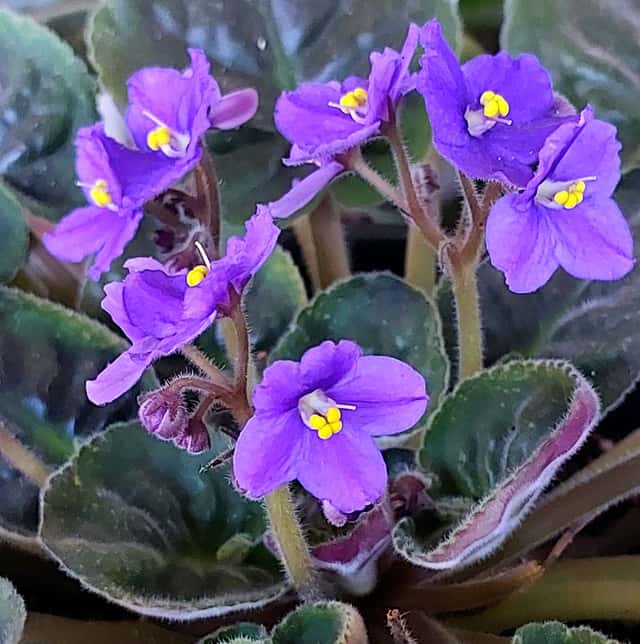
African violet (Streptocarpus sect. Saintpaulia) is a medium-care plant from the Gesneriaceae family. African violet (Streptocarpus sect. Saintpaulia, formerly genus Saintpaulia) is a compact, rosette-forming perennial from the Gesneriaceae family, native to the Eastern Arc Mountains and coastal forests of Tanzania and Kenya. Prized for its fuzzy, deep-green leaves and near-continuous clusters of pu...
African violet grows up to 15cm, spread of 30cm, watering every 7 days, 18°C – 24°C, 40–60% humidity. It is suitable for indoor environments and safe for pets.
Unlike many popular species, African violet is safe to keep around pets. Without adequate drainage, root rot can develop within 14 days.
How to Care for African violet?
TLDR: African violet needs Partial shade, watering every 7 days, and temperatures between 18-24°C with 40-60% humidity.
How Often Should You Water African violet?
Water from the bottom or at the soil line with room-temperature water when the top inch of soil is dry; never let water sit on the fuzzy leaves.
How Much Light Does African violet Need?
Place in bright, indirect light (an east or north-facing window) - direct sun scorches the leaves, while too little light stops flowering.
What Is the Best Soil for African violet?
Use a light, peat-based, well-draining African violet mix; avoid heavy or compacted soil that retains excess moisture around the crown.
Care Schedule
Fertilize
Every 14 days
Rotate
Every 7 days
Repot
Every 365 days
What Is African violet and Where Does It Come From?
African violet (Streptocarpus sect. Saintpaulia, formerly genus Saintpaulia) is a compact, rosette-forming perennial from the Gesneriaceae family, native to the Eastern Arc Mountains and coastal forests of Tanzania and Kenya. Prized for its fuzzy, deep-green leaves and near-continuous clusters of purple, pink, blue, or white flowers, it is one of the most popular flowering houseplants worldwide.
How Big Does African violet Grow?
TLDR: African violet can reach up to 15cm tall with Slow growth rate.
Max height
15cm
Spread
30cm
Growth rate
Slow
Foliage
Evergreen
Plant Uses
Ornamental
Great for decoration
Is your plant showing symptoms?
Click on the symptom to discover possible causes:
What Diseases Commonly Affect African violet?
TLDR: African violet is susceptible to 9 known diseases. Monitor regularly for early detection.
Powdery Mildew
Powdery mildew is a common fungal disease caused by various fungi species including Erysiphe, Podosphaera, Oïdium, and Leveillula. It affects over 10,000 plant species worldwide. The disease thrives in warm, dry climates with high humidity and appears as a distinctive white powdery coating on plant surfaces.
Root Rot
Root rot is a serious fungal disease that affects the root system of plants, causing them to decay and die. It is primarily caused by overwatering, poor drainage, or soil-borne fungi such as Pythium, Phytophthora, Rhizoctonia, and Fusarium. The disease thrives in waterlogged conditions where roots are deprived of oxygen, making them susceptible to fungal infection.
Gray Mold (Botrytis Blight)
Gray mold, caused by the fungus Botrytis cinerea, is one of the most common fungal diseases in plants. It affects over 200 plant species, including ornamentals, vegetables, fruits, and houseplants. The disease thrives in cool, humid conditions with poor air circulation, causing grayish spots and soft rot on infected tissues.
Leaf Spot
Leaf spot is a common fungal disease caused by various pathogens including Alternaria, Ascochyta, Colletotrichum, Septoria, and Venturia. It primarily affects leaves, causing discolored spots that can lead to premature leaf drop if left untreated.
Meaning & Symbolism
Symbol of faithfulness, devotion, and small but enduring beauty.
Compare with similar plants
| Attribute | Difficulty | Light | Watering | Pet Safe |
|---|---|---|---|---|
| Dark Fieldcap | Medium | Low light | 2d | ⚠️ |
| Azalea | Medium | Partial shade | 3d | ⚠️ |
| Muriel's Bamboo | Medium | Partial shade | 3d | ✓ |
| Bougainvillea | Medium | Direct sun | 7d | ⚠️ |




