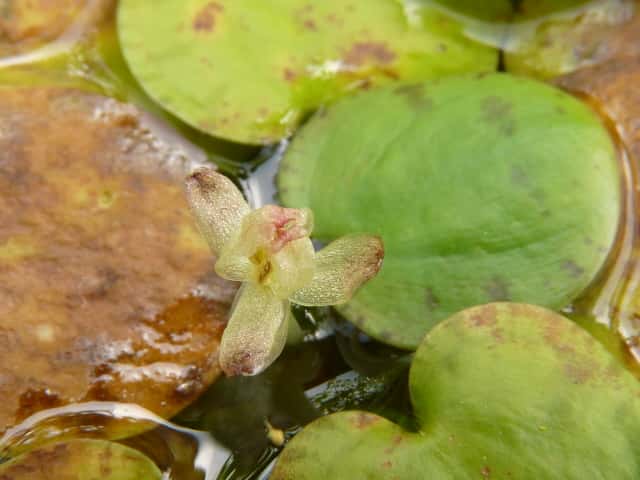
Hydrocharitaceae
Amazon frogbit: Fast Growing
Limnobium laevigatum
One of the easiest floating plants to maintain: it requires strong light and nutrient-rich water. The leaves must remain dry—if the upper surface is constantly exposed to water (even under a humid, closed aquarium lid), the plant may rot or 'melt'.
Every 1 days
Bright indirect
18° - 30°C
60% - 90%
Categories
What is Amazon frogbit?
Amazon frogbit (Limnobium laevigatum) is a easy-care plant from the Hydrocharitaceae family. Limnobium laevigatum, commonly known as South American or Amazon frogbit, is a fast-growing floating aquatic plant native to Central and South America. Its round, glossy, slightly fleshy leaves float in rosettes on the water's surface, while long, feathery roots hang below, providing shelter for fis...
Amazon frogbit grows up to 5cm, spread of 50cm, watering every 1 days, 18°C – 30°C, 60–90% humidity. It is suitable for indoor environments and safe for pets.
Unlike many tropical plants, Amazon frogbit tolerates watering mistakes. Best for beginners. Unlike many popular species, Amazon frogbit is safe to keep around pets. Without adequate drainage, root rot can develop within 7 days.
How to Care for Amazon frogbit?
TLDR: Amazon frogbit needs Bright indirect, watering every 1 days, and temperatures between 18-30°C with 60-90% humidity.
How Often Should You Water Amazon frogbit?
As an aquatic plant, it lives continuously on water; avoid strong water currents hitting the leaves and splashing from the filter, as a wet leaf surface can trigger rot.
How Much Light Does Amazon frogbit Need?
Requires medium to strong lighting. Under strong light, it grows faster, developing larger leaves and denser roots; if the leaves remain small or turn yellow, increase the light intensity.
What Is the Best Soil for Amazon frogbit?
Does not require a planting medium—it absorbs nutrients directly from the water through its roots. In nutrient-poor water, liquid aquarium fertilizer (e.g., iron, nitrogen) supports healthy growth.
What Pot Should You Use for Amazon frogbit?
Open-top aquarium or garden pond with a calm water surface; leave a gap between the lid and the water for ventilation to keep the leaves dry.
Care Schedule
Fertilize
Every 14 days
What Is Amazon frogbit and Where Does It Come From?
Limnobium laevigatum, commonly known as South American or Amazon frogbit, is a fast-growing floating aquatic plant native to Central and South America. Its round, glossy, slightly fleshy leaves float in rosettes on the water's surface, while long, feathery roots hang below, providing shelter for fish fry and purifying the water by absorbing excess nutrients.
How to Propagate Amazon frogbit?
Propagation via runners
- Use liquid aquarium fertilizer to encourage faster growth.
- 1 Identify runners
Wait for the mother plant to grow long runners where small daughter plants appear.
- 2 Separation
Once the small plant has developed its own roots, cut the connecting runner with sharp scissors.
- 3 Placement
Place the new plant on the water surface in a calmer area.
Materials needed:
How Big Does Amazon frogbit Grow?
TLDR: Amazon frogbit can reach up to 5cm tall with Fast growth rate.
Max height
5cm
Spread
50cm
Growth rate
Fast
Foliage
Evergreen
Plant Uses
Ornamental
Great for decoration
Air Purifying
Improves air quality
Is your plant showing symptoms?
Click on the symptom to discover possible causes:
What Diseases Commonly Affect Amazon frogbit?
TLDR: Amazon frogbit is susceptible to 6 known diseases. Monitor regularly for early detection.
Root Rot
Root rot is a serious fungal disease that affects the root system of plants, causing them to decay and die. It is primarily caused by overwatering, poor drainage, or soil-borne fungi such as Pythium, Phytophthora, Rhizoctonia, and Fusarium. The disease thrives in waterlogged conditions where roots are deprived of oxygen, making them susceptible to fungal infection.
Aphids
Aphids are small, soft-bodied, pear-shaped insects (1/16 to 1/8 inch long) that feed by sucking nutrient-rich sap from plants. They reproduce rapidly and can quickly weaken plants, causing distorted growth and transmitting plant viruses. Aphids come in various colors including green, black, red, yellow, brown, and gray. They secrete honeydew, a sticky substance that attracts ants and encourages sooty mold growth.
Spider Mites
Spider mites are tiny arachnids (less than 1/20 inch long) related to spiders and ticks that feed on plant sap. They thrive in hot, dry conditions and can cause significant damage to ornamental and vegetable plants. During severe infestations, crop losses can reach 14% or higher as these pests disrupt vital plant processes including photosynthesis, carbon dioxide absorption, and transpiration.
Slugs and Snails
Slugs and snails are mollusks that feed on plant tissue, causing irregular holes in leaves and damage to young seedlings. They are most active at night and in moist conditions, leaving characteristic silvery slime trails. These pests can quickly devastate gardens, especially during wet seasons.
Meaning & Symbolism
A symbol of clean water and a balanced aquatic ecosystem.
Compare with similar plants
| Attribute | Difficulty | Light | Watering | Pet Safe |
|---|---|---|---|---|
| Field Maple | Easy | Bright indirect | 14d | ✓ |
| Silver Birch | Easy | Direct sun | 14d | ✓ |
| Common Blanketflower | Easy | Direct sun | 10d | ✓ |
| Cushion Bush | Easy | Direct sun | 14d | ✓ |





