Platanaceae
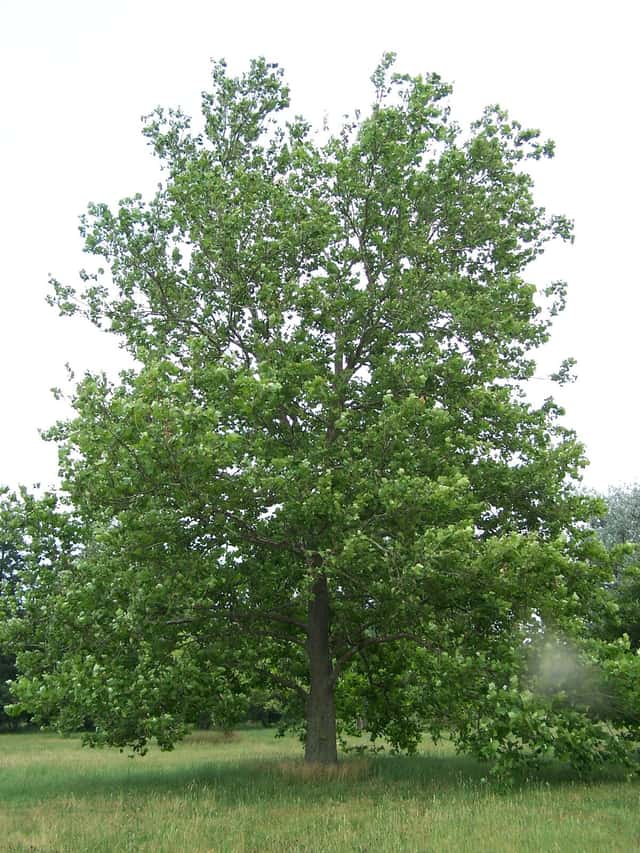
American Sycamore (Platanus occidentalis) Care Guide
Platanus occidentalis
A fast-growing shade tree for large landscapes, parks and streets. Needs full sun and deep, moist, well-drained soil. Prune only in late winter dormancy to remove dead or crossing branches. Highly susceptible to anthracnose in cool, wet springs, so plant in a site with good air circulation.
Every 7 days
Direct sun
° - °C
% - %
Categories
What is American Sycamore?
American Sycamore (Platanus occidentalis) is a medium-care plant from the Platanaceae family. The American sycamore is one of the largest native hardwood trees in eastern North America, commonly reaching 75-100 ft (23-30 m) tall with a broad, spreading crown. It is best known for its distinctive exfoliating bark, which sheds in irregular gray-brown plates to reveal smooth, creamy-white inner...
American Sycamore grows up to 30.0m, spread of 2000cm, watering every 7 days. It is not suitable for indoor environments and safe for pets.
Unlike many popular species, American Sycamore is safe to keep around pets.
How to Care for American Sycamore?
TLDR: American Sycamore needs Direct sun, watering every 7 days, and temperatures between 15-30°C with 40-70% humidity.
How Often Should You Water American Sycamore?
Water deeply 2-3 times a week while young or newly transplanted; established trees generally only need supplemental water during extended drought. Reduce watering in fall and winter as the tree goes dormant.
How Much Light Does American Sycamore Need?
Requires full sun (6+ hours of direct light daily); does not perform well in shade.
What Is the Best Soil for American Sycamore?
Prefers deep, rich, moist, well-drained soil but tolerates clay, sand, and both acidic and alkaline pH once established.
What Is American Sycamore and Where Does It Come From?
The American sycamore is one of the largest native hardwood trees in eastern North America, commonly reaching 75-100 ft (23-30 m) tall with a broad, spreading crown. It is best known for its distinctive exfoliating bark, which sheds in irregular gray-brown plates to reveal smooth, creamy-white inner bark. Native to riverbanks, floodplains and bottomlands, it tolerates wet soils as well as periods of drought once established. Small monoecious flowers appear in early spring (green male clusters, burgundy-red female clusters), followed by distinctive ball-shaped seed heads that persist through winter.
How to Propagate American Sycamore?
Seed propagation
Germination rates are often low; sow extra seed to compensate. Transplant seedlings outdoors once they have several true leaves and danger of frost has passed.
- 1 Collect ball-shaped seed heads in late fall or winter
- 2 Break apart the seed head and separate the fluffy achenes
- 3 Cold-stratify seeds in moist sand in the refrigerator for 60-90 days
- 4 Sow stratified seeds in seed trays with moist potting mix in early spring
- 5 Keep soil consistently moist until germination and seedling establishment
Materials needed:
Hardwood cutting
Hardwood cuttings root more reliably than softwood for this species. Protect cuttings from freezing temperatures during rooting.
- 1 Take 8-12 inch hardwood cuttings from dormant one-year-old wood in late winter
- 2 Dip the cut end in rooting hormone
- 3 Insert cuttings two-thirds deep into moist, well-drained rooting medium
- 4 Keep medium consistently moist and in a sheltered, partly shaded spot
- 5 Transplant once a healthy root system has developed in spring
Materials needed:
How Big Does American Sycamore Grow?
TLDR: American Sycamore can reach up to 30.0m tall with Fast growth rate.
Max height
30.0m
Spread
20.0m
Growth rate
Fast
Foliage
Deciduous
Plant Uses
Ornamental
Great for decoration
Air Purifying
Improves air quality
Is your plant showing symptoms?
Click on the symptom to discover possible causes:
What Diseases Commonly Affect American Sycamore?
TLDR: American Sycamore is susceptible to 7 known diseases. Monitor regularly for early detection.
Anthracnose
Anthracnose is a fungal disease caused by fungi in the genus Colletotrichum that affects many plants, including vegetables, fruits, and trees. The disease thrives in cool, wet conditions, causing dark, sunken lesions on leaves, stems, flowers, and fruits.
Leaf Spot
Leaf spot is a common fungal disease caused by various pathogens including Alternaria, Ascochyta, Colletotrichum, Septoria, and Venturia. It primarily affects leaves, causing discolored spots that can lead to premature leaf drop if left untreated.
Powdery Mildew
Powdery mildew is a common fungal disease caused by various fungi species including Erysiphe, Podosphaera, Oïdium, and Leveillula. It affects over 10,000 plant species worldwide. The disease thrives in warm, dry climates with high humidity and appears as a distinctive white powdery coating on plant surfaces.
Canker
Canker is a disease caused by various fungi and bacteria that create necrotic, sunken areas on bark of branches, stems, and trunks. Pathogens enter through wounds and natural openings, especially when plants are stressed. Canker can gradually weaken or kill branches by disrupting water and nutrient flow.
Meaning & Symbolism
A symbol of strength, protection, longevity, and resilience in North American and European folklore. In U.S. history, a sycamore on Wall Street was the site of the 1792 Buttonwood Agreement that founded the New York Stock Exchange.
Fun Facts
Can live 500-600 years and is among the longest-lived hardwoods in North America.
Its hollow trunk provides den sites for raccoons, opossums, and wood ducks.
The Buttonball Tree in Sunderland, Massachusetts, one of the largest American sycamores on record, stands about 113 ft tall.
Native Americans carved dugout canoes from sycamore trunks, and early settlers used hollow trunks as temporary shelters.
Frequently asked questions
How big does an American sycamore get?
Is American sycamore toxic to pets?
Why does sycamore bark peel?
What is the biggest disease threat to sycamores?
Can American sycamore tolerate wet soil?
Compare with similar plants
| Attribute | Difficulty | Light | Watering | Pet Safe |
|---|---|---|---|---|
| Dark Fieldcap | Medium | Low light | 2d | ⚠️ |
| Azalea | Medium | Partial shade | 3d | ⚠️ |
| Muriel's Bamboo | Medium | Partial shade | 3d | ✓ |
| Bougainvillea | Medium | Direct sun | 7d | ⚠️ |




