Ericaceae
American Wintergreen: Ground Cover Plant
Gaultheria procumbens
American Wintergreen thrives in partial shade on acidic, peaty, humus-rich, well-drained soil and requires consistent moisture without waterlogging. As a typical bog garden inhabitant, it does not tolerate lime-heavy soil or harsh midday sun. Once established, it is very hardy down to -4°F (-20°C) and easy to care for; pruning is only necessary every two to three years.
Every 4 days
Partial shade
-20° - 24°C
50% - 80%
Categories
What is American Wintergreen?
American Wintergreen (Gaultheria procumbens) is a medium-care plant from the Ericaceae family. American Wintergreen (Gaultheria procumbens) is an evergreen, creeping dwarf shrub from the heath family (Ericaceae), native to the open woodlands of eastern North America. It forms dense groundcover mats only about 4-8 inches high, consisting of leathery, dark green leaves that often turn a reddish...
American Wintergreen grows up to 20cm, spread of 60cm, watering every 4 days, -20°C – 24°C, 50–80% humidity. It is not suitable for indoor environments and not safe for pets.
Without precautions, ingestion can cause irritation in pets. Keep out of reach of cats and dogs.
How to Care for American Wintergreen?
TLDR: American Wintergreen needs Partial shade, watering every 4 days, and temperatures between -20-24°C with 50-80% humidity.
How Often Should You Water American Wintergreen?
Keep the soil consistently slightly moist, but strictly avoid waterlogging—both drought and excessive wetness harm the plant. Use only lime-free water (rainwater) and pour directly onto the substrate, not over the foliage.
How Much Light Does American Wintergreen Need?
Partial shade to light shade is ideal, such as under loose woodland cover. Harsh midday sun should be avoided as it burns the foliage and dries out the plant; in light shade, the soil also remains cooler and moister.
What Is the Best Soil for American Wintergreen?
Acidic, peaty, and humus-rich soil with a pH of 4.5-5.5 is crucial—it is best to use special rhododendron or azalea soil or mix regular garden soil generously with unfertilized peat or acidic bark humus. Lime-heavy or waterlogged locations are not tolerated.
What Pot Should You Use for American Wintergreen?
A wide, shallow pot with good drainage holes is best, filled with acidic bog or rhododendron substrate. Unglazed clay pots help release excess moisture and prevent waterlogging.
Care Schedule
Fertilize
Every 90 days
What Is American Wintergreen and Where Does It Come From?
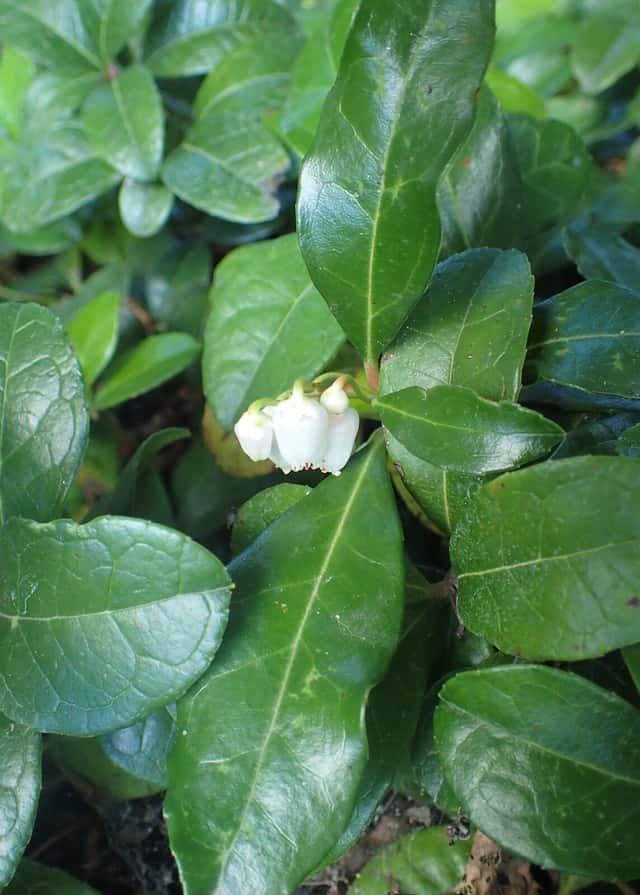
American Wintergreen (Gaultheria procumbens) is an evergreen, creeping dwarf shrub from the heath family (Ericaceae), native to the open woodlands of eastern North America. It forms dense groundcover mats only about 4-8 inches high, consisting of leathery, dark green leaves that often turn a reddish-bronze color in winter. From May to September, small, bell-shaped white-to-pink flowers appear, developing into bright red berries that often remain on the shrub well into winter. The leaves and fruit have an unmistakable scent and taste of wintergreen—giving the plant its name—and it was historically a major source of essential wintergreen oil (methyl salicylate).
How to Propagate American Wintergreen?
Cuttings
- Constant moisture and high humidity promote rooting
- Patience is required as Ericaceae root slowly
- 1 Take the cutting
In fall, cut a semi-hardwood shoot about 3-4 inches long.
- 2 Preparation
Remove lower leaves and dip the cut end into rooting hormone.
- 3 Planting
Insert into acidic, moist substrate and cultivate in a protected, bright spot without direct sun.
Materials needed:
Division / Layering
- Easiest and most reliable method since the plant grows naturally via rhizomes
- 1 Expose runners
In spring, carefully expose rooted runners from the creeping mat.
- 2 Separate
Detach from the mother plant with a portion of the root system.
- 3 Replant
Immediately place in acidic, moist substrate and water in.
Materials needed:
Sowing
- Very slow and uneven germination
- Vegetative propagation is significantly more reliable
- 1 Collect seeds
Wash seeds out of ripe red fruits.
- 2 Cold stratification
Seeds require a cold period to break dormancy—allow them to overwinter outdoors.
- 3 Sowing
Sow on the surface of moist, acidic substrate as they require light to germinate.
Materials needed:
How Big Does American Wintergreen Grow?
TLDR: American Wintergreen can reach up to 20cm tall with Slow growth rate.
Max height
20cm
Spread
60cm
Growth rate
Slow
Foliage
Evergreen
Warning: Toxic Plant
This plant can be toxic if ingested. Keep out of reach of:
Plant Uses
Ornamental
Great for decoration
Ground Cover
Soil coverage
Aromatic
Pleasant fragrance
Medicinal
Medicinal properties
Edible
Can be consumed
Medicinal Uses
- Traditionally used leaf tea for mild pain and cold symptoms (contains methyl salicylate, acting similarly to acetylsalicylic acid)
- Essential wintergreen oil used externally in rubs and ointments for muscle and joint pain
- Historical use by indigenous peoples of North America for rheumatic complaints and fever
- Important: the pure essential oil is highly toxic if ingested even in small amounts (a few ml) and must not be used on young children
Culinary Uses
- Snack on ripe red berries raw or process them into jam, jelly, and desserts (enjoy only in small quantities)
- Brew young leaves for an aromatic wintergreen tea
- Historical wintergreen flavoring for chewing gum, candy, and toothpaste
Is your plant showing symptoms?
Click on the symptom to discover possible causes:
What Diseases Commonly Affect American Wintergreen?
TLDR: American Wintergreen is susceptible to 7 known diseases. Monitor regularly for early detection.
Root Rot
Root rot is a serious fungal disease that affects the root system of plants, causing them to decay and die. It is primarily caused by overwatering, poor drainage, or soil-borne fungi such as Pythium, Phytophthora, Rhizoctonia, and Fusarium. The disease thrives in waterlogged conditions where roots are deprived of oxygen, making them susceptible to fungal infection.
Phytophthora Root Rot
Disease caused by fungus-like organisms (oomycetes) that live in soil and can survive for years. It affects roots, stem, and crown of plants, being especially severe in waterlogged or poorly drained soils. It is the second most common cause of root rot in trees and shrubs.
Powdery Mildew
Powdery mildew is a common fungal disease caused by various fungi species including Erysiphe, Podosphaera, Oïdium, and Leveillula. It affects over 10,000 plant species worldwide. The disease thrives in warm, dry climates with high humidity and appears as a distinctive white powdery coating on plant surfaces.
Leaf Spot
Leaf spot is a common fungal disease caused by various pathogens including Alternaria, Ascochyta, Colletotrichum, Septoria, and Venturia. It primarily affects leaves, causing discolored spots that can lead to premature leaf drop if left untreated.
Meaning & Symbolism
As an evergreen shrub with bright red winter berries that survives even severe frost, American Wintergreen is regarded in North American folklore as a symbol of endurance, resilience, and quiet life force during the cold season.
Compare with similar plants
| Attribute | Difficulty | Light | Watering | Pet Safe |
|---|---|---|---|---|
| Dark Fieldcap | Medium | Low light | 2d | ⚠️ |
| Azalea | Medium | Partial shade | 3d | ⚠️ |
| Muriel's Bamboo | Medium | Partial shade | 3d | ✓ |
| Bougainvillea | Medium | Direct sun | 7d | ⚠️ |
Choose & Compare
Sources & References
- Scheinbeere: Standort, Pflanzen & Pflege der Gaultheria - Plantura
- Gaultheria procumbens - NC State Extension Plant Toolbox
- Niedere Scheinbeere / Gaultheria procumbens - NaturaDB
- Wintergrün - Aromatherapie
- Scheinbeeren: Giftig oder ungefährlich?
- American Wintergreen Care 101 - toxicity to dogs
- Growing Wintergreen (Gaultheria procumbens)




