Asteraceae
Angel Wings Senecio (Senecio candidans)
Senecio candidans
Easy if you have sun: very free-draining soil, water only when dry, and light feeding during the growing season. It takes light frosts down to about -12 °C; in colder winters bring it indoors to a very bright window. The biggest risk is overwatering.
Every 10 days
Bright indirect
-12° - °C
% - %
Categories
What is Angel Wings Senecio?
Angel Wings Senecio (Senecio candidans) is a easy-care plant from the Asteraceae family. Senecio candidans, sold in gardening as Senecio candicans 'Angel Wings', is a perennial in the daisy family (Asteraceae), native to sandy beaches and rocks in southern Chile, southern Argentina and the Falkland Islands. It forms rosettes 25 to 40 cm tall of large, heart-shaped, toothed, thick, velve...
Angel Wings Senecio grows up to 40cm, spread of 40cm, watering every 10 days. It is suitable for indoor environments and not safe for pets.
Unlike many tropical plants, Angel Wings Senecio tolerates watering mistakes. Best for beginners. Without precautions, ingestion can cause irritation in pets. Keep out of reach of cats and dogs. Without adequate drainage, root rot can develop within 20 days.
How to Care for Angel Wings Senecio?
TLDR: Angel Wings Senecio needs Bright indirect, watering every 10 days, and temperatures between -12-30°C with 40-70% humidity.
How Often Should You Water Angel Wings Senecio?
Water about every 10 days, only when the soil is dry. Water less often in winter. Avoid wetting the velvety leaves and never leave water in the saucer.
How Much Light Does Angel Wings Senecio Need?
Full sun keeps the leaves whitest and the plant compact. It tolerates part shade but turns greener and leggier.
What Is the Best Soil for Angel Wings Senecio?
Sandy soil or succulent mix with coarse sand. Heavy soil that stays wet in cold weather rots the roots.
What Pot Should You Use for Angel Wings Senecio?
A 20-30 cm terracotta pot with drainage that dries quickly. Repot once a year or when the plant doubles in size.
Care Schedule
Fertilize
Every 30 days
Repot
Every 365 days
What Is Angel Wings Senecio and Where Does It Come From?
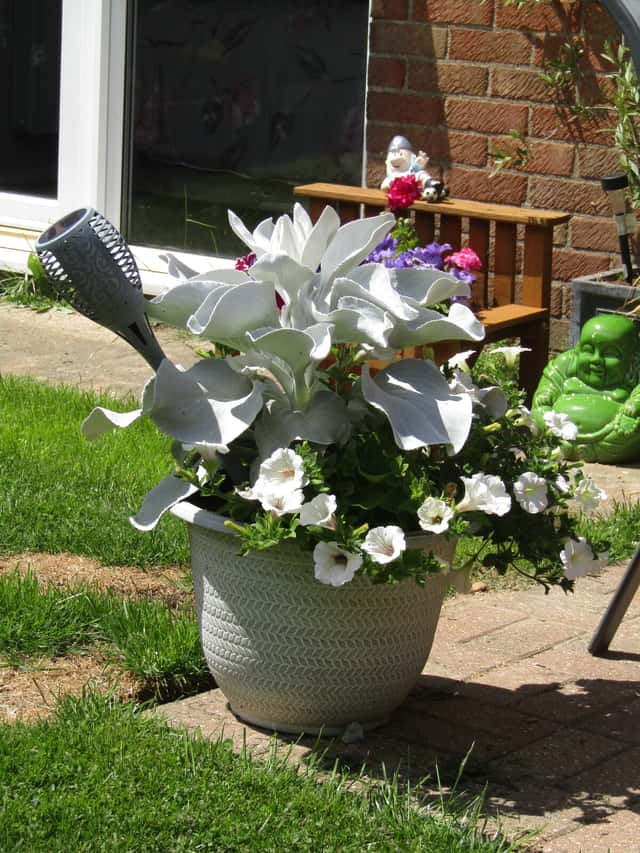
Senecio candidans, sold in gardening as Senecio candicans 'Angel Wings', is a perennial in the daisy family (Asteraceae), native to sandy beaches and rocks in southern Chile, southern Argentina and the Falkland Islands. It forms rosettes 25 to 40 cm tall of large, heart-shaped, toothed, thick, velvety leaves in a silvery white that shines in the sun. In summer it may produce clusters of small yellow flowers of little ornamental value. It tolerates drought, wind and salt spray.
How to Propagate Angel Wings Senecio?
Stem cutting
Take cuttings in early spring or autumn. Too much water rots them, so water sparingly.
- 1 Cut a healthy 8-10 cm shoot with a clean knife
- 2 Strip the lower leaves and let the cut dry for a day
- 3 Plant in slightly moist, gritty mix
- 4 Keep in bright light out of harsh sun until rooted
Materials needed:
Division
The quickest way to get a good-sized new plant.
- 1 Unpot the plant
- 2 Separate side rosettes with their roots
- 3 Replant each piece in well-draining mix
- 4 Water lightly and keep in part shade for a few days
Materials needed:
How Big Does Angel Wings Senecio Grow?
TLDR: Angel Wings Senecio can reach up to 40cm tall with Fast growth rate.
Max height
40cm
Spread
40cm
Growth rate
Fast
Foliage
Evergreen
Warning: Toxic Plant
This plant can be toxic if ingested. Keep out of reach of:
Plant Uses
Ornamental
Great for decoration
Is your plant showing symptoms?
Click on the symptom to discover possible causes:
What Diseases Commonly Affect Angel Wings Senecio?
TLDR: Angel Wings Senecio is susceptible to 5 known diseases. Monitor regularly for early detection.
Root Rot
Root rot is a serious fungal disease that affects the root system of plants, causing them to decay and die. It is primarily caused by overwatering, poor drainage, or soil-borne fungi such as Pythium, Phytophthora, Rhizoctonia, and Fusarium. The disease thrives in waterlogged conditions where roots are deprived of oxygen, making them susceptible to fungal infection.
Overwatering
Overwatering occurs when plants receive too much water, depriving roots of oxygen and causing root rot. This environmental stress is one of the most common causes of houseplant death, as waterlogged soil prevents roots from breathing and functioning properly.
Spider Mites
Spider mites are tiny arachnids (less than 1/20 inch long) related to spiders and ticks that feed on plant sap. They thrive in hot, dry conditions and can cause significant damage to ornamental and vegetable plants. During severe infestations, crop losses can reach 14% or higher as these pests disrupt vital plant processes including photosynthesis, carbon dioxide absorption, and transpiration.
Aphids
Aphids are small, soft-bodied, pear-shaped insects (1/16 to 1/8 inch long) that feed by sucking nutrient-rich sap from plants. They reproduce rapidly and can quickly weaken plants, causing distorted growth and transmitting plant viruses. Aphids come in various colors including green, black, red, yellow, brown, and gray. They secrete honeydew, a sticky substance that attracts ants and encourages sooty mold growth.
Fun Facts
In the Falkland Islands it grows on sandy beaches just above the tide line
The leaves are covered in fine hairs that give them a silver felt look
The Angel Wings cultivar was released in 2017
Frequently asked questions
Are Senecio candicans and Senecio candidans the same plant?
Is Angel Wings toxic to cats and dogs?
Can it grow indoors?
Why are the leaves soft and dark at the base?
Compare with similar plants
| Attribute | Difficulty | Light | Watering | Pet Safe |
|---|---|---|---|---|
| Field Maple | Easy | Bright indirect | 14d | ✓ |
| Iberian Houseleek | Easy | Direct sun | 14d | ✓ |
| Silver Birch | Easy | Direct sun | 14d | ✓ |
| Common Blanketflower | Easy | Direct sun | 10d | ✓ |





