Lamiaceae
Anise-Scented Sage: The Ultimate Growing & Care Guide
Salvia guaranitica
Easy to grow, anise-scented sage thrives in full sun to part shade with rich, well-draining soil. It appreciates regular watering during active growth and becomes drought-tolerant once established. Light pruning after flowering encourages new shoots and extends the bloom season.
Every 7 days
Bright indirect
10° - 32°C
40% - 60%
Categories
What is Anise-Scented Sage?
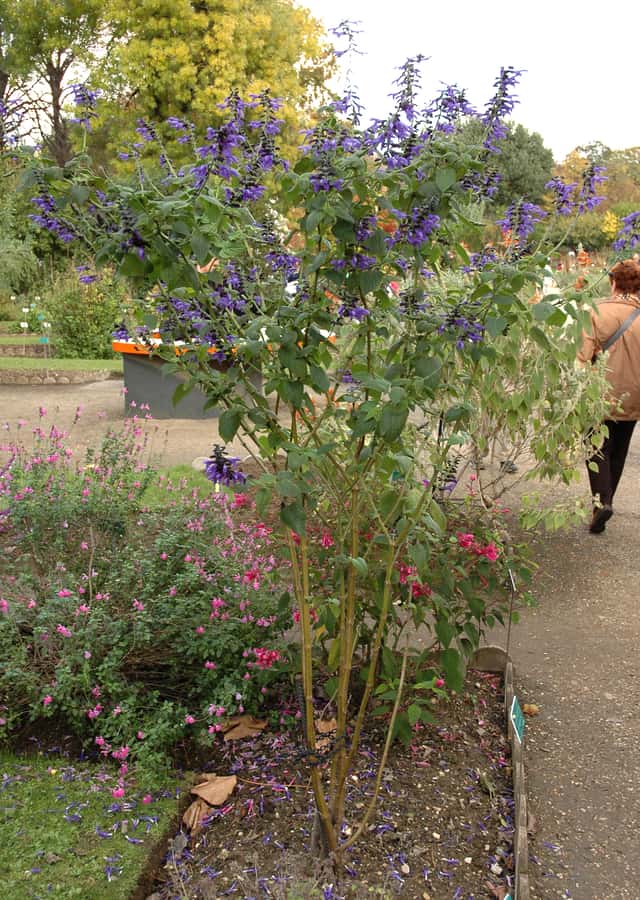
Anise-Scented Sage (Salvia guaranitica) is a easy-care plant from the Lamiaceae family. Salvia guaranitica, commonly known as anise-scented sage or hummingbird sage, is a bushy herbaceous perennial native to Brazil, Paraguay, Uruguay, and Argentina, belonging to the Lamiaceae family. Its fresh mint-green, ovate leaves release a soft anise scent when crushed, and its upright stems bear...
Anise-Scented Sage grows up to 1.5m, spread of 120cm, watering every 7 days, 10°C – 32°C, 40–60% humidity. It is not suitable for indoor environments and safe for pets.
Unlike many tropical plants, Anise-Scented Sage tolerates watering mistakes. Best for beginners. Unlike many popular species, Anise-Scented Sage is safe to keep around pets.
How to Care for Anise-Scented Sage?
TLDR: Anise-Scented Sage needs Bright indirect, watering every 7 days, and temperatures between 10-32°C with 40-60% humidity.
How Often Should You Water Anise-Scented Sage?
Water deeply once a week, increasing to twice a week during hot, dry weather. Let the top couple of inches of soil dry out between waterings and avoid wetting the foliage to prevent fungal issues.
How Much Light Does Anise-Scented Sage Need?
Prefers full sun (6+ hours of direct light) but tolerates partial shade in very hot climates, especially during the most intense afternoon hours.
What Is the Best Soil for Anise-Scented Sage?
Use soil rich in organic matter, evenly moist, and well-draining. Waterlogged soil promotes root rot.
What Pot Should You Use for Anise-Scented Sage?
Terracotta or ceramic pots with generous drainage holes, at least 12-16 inches in diameter, allowing room for root growth and good air circulation.
Care Schedule
Fertilize
Every 30 days
What Is Anise-Scented Sage and Where Does It Come From?
Salvia guaranitica, commonly known as anise-scented sage or hummingbird sage, is a bushy herbaceous perennial native to Brazil, Paraguay, Uruguay, and Argentina, belonging to the Lamiaceae family. Its fresh mint-green, ovate leaves release a soft anise scent when crushed, and its upright stems bear spikes of deep blue tubular flowers (with dark calyces in the 'Black and Blue' cultivar) from summer into fall. It is a favorite of hummingbirds and butterflies in warm-climate gardens.
How to Propagate Anise-Scented Sage?
Stem Cutting
Use clean, sharp shears; rooting hormone is optional but speeds things up. Keep the medium lightly moist, never soggy.
- 1 Cut a healthy 4-6 inch stem from current-season growth, just below a leaf node
- 2 Strip the leaves from the lower half of the cutting
- 3 Plant in a light mix of perlite and peat, keeping it consistently moist
- 4 Keep in bright indirect light with high humidity until roots form
Materials needed:
Division
Only divide established plants at least 2 years old. Avoid dividing during bloom.
- 1 Carefully dig up the clump in early spring
- 2 Separate the root ball into sections, each with roots and shoots
- 3 Replant immediately in rich, well-draining soil
- 4 Water thoroughly after planting
Materials needed:
Seed
Germination can be uneven; be patient. Seed-grown plants may vary slightly from the parent.
- 1 Wait for flower heads to dry and turn brown before harvesting seeds
- 2 Sow about 1/4 inch deep in a well-draining seed-starting mix
- 3 Maintain 70-75°F (21-24°C) with bright indirect light
- 4 Transplant seedlings once they have 2-3 sets of true leaves
Materials needed:
How Big Does Anise-Scented Sage Grow?
TLDR: Anise-Scented Sage can reach up to 1.5m tall with Fast growth rate.
Max height
1.5m
Spread
1.2m
Growth rate
Fast
Foliage
Deciduous
Plant Uses
Ornamental
Great for decoration
Aromatic
Pleasant fragrance
Medicinal
Medicinal properties
Medicinal Uses
- Traditionally used by the Guaraní people as a mild sedative
- Leaf infusion popularly used to help ease anxiety
Culinary Uses
- Fresh leaves occasionally used to flavor teas and beverages, imparting a light anise flavor
Is your plant showing symptoms?
Click on the symptom to discover possible causes:
What Diseases Commonly Affect Anise-Scented Sage?
TLDR: Anise-Scented Sage is susceptible to 6 known diseases. Monitor regularly for early detection.
Powdery Mildew
Powdery mildew is a common fungal disease caused by various fungi species including Erysiphe, Podosphaera, Oïdium, and Leveillula. It affects over 10,000 plant species worldwide. The disease thrives in warm, dry climates with high humidity and appears as a distinctive white powdery coating on plant surfaces.
Root Rot
Root rot is a serious fungal disease that affects the root system of plants, causing them to decay and die. It is primarily caused by overwatering, poor drainage, or soil-borne fungi such as Pythium, Phytophthora, Rhizoctonia, and Fusarium. The disease thrives in waterlogged conditions where roots are deprived of oxygen, making them susceptible to fungal infection.
Downy Mildew
Downy mildew is a fungal-like disease caused by oomycetes (water molds) that thrives in cool, wet conditions. It affects a wide range of plants, causing yellowing leaves with fuzzy white-gray growth underneath, leading to defoliation and reduced yields if left untreated.
Whiteflies
Whiteflies are small, soft-bodied, winged insects closely related to aphids and mealybugs. They are moth-like in appearance, about 1/16 inch long, triangular in shape, and gray-white in color. These sap-sucking pests feed on plant tissue, causing yellowing, stunted growth, and wilting. They also excrete honeydew, which attracts ants and promotes sooty mold growth. Whiteflies can transmit serious plant viruses.
Meaning & Symbolism
Associated with healing and protection, salvia carries the meaning of its own Latin root 'salvere' (to heal, to save). In the garden it symbolizes vitality and draws positive energy through the hummingbirds it attracts.
Fun Facts
The name 'guaranitica' honors the Guaraní people, who used its leaves as a mild sedative
The leaves release an anise scent when crushed
It is one of the most effective plants for attracting hummingbirds to a garden
Frequently asked questions
Does anise-scented sage need full sun?
How often should I water anise-scented sage?
Is anise-scented sage toxic to cats and dogs?
How do you propagate anise-scented sage?
Compare with similar plants
| Attribute | Difficulty | Light | Watering | Pet Safe |
|---|---|---|---|---|
| Field Maple | Easy | Bright indirect | 14d | ✓ |
| Silver Birch | Easy | Direct sun | 14d | ✓ |
| Common Blanketflower | Easy | Direct sun | 10d | ✓ |
| Cushion Bush | Easy | Direct sun | 14d | ✓ |





