Asteraceae
Annual Ragweed (Ambrosia artemisiifolia)
Ambrosia artemisiifolia
Not a plant to grow: it comes up on its own in crop fields, roadsides, pastures and vacant lots. If it appears on your land, pull it before it flowers, wearing gloves, since contact can irritate the skin and the pollen triggers allergies. Keeping soil covered with mulch or other plants cuts down germination.
Every 7 days
Direct sun
° - °C
% - %
Categories
What is Annual ragweed?
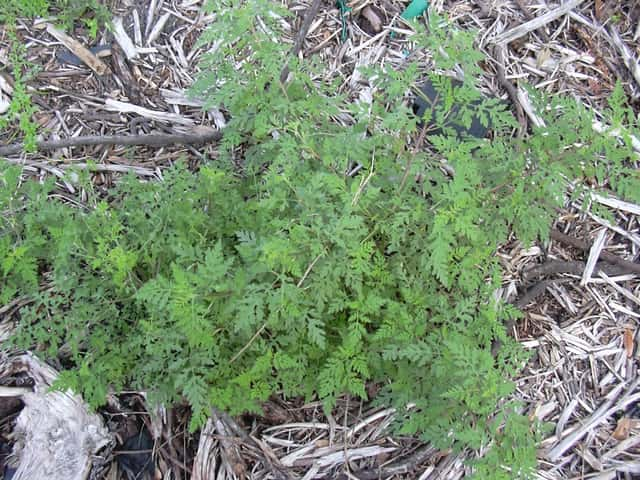
Annual ragweed (Ambrosia artemisiifolia) is a easy-care plant from the Asteraceae family. Annual ragweed (Ambrosia artemisiifolia) is an annual herb in the daisy family (Asteraceae), native to North and South America. It grows upright and heavily branched, usually 30 to 90 cm tall and sometimes up to 1.8 m. The leaves are green on both sides, deeply divided and softly hairy, 3 to 12 cm l...
Annual ragweed grows up to 1.8m, spread of 120cm, watering every 7 days. It is not suitable for indoor environments and safe for pets.
Unlike many tropical plants, Annual ragweed tolerates watering mistakes. Best for beginners. Unlike many popular species, Annual ragweed is safe to keep around pets.
How to Care for Annual ragweed?
TLDR: Annual ragweed needs Direct sun, watering every 7 days, and temperatures between 15-30°C with 40-70% humidity.
How Often Should You Water Annual ragweed?
No watering needed: it lives on rainfall and handles dry spells well. Watering only helps it grow and shed more pollen.
How Much Light Does Annual ragweed Need?
Prefers full sun, 6 or more hours a day, but also grows in part shade.
What Is the Best Soil for Annual ragweed?
Grows in almost any well-drained soil: clay, sand, shallow or rocky ground. It is most common on disturbed soil.
What Pot Should You Use for Annual ragweed?
Not recommended for containers: the pollen causes allergies and the plant spreads by seed.
What Is Annual ragweed and Where Does It Come From?
Annual ragweed (Ambrosia artemisiifolia) is an annual herb in the daisy family (Asteraceae), native to North and South America. It grows upright and heavily branched, usually 30 to 90 cm tall and sometimes up to 1.8 m. The leaves are green on both sides, deeply divided and softly hairy, 3 to 12 cm long. From summer to fall it carries slender spikes of tiny green-yellow male flowers above female flowers tucked in the leaf axils. The male flowers release huge amounts of wind-blown pollen, one of the strongest plant allergens known and the main cause of late-summer hay fever in North America. It has become invasive across Europe, Asia, Africa and Australia. The small oily seeds feed songbirds and game birds through winter and can stay viable in the soil for years.
How to Propagate Annual ragweed?
Seed
Seed is its only way to spread and the reason it is so invasive. Do not propagate it. To control it, pull plants before flowering, keep soil covered and clean machinery and tools so seeds are not carried elsewhere.
- 1 In fall each plant sets many brown fruits 2 to 4 mm long, each holding one seed.
- 2 Seeds drop to the soil and can wait up to 5 years to germinate.
- 3 Seedlings come up as soil warms in late spring, mostly where soil has been disturbed.
- 4 The plant grows fast, flowers from summer to fall and dies with frost.
Materials needed:
How Big Does Annual ragweed Grow?
TLDR: Annual ragweed can reach up to 1.8m tall with Fast growth rate.
Max height
1.8m
Spread
1.2m
Growth rate
Fast
Warning: Toxic Plant
This plant can be toxic if ingested. Keep out of reach of:
Is your plant showing symptoms?
Click on the symptom to discover possible causes:
What Diseases Commonly Affect Annual ragweed?
TLDR: Annual ragweed is susceptible to 2 known diseases. Monitor regularly for early detection.
Downy Mildew
Downy mildew is a fungal-like disease caused by oomycetes (water molds) that thrives in cool, wet conditions. It affects a wide range of plants, causing yellowing leaves with fuzzy white-gray growth underneath, leading to defoliation and reduced yields if left untreated.
Rust
Rust is a common fungal disease caused by fungi in the order Pucciniales that affects a wide variety of plants. The disease gets its name from the characteristic orange, yellow, or reddish-brown pustules that appear on leaves, resembling metal rust. This obligate fungal parasite requires living plants to survive and can cause significant economic losses in agricultural crops.
Fun Facts
Ragweed pollen is the main cause of late-summer hay fever in North America.
Its oily seeds are a winter food for songbirds and game birds.
The plant has been used to pull lead out of contaminated soil.
Frequently asked questions
Does annual ragweed cause allergies?
How do I tell ragweed from mugwort?
How do I get rid of ragweed?
How long do ragweed seeds last in the soil?
Compare with similar plants
| Attribute | Difficulty | Light | Watering | Pet Safe |
|---|---|---|---|---|
| Field Maple | Easy | Bright indirect | 14d | ✓ |
| Iberian Houseleek | Easy | Direct sun | 14d | ✓ |
| Silver Birch | Easy | Direct sun | 14d | ✓ |
| Common Blanketflower | Easy | Direct sun | 10d | ✓ |
Choose & Compare
Sources & References
- Wikipedia - Ambrosia artemisiifolia
- NC State Extension Gardener Plant Toolbox - Common Ragweed
- Revista Cultivar - Ambrosia artemisiifolia (cravorana)
- UFPR - Cravorana (Ambrosia artemisiifolia), planta daninha
- US Botanic Garden - Ambrosía común (science page, ES)
- AGRIS - Study on an Ambrosia isolate of Plasmopara halstedii





