Pinaceae
Atlas cedar: Aromatic Plant
Cedrus atlantica
The Atlas cedar is a sun-loving ornamental tree that requires well-drained soil. Once established, it is extremely drought-tolerant and requires little maintenance, but it develops poorly in wet, compacted soil or shade.
Every 14 days
Direct sun
-20° - 40°C
% - %
Categories
What is Atlas cedar?
Atlas cedar (Cedrus atlantica) is a medium-care plant from the Pinaceae family. The Atlas cedar (Cedrus atlantica) is a large, evergreen coniferous tree belonging to the pine family (Pinaceae), native to the Atlas Mountains of North Africa and the Rif Mountains, as well as the Tell Atlas region of Algeria. In its youth, it develops a regular conical crown, but as it matures, it...
Atlas cedar grows up to 35.0m, spread of 1000cm, watering every 14 days, -20°C – 40°C. It is not suitable for indoor environments and safe for pets.
Unlike many popular species, Atlas cedar is safe to keep around pets.
How to Care for Atlas cedar?
TLDR: Atlas cedar needs Direct sun, watering every 14 days, and temperatures between -20-40°C with 40-70% humidity.
How Often Should You Water Atlas cedar?
Water regularly and deeply during the first 1-2 years after planting to ensure the root system is well-established; after this, the tree is considered established and generally does not require additional watering under normal rainfall conditions, except during prolonged droughts.
How Much Light Does Atlas cedar Need?
A tree that requires full sun, so it should be planted in a location where it receives at least 6 hours of direct sunlight daily; it only tolerates partial shade in its youth.
What Is the Best Soil for Atlas cedar?
Choose deep, well-drained soil—it tolerates sandy, loamy, or even slightly calcareous soils well, but specifically avoid heavy, waterlogged, or peaty soils, as these predispose the tree to root rot.
What Pot Should You Use for Atlas cedar?
The Atlas cedar is fundamentally not a potted plant but an outdoor ornamental tree; due to its deep taproot, it is not suitable for long-term container cultivation. Young specimens can be grown for a few years in large, well-ventilated, frost-proof containers (and dwarf varieties can be kept as bonsai), but they should be transplanted to their final location in open ground at a young age if possible.
What Is Atlas cedar and Where Does It Come From?
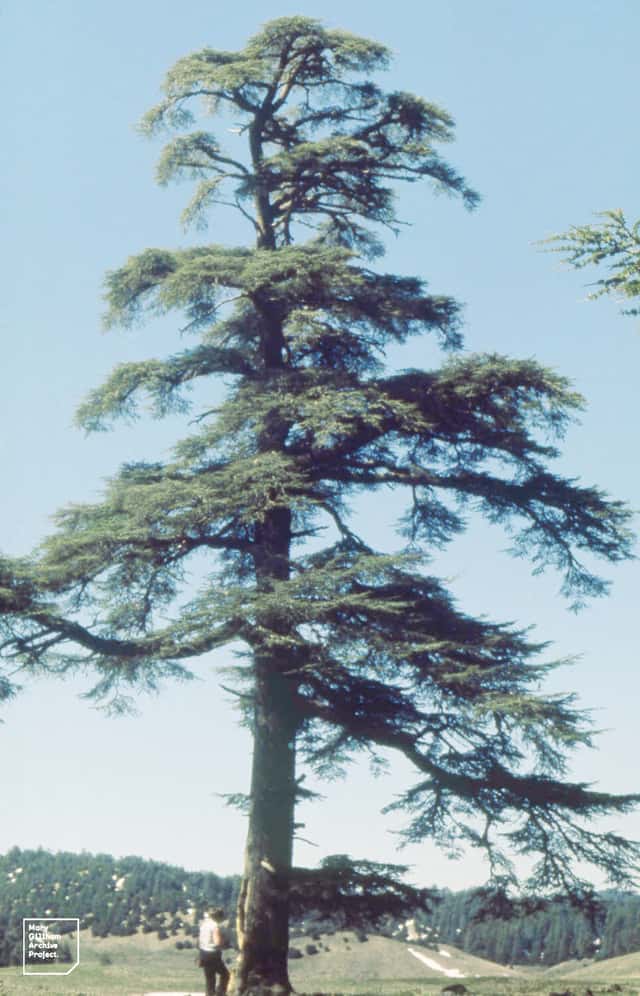
The Atlas cedar (Cedrus atlantica) is a large, evergreen coniferous tree belonging to the pine family (Pinaceae), native to the Atlas Mountains of North Africa and the Rif Mountains, as well as the Tell Atlas region of Algeria. In its youth, it develops a regular conical crown, but as it matures, it flattens out with spreading, horizontal, or drooping branches. Its grayish-green, short needles sit in clusters on short shoots and are scattered on long shoots, while its upright, barrel-shaped cones turn from greenish-blue to a shiny brown over 2-3 years. In its native habitat, it can grow up to 30-40 meters tall, making it one of the largest coniferous species.
How Big Does Atlas cedar Grow?
TLDR: Atlas cedar can reach up to 35.0m tall with Medium growth rate.
Max height
35.0m
Spread
10.0m
Growth rate
Medium
Foliage
Evergreen
Plant Uses
Ornamental
Great for decoration
Aromatic
Pleasant fragrance
Medicinal Uses
- Essential oil distilled from cedar wood (cedarwood oil) has been used for centuries in traditional medicine and aromatherapy as a calming, stress-relieving agent
- Due to its antimicrobial and anti-inflammatory effects, it is traditionally used for skin care and to strengthen hair follicles
- In folk practice, it is inhaled via a diffuser to alleviate respiratory complaints and improve concentration
Is your plant showing symptoms?
Click on the symptom to discover possible causes:
What Diseases Commonly Affect Atlas cedar?
TLDR: Atlas cedar is susceptible to 6 known diseases. Monitor regularly for early detection.
Phytophthora Root Rot
Disease caused by fungus-like organisms (oomycetes) that live in soil and can survive for years. It affects roots, stem, and crown of plants, being especially severe in waterlogged or poorly drained soils. It is the second most common cause of root rot in trees and shrubs.
Aphids
Aphids are small, soft-bodied, pear-shaped insects (1/16 to 1/8 inch long) that feed by sucking nutrient-rich sap from plants. They reproduce rapidly and can quickly weaken plants, causing distorted growth and transmitting plant viruses. Aphids come in various colors including green, black, red, yellow, brown, and gray. They secrete honeydew, a sticky substance that attracts ants and encourages sooty mold growth.
Sooty Mold
Sooty mold is a fungal disease that develops on surfaces coated with honeydew, a sticky sweet substance secreted by sap-sucking insects like aphids, scale insects, and whiteflies. While it does not directly infect plant tissue, it reduces photosynthetic capacity by blocking sunlight and diminishes the plant's aesthetic appearance.
Scale Insects
Scale insects are small sap-sucking pests that appear as brown, shell-like bumps on plant stems and leaves. There are over 25 species, divided into armored (hard) and unarmored (soft) scales. They feed by piercing plant tissue and extracting sap, which weakens the plant and can lead to yellowing, stunted growth, and even death if left untreated. They also excrete honeydew, which attracts ants and promotes sooty mold growth.
Meaning & Symbolism
For thousands of years, the cedar tree has been a symbol of strength, dignity, and immortality; in the Bible, the Cedar of Lebanon is the 'glory of Lebanon,' a symbol of power and divine blessing, and its timber was used in the construction of Solomon's Temple. As a related species, the Atlas cedar shares this symbolism: due to its durable wood and imposing, long-lived stature, it is still planted in parks today as a symbol of endurance and monumentality.
Compare with similar plants
| Attribute | Difficulty | Light | Watering | Pet Safe |
|---|---|---|---|---|
| Dark Fieldcap | Medium | Low light | 2d | ⚠️ |
| Azalea | Medium | Partial shade | 3d | ⚠️ |
| Muriel's Bamboo | Medium | Partial shade | 3d | ✓ |
| Bougainvillea | Medium | Direct sun | 7d | ⚠️ |




