Brassicaceae
Aubrieta: Ground Cover Plant
Aubrieta deltoidea
Aubrieta is a low-maintenance and hardy perennial that thrives best in full sun and well-drained, preferably calcareous soil. Water sparingly—the plant is drought-tolerant once established and is far more sensitive to wet, heavy soil than to drought. Cut the plant back hard after flowering to keep it compact and promote renewed growth.
Every 10 days
Bright indirect
-20° - 30°C
30% - 60%
Categories
What is Aubrieta?
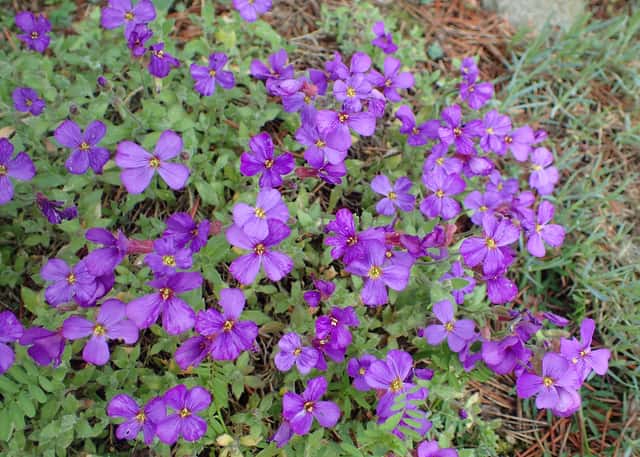
Aubrieta (Aubrieta deltoidea) is a easy-care plant from the Brassicaceae family. Aubrieta is an evergreen, mat-forming perennial from the mustard family, originally native to Southeast Europe (including Greece, Bulgaria, and the Balkans). The plant forms dense, gray-green cushions of small, spatulate to egg-shaped leaves and is smothered in spring and early summer by numerous vi...
Aubrieta grows up to 15cm, spread of 60cm, watering every 10 days, -20°C – 30°C, 30–60% humidity. It is not suitable for indoor environments and safe for pets.
Unlike many tropical plants, Aubrieta tolerates watering mistakes. Best for beginners. Unlike many popular species, Aubrieta is safe to keep around pets.
How to Care for Aubrieta?
TLDR: Aubrieta needs Bright indirect, watering every 10 days, and temperatures between -20-30°C with 30-60% humidity.
How Often Should You Water Aubrieta?
Allow the soil to dry out almost completely between waterings. Newly planted specimens should be kept evenly moist during their first season, but avoid letting the soil become waterlogged—overwatering is the most common cause of root rot in Aubrieta.
How Much Light Does Aubrieta Need?
Choose a sunny spot—preferably south- or west-facing—for the most vigorous flowering. Aubrieta tolerates light shade, but will flower more sparsely in such conditions.
What Is the Best Soil for Aubrieta?
Use well-drained, preferably sandy or gravel-mixed soil with a neutral to slightly alkaline (calcareous) pH. Heavy, moisture-retaining clay soil should be avoided or improved with gravel/sand before planting, as the plant easily rots in wet soil environments.
What Pot Should You Use for Aubrieta?
Best suited for low, wide pots or bowls with ample drainage holes, preferably filled with a gravel-mixed, well-drained soil—mimicking the conditions of a rock garden. Avoid deep pots, as the plant has a shallow root system and does not like having 'wet feet'.
Care Schedule
Fertilize
Every 21 days
What Is Aubrieta and Where Does It Come From?
Aubrieta is an evergreen, mat-forming perennial from the mustard family, originally native to Southeast Europe (including Greece, Bulgaria, and the Balkans). The plant forms dense, gray-green cushions of small, spatulate to egg-shaped leaves and is smothered in spring and early summer by numerous violet, purple, pink, or white four-petaled flowers. It is widely used as a groundcover in rock gardens, on walls, and on slopes, where it tolerates drought and poor soil better than most perennials.
How Big Does Aubrieta Grow?
TLDR: Aubrieta can reach up to 15cm tall with Medium growth rate.
Max height
15cm
Spread
60cm
Growth rate
Medium
Foliage
Evergreen
Plant Uses
Ornamental
Great for decoration
Ground Cover
Soil coverage
Is your plant showing symptoms?
Click on the symptom to discover possible causes:
What Diseases Commonly Affect Aubrieta?
TLDR: Aubrieta is susceptible to 9 known diseases. Monitor regularly for early detection.
Powdery Mildew
Powdery mildew is a common fungal disease caused by various fungi species including Erysiphe, Podosphaera, Oïdium, and Leveillula. It affects over 10,000 plant species worldwide. The disease thrives in warm, dry climates with high humidity and appears as a distinctive white powdery coating on plant surfaces.
Root Rot
Root rot is a serious fungal disease that affects the root system of plants, causing them to decay and die. It is primarily caused by overwatering, poor drainage, or soil-borne fungi such as Pythium, Phytophthora, Rhizoctonia, and Fusarium. The disease thrives in waterlogged conditions where roots are deprived of oxygen, making them susceptible to fungal infection.
Downy Mildew
Downy mildew is a fungal-like disease caused by oomycetes (water molds) that thrives in cool, wet conditions. It affects a wide range of plants, causing yellowing leaves with fuzzy white-gray growth underneath, leading to defoliation and reduced yields if left untreated.
Rust
Rust is a common fungal disease caused by fungi in the order Pucciniales that affects a wide variety of plants. The disease gets its name from the characteristic orange, yellow, or reddish-brown pustules that appear on leaves, resembling metal rust. This obligate fungal parasite requires living plants to survive and can cause significant economic losses in agricultural crops.
Meaning & Symbolism
Aubrieta is often associated with endurance and frugality—a low-growing plant that finds a foothold in crevices and on lean slopes, yet unfolds into a sea of color in the spring. It symbolizes the joy of simplicity and the ability to bloom under meager conditions.
Compare with similar plants
| Attribute | Difficulty | Light | Watering | Pet Safe |
|---|---|---|---|---|
| Field Maple | Easy | Bright indirect | 14d | ✓ |
| Silver Birch | Easy | Direct sun | 14d | ✓ |
| Common Blanketflower | Easy | Direct sun | 10d | ✓ |
| Cushion Bush | Easy | Direct sun | 14d | ✓ |
Choose & Compare
Sources & References
- Aubrieta deltoidea - PFAF Plant Database
- Aubrieta deltoidea Blue Kisses - RHS Plants
- Aubrieta deltoidea - Wikipedia
- Care Of Aubrieta Groundcover - Gardening Know How
- Aubretia Plant Care and Growing Basics - PlantIn
- Purple Rockcress Is Not Toxic To Dogs - Greg
- Aubrietia deltoidea Blaapude - Jyllands Froehandel





