Oleaceae
Azores Jasmine: Complete Growing Guide
Jasminum azoricum
Grow in bright light to full sun with regular watering, letting the soil dry slightly between waterings, in rich, well-draining soil, and protect from hard frost.
Every 6 days
Bright indirect
5° - 32°C
50% - 70%
Categories
What is Azores Jasmine?
Azores Jasmine (Jasminum azoricum) is a medium-care plant from the Oleaceae family. Azores jasmine (Jasminum azoricum) is an evergreen climbing shrub in the olive family (Oleaceae), prized for its fragrant white flowers with a subtle citrus scent that bloom from spring through fall. With woody stems at the base and trailing, semi-woody growth above, it can reach 2.5 to 6 meters in...
Azores Jasmine grows up to 6.0m, spread of 100cm, watering every 6 days, 5°C – 32°C, 50–70% humidity. It is suitable for indoor environments and safe for pets.
Unlike many popular species, Azores Jasmine is safe to keep around pets. Without adequate drainage, root rot can develop within 12 days.
How to Care for Azores Jasmine?
TLDR: Azores Jasmine needs Bright indirect, watering every 6 days, and temperatures between 5-32°C with 50-70% humidity.
How Often Should You Water Azores Jasmine?
Water every 3-4 days during spring and summer, tapering off to weekly or less in fall and winter. Let the topsoil dry out between waterings to prevent root rot.
How Much Light Does Azores Jasmine Need?
Provide bright light to full sun; it tolerates partial shade as long as it gets a few hours of direct sun daily.
What Is the Best Soil for Azores Jasmine?
Use a fertile, well-draining mix rich in organic matter, slightly acidic to neutral; avoid compacted clay soils that retain excess moisture.
What Pot Should You Use for Azores Jasmine?
A terracotta or ceramic pot with good drainage and room for a trellis or support, since this is a climbing plant.
Care Schedule
Fertilize
Every 18 days
What Is Azores Jasmine and Where Does It Come From?
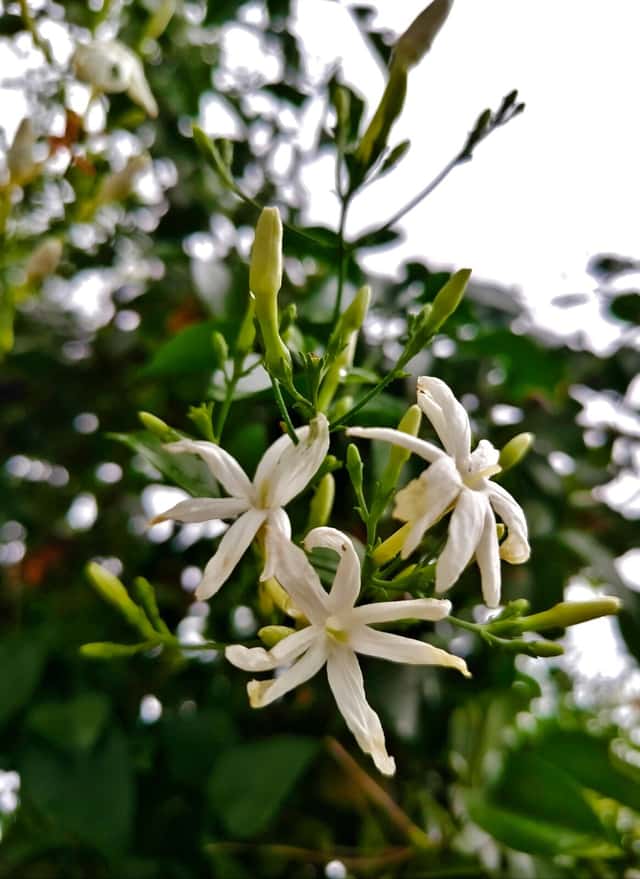
Azores jasmine (Jasminum azoricum) is an evergreen climbing shrub in the olive family (Oleaceae), prized for its fragrant white flowers with a subtle citrus scent that bloom from spring through fall. With woody stems at the base and trailing, semi-woody growth above, it can reach 2.5 to 6 meters in height when given support to climb. Its glossy, dark green trifoliate leaves keep the plant attractive year-round.
How to Propagate Azores Jasmine?
Semi-hardwood cutting
Maintain high humidity around the cutting and avoid direct sun until roots form.
- 1 Take a 15 cm semi-hardwood cutting in late summer or spring
- 2 Remove leaves from the lower half of the cutting
- 3 Dip the cut end in rooting hormone
- 4 Plant in a light potting mix and keep moist in a shaded spot
Materials needed:
How Big Does Azores Jasmine Grow?
TLDR: Azores Jasmine can reach up to 6.0m tall with Medium growth rate.
Max height
6.0m
Spread
1.0m
Growth rate
Medium
Foliage
Evergreen
Plant Uses
Ornamental
Great for decoration
Aromatic
Pleasant fragrance
Is your plant showing symptoms?
Click on the symptom to discover possible causes:
What Diseases Commonly Affect Azores Jasmine?
TLDR: Azores Jasmine is susceptible to 6 known diseases. Monitor regularly for early detection.
Mealybugs
Mealybugs are small, soft-bodied insects covered with a white, waxy, cottony material. They are common pests of houseplants and outdoor plants in mild climates. These sap-sucking insects feed on plant tissue, causing damage, stunted growth, and can lead to plant death if left untreated. They produce sticky honeydew which attracts sooty mold.
Aphids
Aphids are small, soft-bodied, pear-shaped insects (1/16 to 1/8 inch long) that feed by sucking nutrient-rich sap from plants. They reproduce rapidly and can quickly weaken plants, causing distorted growth and transmitting plant viruses. Aphids come in various colors including green, black, red, yellow, brown, and gray. They secrete honeydew, a sticky substance that attracts ants and encourages sooty mold growth.
Scale Insects
Scale insects are small sap-sucking pests that appear as brown, shell-like bumps on plant stems and leaves. There are over 25 species, divided into armored (hard) and unarmored (soft) scales. They feed by piercing plant tissue and extracting sap, which weakens the plant and can lead to yellowing, stunted growth, and even death if left untreated. They also excrete honeydew, which attracts ants and promotes sooty mold growth.
Root Rot
Root rot is a serious fungal disease that affects the root system of plants, causing them to decay and die. It is primarily caused by overwatering, poor drainage, or soil-borne fungi such as Pythium, Phytophthora, Rhizoctonia, and Fusarium. The disease thrives in waterlogged conditions where roots are deprived of oxygen, making them susceptible to fungal infection.
Meaning & Symbolism
Symbolizes purity, love, and sweetness; its intensely fragrant white flowers are associated with warm summer evenings in Mediterranean-style gardens.
Fun Facts
Despite its name, several sources suggest the species is actually native to Madeira rather than the Azores.
Its flowers carry a subtle lemony fragrance, earning it the nickname lemon-scented jasmine.
It is a vigorous evergreen climber that can exceed 5 meters in height when given proper support.
Frequently asked questions
Is Azores jasmine toxic to cats and dogs?
How often should I water Azores jasmine?
What soil does Azores jasmine need?
When does Azores jasmine bloom?
How do you propagate Azores jasmine?
Compare with similar plants
| Attribute | Difficulty | Light | Watering | Pet Safe |
|---|---|---|---|---|
| Dark Fieldcap | Medium | Low light | 2d | ⚠️ |
| Azalea | Medium | Partial shade | 3d | ⚠️ |
| Muriel's Bamboo | Medium | Partial shade | 3d | ✓ |
| Bougainvillea | Medium | Direct sun | 7d | ⚠️ |




