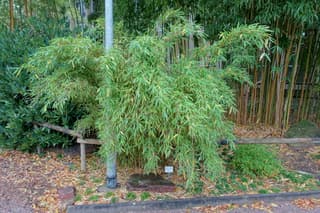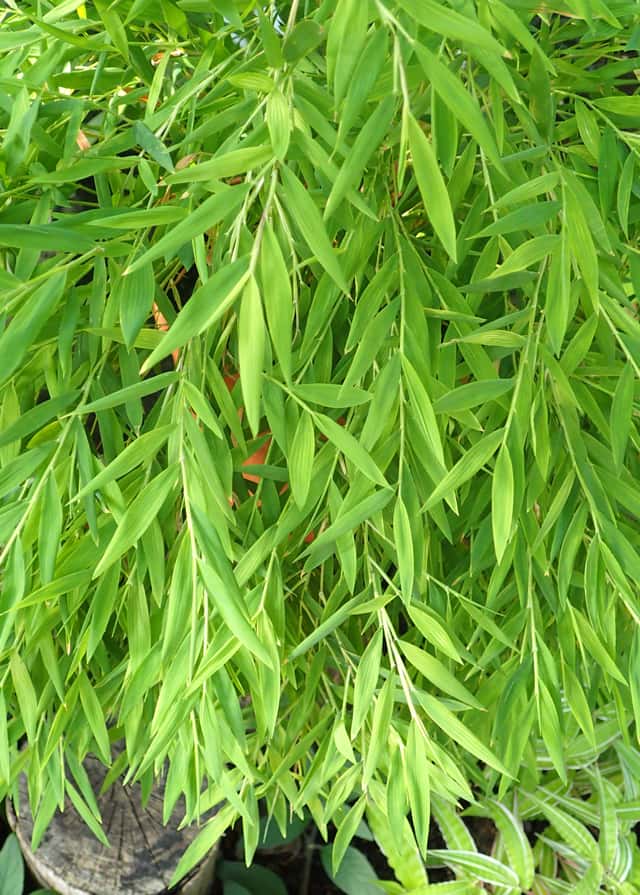
Poaceae
Baby Bamboo Plant Care: The Complete Guide to Pogonatherum paniceum
Pogonatherum paniceum
Baby Bamboo thrives with bright indirect light, consistently moist soil, and high humidity (60-80%). Water every 3-5 days and mist frequently. Fertilize monthly during spring and summer. Repot annually. Keep away from cold drafts and heating vents.
Every 4 days
Bright indirect
16° - 30°C
60% - 80%
Categories
What is Baby Bamboo?
Baby Bamboo (Pogonatherum paniceum) is a easy-care plant from the Poaceae family. Pogonatherum paniceum, commonly known as Baby Bamboo, is a compact ornamental grass native to Southeast Asia and China. Despite not being a true bamboo, its slender, arching culms and delicate foliage create a strikingly similar appearance. It is a fast-growing, low-maintenance houseplant that thriv...
Baby Bamboo grows up to 80cm, spread of 60cm, watering every 4 days, 16°C – 30°C, 60–80% humidity. It is suitable for indoor environments and safe for pets.
Unlike many tropical plants, Baby Bamboo tolerates watering mistakes. Best for beginners. Unlike many popular species, Baby Bamboo is safe to keep around pets. Without adequate drainage, root rot can develop within 8 days.
How to Care for Baby Bamboo?
TLDR: Baby Bamboo needs Bright indirect, watering every 4 days, and temperatures between 16-30°C with 60-80% humidity.
How Often Should You Water Baby Bamboo?
Water every 3-5 days, keeping the soil consistently moist but never waterlogged. Baby Bamboo is sensitive to drought — allow only the very top layer to dry slightly between waterings. In winter, reduce frequency slightly but never let the soil dry out completely.
How Much Light Does Baby Bamboo Need?
Provide bright indirect light — a spot near an east or west-facing window is ideal. Avoid intense direct sunlight, which can scorch the delicate leaves. The plant tolerates partial shade but grows best with 5,000–20,000 lux of diffused light.
What Is the Best Soil for Baby Bamboo?
Use a lightweight, well-draining mix of equal parts loamy soil and organic compost. A slightly acidic pH of 5.0–6.5 promotes healthy growth. Good drainage is essential to prevent root rot, which is this plant's primary vulnerability.
What Pot Should You Use for Baby Bamboo?
A pot with drainage holes is essential. Terracotta pots help regulate moisture but may dry out too quickly — glazed ceramic or plastic pots better retain the consistent moisture this plant requires. Choose a pot only slightly larger than the root ball to avoid waterlogging.
Care Schedule
Fertilize
Every 30 days
Misting
Every 2 days
Repot
Every 365 days
What Is Baby Bamboo and Where Does It Come From?
Pogonatherum paniceum, commonly known as Baby Bamboo, is a compact ornamental grass native to Southeast Asia and China. Despite not being a true bamboo, its slender, arching culms and delicate foliage create a strikingly similar appearance. It is a fast-growing, low-maintenance houseplant that thrives indoors with bright indirect light and consistently moist soil, making it an ideal choice for those seeking a tropical aesthetic in small spaces.
How to Propagate Baby Bamboo?
Clump Division
Divide during early spring when the plant is actively growing for best results. Keep divisions consistently moist during establishment.
- 1 Remove the plant from its pot and gently shake off excess soil
- 2 Use clean, sharp scissors or a knife to divide the root clump into sections, each with several stems and healthy roots
- 3 Plant each division in fresh, moist potting mix
- 4 Keep in a warm, humid location with indirect light until established
Materials needed:
Stem Cutting
Keep humidity very high around cuttings by using a humidity dome or plastic bag. Change water weekly if rooting in water.
- 1 Cut a healthy stem section of about 10 cm with at least 2-3 nodes
- 2 Remove lower leaves to expose the nodes
- 3 Place the cutting in a glass of water or in moist potting mix
- 4 Maintain high humidity and warmth (around 20°C) until roots develop
Materials needed:
How Big Does Baby Bamboo Grow?
TLDR: Baby Bamboo can reach up to 80cm tall with Fast growth rate.
Max height
80cm
Spread
60cm
Growth rate
Fast
Foliage
Evergreen
Plant Uses
Ornamental
Great for decoration
Is your plant showing symptoms?
Click on the symptom to discover possible causes:
What Diseases Commonly Affect Baby Bamboo?
TLDR: Baby Bamboo is susceptible to 6 known diseases. Monitor regularly for early detection.
Root Rot
Root rot is a serious fungal disease that affects the root system of plants, causing them to decay and die. It is primarily caused by overwatering, poor drainage, or soil-borne fungi such as Pythium, Phytophthora, Rhizoctonia, and Fusarium. The disease thrives in waterlogged conditions where roots are deprived of oxygen, making them susceptible to fungal infection.
Overwatering
Overwatering occurs when plants receive too much water, depriving roots of oxygen and causing root rot. This environmental stress is one of the most common causes of houseplant death, as waterlogged soil prevents roots from breathing and functioning properly.
Low Humidity Stress
Low humidity stress occurs when indoor air becomes too dry, causing plants to lose moisture faster than they can absorb it through their roots. This is especially common during winter heating periods, near radiators and heating vents, or in air-conditioned spaces. Tropical plants are particularly susceptible to low humidity damage.
Spider Mites
Spider mites are tiny arachnids (less than 1/20 inch long) related to spiders and ticks that feed on plant sap. They thrive in hot, dry conditions and can cause significant damage to ornamental and vegetable plants. During severe infestations, crop losses can reach 14% or higher as these pests disrupt vital plant processes including photosynthesis, carbon dioxide absorption, and transpiration.
Meaning & Symbolism
Like bamboo, Baby Bamboo symbolizes resilience, flexibility, and continuous growth. It is seen as a symbol of adaptation and strength in the face of adversity.
Fun Facts
Despite its name, Baby Bamboo is not a true bamboo — it belongs to the grass family Poaceae and simply mimics bamboo's elegant appearance in miniature.
In very mature specimens, Baby Bamboo occasionally produces tiny purple or dark red flowers with a hint of blue — a rare and delightful surprise for patient growers.
Native to the humid forests of Southeast Asia and China, Baby Bamboo has adapted to thrive in the stable warmth and moisture of indoor environments.
Baby Bamboo grows as a clump-forming perennial, meaning it steadily multiplies from its base, filling its pot with a lush colony of slender green culms over time.
Frequently asked questions
How often should I water Baby Bamboo?
Can Baby Bamboo grow indoors?
Is Baby Bamboo toxic to pets?
Why are my Baby Bamboo leaves turning yellow?
How fast does Baby Bamboo grow?
Compare with similar plants
| Attribute | Difficulty | Light | Watering | Pet Safe |
|---|---|---|---|---|
| Field Maple | Easy | Bright indirect | 14d | ✓ |
| Muriel's Bamboo | Medium | Partial shade | 3d | ✓ |
| Silver Birch | Easy | Direct sun | 14d | ✓ |
| Common Blanketflower | Easy | Direct sun | 10d | ✓ |