Cupressaceae
Bald Cypress: Full Sun Plant
Taxodium distichum
An easy-to-grow outdoor tree that prefers full sun and acidic soils with constant moisture. It is extraordinarily adaptable, tolerating both prolonged flooding and moderate periods of drought. Regular watering is necessary for young trees; mature specimens are much more self-sufficient. Ideal for riparian zones, lakesides, or gardens with wet soils. Requires little maintenance once established.
Every 7 days
Direct sun
-28° - 40°C
40% - 100%
Categories
What is Bald Cypress?
Bald Cypress (Taxodium distichum) is a easy-care plant from the Cupressaceae family. Taxodium distichum, commonly known as the bald cypress, is a large deciduous conifer in the Cupressaceae family. Native to the southeastern United States, it grows naturally in swamps, riverbanks, and floodplains. It is one of the few deciduous conifers, and its bright green foliage turns reddish-br...
Bald Cypress grows up to 43.0m, spread of 900cm, watering every 7 days, -28°C – 40°C, 40–100% humidity. It is not suitable for indoor environments and safe for pets.
Unlike many tropical plants, Bald Cypress tolerates watering mistakes. Best for beginners. Unlike many popular species, Bald Cypress is safe to keep around pets.
How to Care for Bald Cypress?
TLDR: Bald Cypress needs Direct sun, watering every 7 days, and temperatures between -28-40°C with 40-100% humidity.
How Often Should You Water Bald Cypress?
Water abundantly during the first few years of establishment, especially in summer, keeping the soil moist but not permanently waterlogged in dry areas. Mature specimens tolerate seasonal drought well. In winter, when the tree loses its leaves, reduce watering but do not let the soil dry out completely. This species also tolerates prolonged flooding and can grow with its roots submerged up to 60 cm deep.
How Much Light Does Bald Cypress Need?
Plant in a full sun location, with at least 6 hours of direct sunlight per day, for the best development, vigorous growth, and characteristic reddish autumn foliage. It tolerates light partial shade, but in low-light conditions, the tree may grow more slender and less dense. Avoid completely shaded locations.
What Is the Best Soil for Bald Cypress?
Prefers acidic to neutral soils (pH 4.5–7.0), with a sandy to loamy texture and good moisture retention. It adapts to heavy clay, sandy, compacted, and even alkaline soils, although in the latter, it may show iron chlorosis (yellow leaves). For best results, plant in acidic, cool, and slightly moist soils. Add organic matter when transplanting to improve water retention in well-draining soils.
What Pot Should You Use for Bald Cypress?
Not suitable for container gardening due to its large size and extensive root space requirements. It is designed exclusively for outdoor ground planting, ideally near bodies of water, ponds, streams, or in areas with permanently moist soils. In private gardens, young specimens can be used temporarily in large containers while the permanent planting site is established.
Care Schedule
Fertilize
Every 90 days
What Is Bald Cypress and Where Does It Come From?
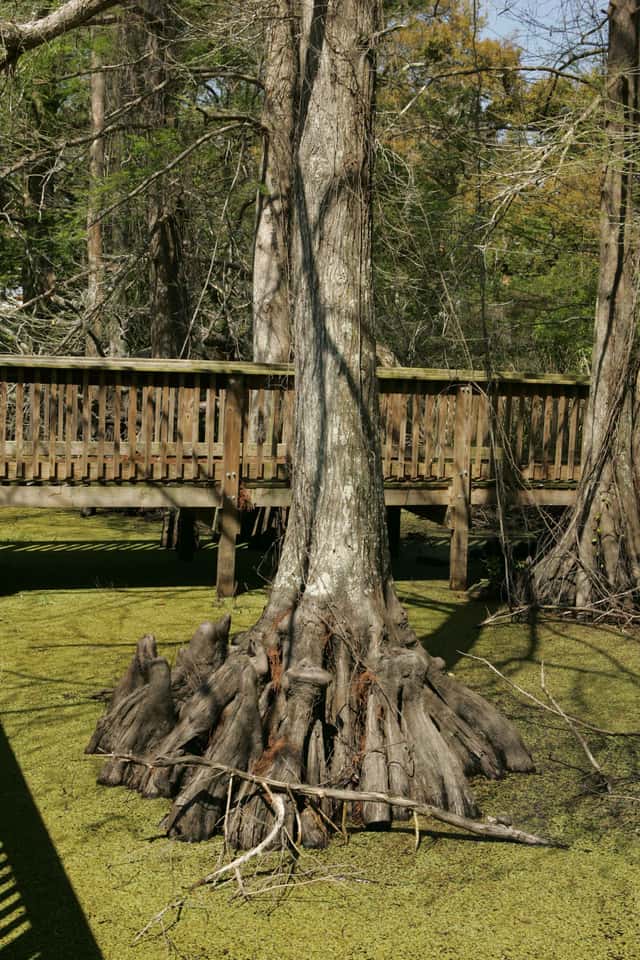
Taxodium distichum, commonly known as the bald cypress, is a large deciduous conifer in the Cupressaceae family. Native to the southeastern United States, it grows naturally in swamps, riverbanks, and floodplains. It is one of the few deciduous conifers, and its bright green foliage turns reddish-bronze in autumn before falling. It produces aerial root structures called pneumatophores or "cypress knees" when growing in flooded soils. With an exceptional lifespan that can exceed 1,000 years, it is an iconic tree of North American wetlands, widely used in parks, urban gardens, and riparian restoration projects.
How to Propagate Bald Cypress?
How Big Does Bald Cypress Grow?
TLDR: Bald Cypress can reach up to 43.0m tall with Medium growth rate.
Max height
43.0m
Spread
9.0m
Growth rate
Medium
Foliage
Deciduous
Plant Uses
Ornamental
Great for decoration
Medicinal
Medicinal properties
Medicinal Uses
- The resin from the cones has been traditionally used as an analgesic for wounds and local pain
- Bark extracts show documented antimicrobial properties in preliminary research
- Diterpenoid compounds from the tree have been studied for their potential antiparasitic activity
Is your plant showing symptoms?
Click on the symptom to discover possible causes:
What Diseases Commonly Affect Bald Cypress?
TLDR: Bald Cypress is susceptible to 5 known diseases. Monitor regularly for early detection.
Spider Mites
Spider mites are tiny arachnids (less than 1/20 inch long) related to spiders and ticks that feed on plant sap. They thrive in hot, dry conditions and can cause significant damage to ornamental and vegetable plants. During severe infestations, crop losses can reach 14% or higher as these pests disrupt vital plant processes including photosynthesis, carbon dioxide absorption, and transpiration.
Cercospora Leaf Spot
Cercospora leaf spot is a common fungal disease caused by Cercospora species that affects many plant types, particularly beets, roses, and leafy vegetables. The disease thrives in warm, humid conditions and can cause significant defoliation, reducing plant vigor and yield. It spreads rapidly through water splash, wind, and contaminated tools.
Broad Mites
Broad mites (Polyphagotarsonemus latus) are microscopic pests measuring only 0.25mm, making them nearly invisible to the naked eye. These arthropods feed on meristematic tissues at growing tips, injecting toxic saliva that severely damages new growth. They prefer warm, humid environments and reproduce rapidly, with females laying eggs every 2-3 days. The damage appears weeks after initial infestation, making early detection extremely difficult.
Iron Deficiency
Iron deficiency, commonly known as iron chlorosis, is a nutrient deficiency disorder where plants cannot access sufficient iron from the soil. While iron is typically abundant in soil, various soil conditions can limit plant uptake, resulting in characteristic yellowing of leaves while veins remain green.
Meaning & Symbolism
The bald cypress symbolizes resilience, longevity, and adaptation in the face of adversity. Its deep roots in wetlands make it an emblem of aquatic ecosystem conservation. In the indigenous cultures of southeastern North America, it was revered as a sacred tree and a symbol of permanence, as its trunks can endure for hundreds of years even after the tree has died.
Compare with similar plants
| Attribute | Difficulty | Light | Watering | Pet Safe |
|---|---|---|---|---|
| Field Maple | Easy | Bright indirect | 14d | ✓ |
| Silver Birch | Easy | Direct sun | 14d | ✓ |
| Common Blanketflower | Easy | Direct sun | 10d | ✓ |
| Cushion Bush | Easy | Direct sun | 14d | ✓ |





