Campanulaceae
Balloon flower: Edible Plant
Platycodon grandiflorus
The balloon flower is an easy-to-grow perennial that requires a sunny to partially shaded location and well-drained, slightly acidic to neutral soil. It does not tolerate waterlogging or frequent transplanting—once planted, it should remain in place. Regular watering during dry spells, moderate fertilization, and deadheading spent blooms will extend the flowering period.
Every 7 days
Bright indirect
15° - 29°C
40% - 60%
Categories
What is Balloon flower?
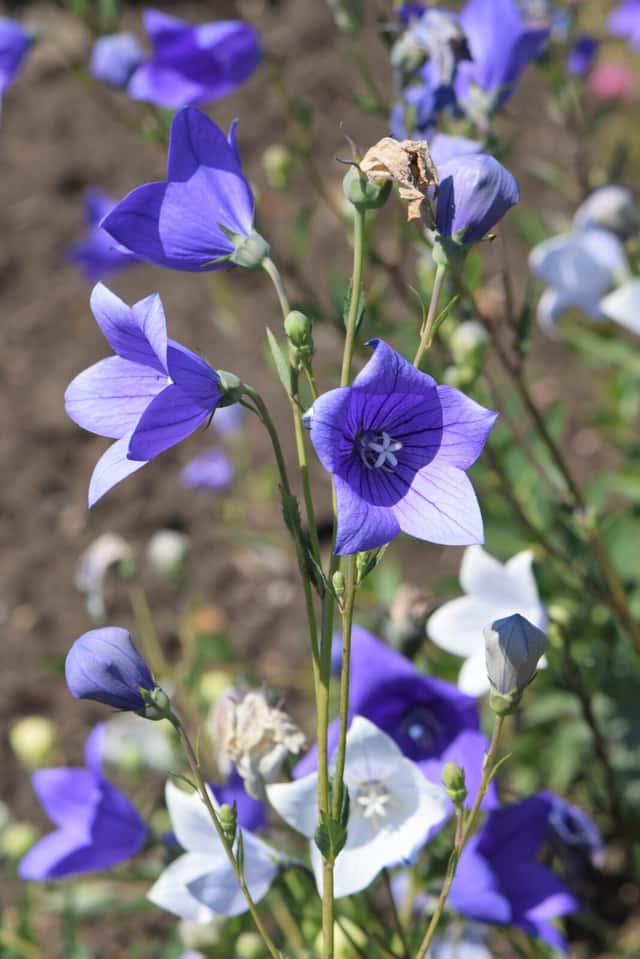
Balloon flower (Platycodon grandiflorus) is a easy-care plant from the Campanulaceae family. The balloon flower (Platycodon grandiflorus) is a perennial herb in the bellflower family (Campanulaceae), native to East Asia—China, Korea, Japan, and Siberia. It is famous for its swollen flower buds that resemble balloons, which puff up before opening into bell-shaped, five-pointed flowers in sha...
Balloon flower grows up to 60cm, spread of 40cm, watering every 7 days, 15°C – 29°C, 40–60% humidity. It is not suitable for indoor environments and safe for pets.
Unlike many tropical plants, Balloon flower tolerates watering mistakes. Best for beginners. Unlike many popular species, Balloon flower is safe to keep around pets.
How to Care for Balloon flower?
TLDR: Balloon flower needs Bright indirect, watering every 7 days, and temperatures between 15-29°C with 40-60% humidity.
How Often Should You Water Balloon flower?
Water regularly to keep the soil slightly moist, but never waterlogged—overwatering easily leads to root rot. During dry periods, watering once a week is sufficient, but more frequent watering may be needed on hot days.
How Much Light Does Balloon flower Need?
It grows best in full sun to partial shade. It blooms most profusely in full sun, while in light shade, the flowers may last longer but will be less intense.
What Is the Best Soil for Balloon flower?
It prefers deep, humus-rich, and well-drained soil with a slightly acidic to neutral pH (5.5–7). Heavy, clayey, or permanently wet soils do not suit it, as they pose a risk of root rot.
What Pot Should You Use for Balloon flower?
Since the plant does not tolerate transplanting and has a fragile root system, plant it directly in its permanent location or in a large pot with a drainage hole and well-drained substrate, and avoid moving it thereafter.
Care Schedule
Fertilize
Every 60 days
What Is Balloon flower and Where Does It Come From?
The balloon flower (Platycodon grandiflorus) is a perennial herb in the bellflower family (Campanulaceae), native to East Asia—China, Korea, Japan, and Siberia. It is famous for its swollen flower buds that resemble balloons, which puff up before opening into bell-shaped, five-pointed flowers in shades of blue, purple, pink, or white. The plant grows to a height of 30–60 cm, blooms from July to October, and is popular in flower beds, rock gardens, and containers.
How Big Does Balloon flower Grow?
TLDR: Balloon flower can reach up to 60cm tall with Medium growth rate.
Max height
60cm
Spread
40cm
Growth rate
Medium
Foliage
Deciduous
Plant Uses
Ornamental
Great for decoration
Medicinal
Medicinal properties
Edible
Can be consumed
Medicinal Uses
- In traditional Chinese and Korean medicine, the root (jie geng/doraji) is used to treat coughs, sore throats, and to promote the expectoration of phlegm.
- The saponins contained in the root have anti-inflammatory and antioxidant effects and are also used in the treatment of bronchitis and asthma.
Culinary Uses
- In Korea, the boiled or pickled root (doraji) is served as a side dish, an ingredient in kimchi, or in herbal tea.
- Young upper leaves can be used similarly to vegetables; the lower basal leaves are not recommended as they can be slightly bitter.
Is your plant showing symptoms?
Click on the symptom to discover possible causes:
What Diseases Commonly Affect Balloon flower?
TLDR: Balloon flower is susceptible to 4 known diseases. Monitor regularly for early detection.
Root Rot
Root rot is a serious fungal disease that affects the root system of plants, causing them to decay and die. It is primarily caused by overwatering, poor drainage, or soil-borne fungi such as Pythium, Phytophthora, Rhizoctonia, and Fusarium. The disease thrives in waterlogged conditions where roots are deprived of oxygen, making them susceptible to fungal infection.
Crown Rot
Crown rot is a serious fungal disease that attacks the crown (base) of the plant where the stem meets the soil. It is caused by various fungal pathogens including Phytophthora, Fusarium, and Rhizoctonia. The disease thrives in waterlogged conditions and can quickly spread to kill the entire plant if not addressed promptly.
Fusarium Wilt
Fusarium wilt is a serious fungal disease caused by the soil-borne fungus Fusarium oxysporum. The fungus invades roots and blocks the water-conducting vessels (xylem) of the plant, causing progressive wilting and eventual death. Host-specific forms of the pathogen exist that attack different plant species.
Powdery Mildew
Powdery mildew is a common fungal disease caused by various fungi species including Erysiphe, Podosphaera, Oïdium, and Leveillula. It affects over 10,000 plant species worldwide. The disease thrives in warm, dry climates with high humidity and appears as a distinctive white powdery coating on plant surfaces.
Meaning & Symbolism
In Korean tradition, the balloon flower (doraji) symbolizes unchanging love, sincerity, and obedience—it is celebrated in the traditional folk song Doraji Taryeong.
Compare with similar plants
| Attribute | Difficulty | Light | Watering | Pet Safe |
|---|---|---|---|---|
| Field Maple | Easy | Bright indirect | 14d | ✓ |
| Silver Birch | Easy | Direct sun | 14d | ✓ |
| Common Blanketflower | Easy | Direct sun | 10d | ✓ |
| Cushion Bush | Easy | Direct sun | 14d | ✓ |
Choose & Compare
Sources & References
- NC State Extension Gardener Plant Toolbox
- PFAF Plant Database
- Epic Gardening - Balloon Flower
- Zahrada-cs.com Zvonkovec velkokvety
- Root Rot of Balloon Flower Caused by Fusarium solani and Fusarium oxysporum
- Pharmacological Effects and Health Benefits of Platycodon grandiflorus
- Gardenia.net Platycodon grandiflorus





