Araceae
Alocasia nycteris - Batwing Alocasia Care Guide
Alocasia nycteris
Give it bright, indirect light, water once the top several centimetres of soil have dried, and keep humidity high (60-80%). It is sensitive to overwatering and cold, so use a fast-draining aroid mix and keep temperatures above 15°C.
Every 7 days
Bright indirect
15° - 28°C
60% - 80%
Categories
What is Batwing Alocasia?
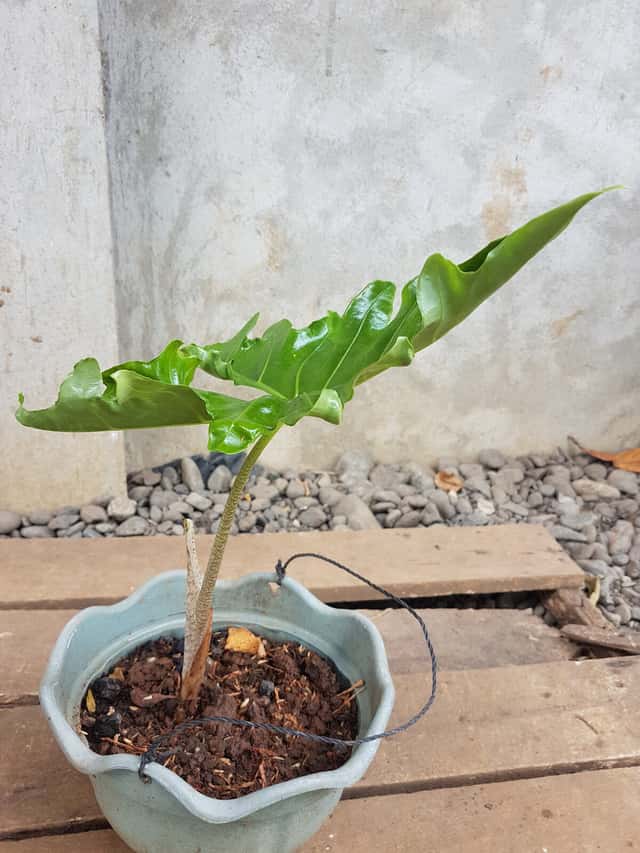
Batwing Alocasia (Alocasia nycteris) is a medium-care plant from the Araceae family. Alocasia nycteris, commonly called the Batwing Alocasia, is a rare aroid endemic to lowland forests of Panay Island in the Philippines. It is prized by collectors for its dark, glossy, arrow-shaped leaves whose rear lobes flare outward at nearly a right angle, evoking the outstretched wings of a bat...
Batwing Alocasia grows up to 1.5m, spread of 90cm, watering every 7 days, 15°C – 28°C, 60–80% humidity. It is suitable for indoor environments and not safe for pets.
Without precautions, ingestion can cause irritation in pets. Keep out of reach of cats and dogs. Without adequate drainage, root rot can develop within 14 days.
How to Care for Batwing Alocasia?
TLDR: Batwing Alocasia needs Bright indirect, watering every 7 days, and temperatures between 15-28°C with 60-80% humidity.
How Often Should You Water Batwing Alocasia?
Water thoroughly when the top 5-8 cm of the substrate feels dry, then let the pot drain fully. Reduce frequency in winter and never let the plant sit in standing water, as the roots rot quickly in waterlogged soil.
How Much Light Does Batwing Alocasia Need?
Place in bright, indirect or dappled light, such as near an east- or north-facing window. Avoid direct midday sun, which scorches the broad leaves.
What Is the Best Soil for Batwing Alocasia?
Use a chunky, well-draining aroid mix, for example equal parts potting soil, peat moss (or coco coir) and perlite, to keep roots aerated while retaining some moisture.
What Pot Should You Use for Batwing Alocasia?
A terracotta or other porous pot with generous drainage holes helps excess moisture evaporate and protects the tuberous roots from rot.
Care Schedule
Fertilize
Every 30 days
Rotate
Every 14 days
Repot
Every 730 days
What Is Batwing Alocasia and Where Does It Come From?
Alocasia nycteris, commonly called the Batwing Alocasia, is a rare aroid endemic to lowland forests of Panay Island in the Philippines. It is prized by collectors for its dark, glossy, arrow-shaped leaves whose rear lobes flare outward at nearly a right angle, evoking the outstretched wings of a bat. First displayed publicly in 2003 by Filipino hobbyist Antonio Advincula, it was formally described as a new species in 2007. In its native habitat it grows on rocky, shaded slopes and forest edges at very low elevation, and indoors it forms a wide, horizontal clump up to about 1.5 m tall.
How to Propagate Batwing Alocasia?
Tuber Division
Use sterilized tools to avoid spreading rot, and keep newly potted divisions out of direct sun until established.
- 1 Unpot the plant and gently remove excess soil from the tuberous rhizome.
- 2 Locate natural divisions or offset bulbs attached to the main tuber.
- 3 Cut the tuber into sections with a clean, sharp knife, making sure each section has at least one growth point.
- 4 Let the cut surfaces callus for a few hours in a dry, shaded spot.
- 5 Pot each section in a well-draining aroid mix and keep warm and lightly moist until new growth appears.
Materials needed:
Offset (Bulb) Division
Offsets establish faster than seed and preserve the exact traits of the parent plant.
- 1 Look for small bulbs or offsets growing at the base of the mother plant.
- 2 Carefully separate the offset from the parent, keeping some roots attached if possible.
- 3 Pot the offset in a small container with a light, well-draining mix.
- 4 Keep warm and humid until the offset establishes and produces new leaves.
Materials needed:
How Big Does Batwing Alocasia Grow?
TLDR: Batwing Alocasia can reach up to 1.5m tall with Medium growth rate.
Max height
1.5m
Spread
90cm
Growth rate
Medium
Foliage
Evergreen
Warning: Toxic Plant
This plant can be toxic if ingested. Keep out of reach of:
Plant Uses
Ornamental
Great for decoration
Is your plant showing symptoms?
Click on the symptom to discover possible causes:
What Diseases Commonly Affect Batwing Alocasia?
TLDR: Batwing Alocasia is susceptible to 2 known diseases. Monitor regularly for early detection.
Root Rot
Root rot is a serious fungal disease that affects the root system of plants, causing them to decay and die. It is primarily caused by overwatering, poor drainage, or soil-borne fungi such as Pythium, Phytophthora, Rhizoctonia, and Fusarium. The disease thrives in waterlogged conditions where roots are deprived of oxygen, making them susceptible to fungal infection.
Spider Mites
Spider mites are tiny arachnids (less than 1/20 inch long) related to spiders and ticks that feed on plant sap. They thrive in hot, dry conditions and can cause significant damage to ornamental and vegetable plants. During severe infestations, crop losses can reach 14% or higher as these pests disrupt vital plant processes including photosynthesis, carbon dioxide absorption, and transpiration.
Meaning & Symbolism
As a rare, dramatically shaped aroid, the Batwing Alocasia is often associated with individuality, mystery and bold self-expression among plant collectors.
Fun Facts
Its species name, nycteris, comes from the Greek word for bat, referencing the wing-like shape of its rear leaf lobes.
It was first shown to the public in 2003 at a Philippine Horticultural Society garden show before being formally described as a new species in 2007.
It is endemic to a narrow strip of lowland habitat on Panay Island in the Philippines, growing at elevations as low as sea level.
Frequently asked questions
Is Alocasia nycteris toxic to cats and dogs?
How often should I water my Batwing Alocasia?
Why is Alocasia nycteris considered rare?
Does the Batwing Alocasia need high humidity?
Compare with similar plants
| Attribute | Difficulty | Light | Watering | Pet Safe |
|---|---|---|---|---|
| Dark Fieldcap | Medium | Low light | 2d | ⚠️ |
| Azalea | Medium | Partial shade | 3d | ⚠️ |
| Muriel's Bamboo | Medium | Partial shade | 3d | ✓ |
| Bougainvillea | Medium | Direct sun | 7d | ⚠️ |




