Zingiberaceae
Beehive Ginger (Zingiber spectabile)
Zingiber spectabile
A tropical plant for warm, humid gardens: morning sun with afternoon shade (or part shade), rich, constantly moist soil, mulch and monthly feeding during the growing season. Not frost tolerant; in cool climates grow it in a large pot and protect it in winter.
Every 3 days
Partial shade
° - °C
% - %
Categories
What is Beehive ginger?
Beehive ginger (Zingiber spectabile) is a medium-care plant from the Zingiberaceae family. Zingiber spectabile, beehive ginger, is a rhizomatous perennial in the ginger family (Zingiberaceae) native to Maritime Southeast Asia. It forms clumps of upright stems with long, narrow leaves often over 2 m tall. Separate stalks rise from the ground carrying inflorescences up to 30 cm tall shaped...
Beehive ginger grows up to 2.4m, watering every 3 days. It is not suitable for indoor environments and safe for pets.
Unlike many popular species, Beehive ginger is safe to keep around pets.
How to Care for Beehive ginger?
TLDR: Beehive ginger needs Partial shade, watering every 3 days, and temperatures between 15-30°C with 40-70% humidity.
How Often Should You Water Beehive ginger?
Keep the soil evenly moist but never soggy: water every 2-3 days in hot weather and less in winter when growth slows. A layer of mulch helps hold moisture. Container plants need even more water.
How Much Light Does Beehive ginger Need?
Partial shade or full morning sun with protection from harsh afternoon sun. It grows in full shade but flowers poorly.
What Is the Best Soil for Beehive ginger?
Rich, loose, moist, well-drained soil high in organic matter. Amend clay with compost; pure sand is unsuitable.
What Pot Should You Use for Beehive ginger?
A large, deep pot (40 cm or more) with drainage holes and rich compost; in warm climates it does best in the ground.
Care Schedule
Fertilize
Every 30 days
What Is Beehive ginger and Where Does It Come From?
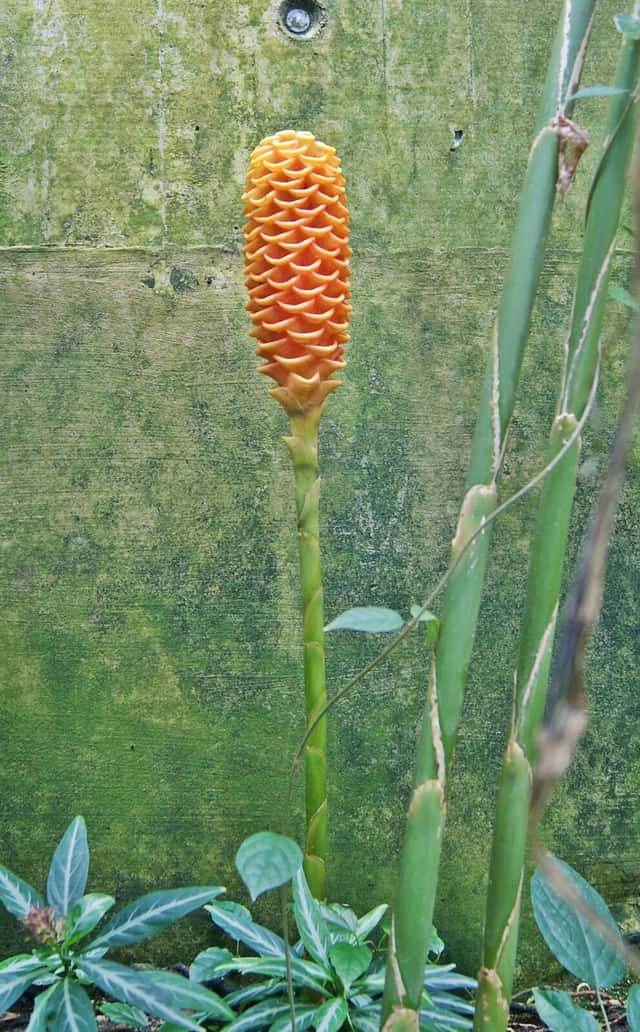
Zingiber spectabile, beehive ginger, is a rhizomatous perennial in the ginger family (Zingiberaceae) native to Maritime Southeast Asia. It forms clumps of upright stems with long, narrow leaves often over 2 m tall. Separate stalks rise from the ground carrying inflorescences up to 30 cm tall shaped like an old skep beehive, with cupped bracts that open yellow or cream and deepen to orange and red; small purple flowers spotted yellow peek out between them. It blooms from summer into autumn and is popular as a cut flower.
How to Propagate Beehive ginger?
Rhizome division
Divisions usually flower in their second year. Cut out old stems that have flowered to encourage new shoots.
- 1 In early spring, lift part of the clump
- 2 Cut the rhizomes into pieces with at least one bud or shoot
- 3 Plant 5 cm deep in rich, moist soil
- 4 Keep moist and in part shade until shoots appear
Materials needed:
How Big Does Beehive ginger Grow?
TLDR: Beehive ginger can reach up to 2.4m tall with Medium growth rate.
Max height
2.4m
Foliage
Evergreen
Plant Uses
Ornamental
Great for decoration
Medicinal
Medicinal properties
Medicinal Uses
- In Indonesia, the leaves are pounded into a paste and applied to the skin for eye inflammation; traditional uses for burns, headaches and back pain are also recorded (folk use, not clinically proven).
Is your plant showing symptoms?
Click on the symptom to discover possible causes:
What Diseases Commonly Affect Beehive ginger?
TLDR: Beehive ginger is susceptible to 6 known diseases. Monitor regularly for early detection.
Root Rot
Root rot is a serious fungal disease that affects the root system of plants, causing them to decay and die. It is primarily caused by overwatering, poor drainage, or soil-borne fungi such as Pythium, Phytophthora, Rhizoctonia, and Fusarium. The disease thrives in waterlogged conditions where roots are deprived of oxygen, making them susceptible to fungal infection.
Cold Damage
Cold damage, also known as frost injury, occurs when plants are exposed to freezing or near-freezing temperatures. This environmental stress can cause cellular damage as ice crystals form within plant tissues, rupturing cells and disrupting normal plant functions. Chilling injury can also occur in sensitive species at temperatures between 32-55°F (0-10°C), even without actual freezing.
Spider Mites
Spider mites are tiny arachnids (less than 1/20 inch long) related to spiders and ticks that feed on plant sap. They thrive in hot, dry conditions and can cause significant damage to ornamental and vegetable plants. During severe infestations, crop losses can reach 14% or higher as these pests disrupt vital plant processes including photosynthesis, carbon dioxide absorption, and transpiration.
Mealybugs
Mealybugs are small, soft-bodied insects covered with a white, waxy, cottony material. They are common pests of houseplants and outdoor plants in mild climates. These sap-sucking insects feed on plant tissue, causing damage, stunted growth, and can lead to plant death if left untreated. They produce sticky honeydew which attracts sooty mold.
Fun Facts
Its name comes from the bloom's resemblance to an old straw skep beehive.
The bracts open pale and deepen to orange and red over time.
Spectabile is Latin for "remarkable" or "showy".
Frequently asked questions
When does beehive ginger bloom?
Can beehive ginger take full sun?
Is it the same as culinary ginger?
How do I propagate beehive ginger?
Compare with similar plants
| Attribute | Difficulty | Light | Watering | Pet Safe |
|---|---|---|---|---|
| Dark Fieldcap | Medium | Low light | 2d | ⚠️ |
| Azalea | Medium | Partial shade | 3d | ⚠️ |
| Muriel's Bamboo | Medium | Partial shade | 3d | ✓ |
| Bougainvillea | Medium | Direct sun | 7d | ⚠️ |




