Asteraceae
Billy Buttons: Full Sun Plant
Craspedia globosa
Requires as much sun as possible and well-draining soil. In warm climates, it lasts several years; in frost-prone areas, it is grown as an annual or kept in a frost-free place during winter.
Every 7 days
Direct sun
0° - °C
% - %
Categories
What is Billy Buttons?
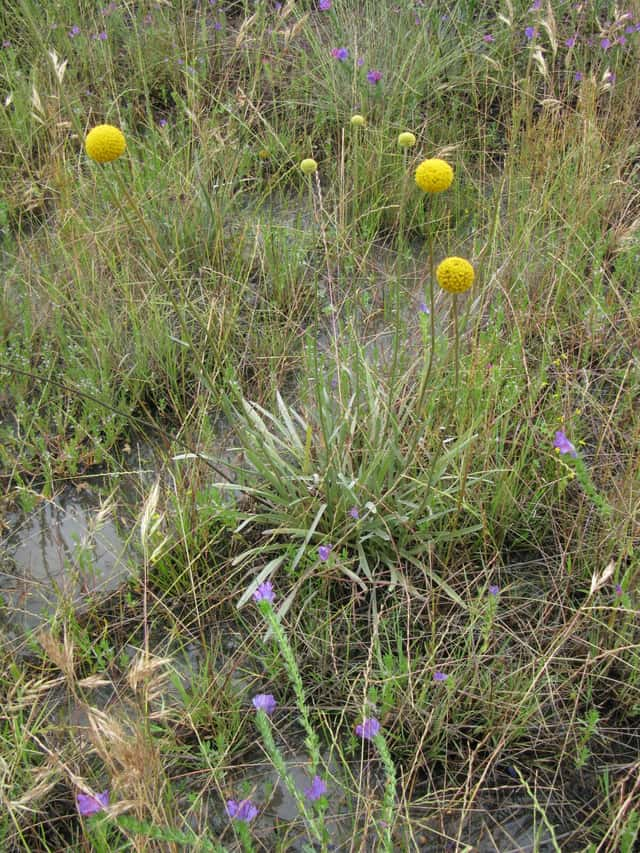
Billy Buttons (Craspedia globosa) is a easy-care plant from the Asteraceae family. A plant with silvery, woolly leaves native to the interior of southeastern Australia, where it grows in dry forests, grasslands, and roadsides. Each stiff stem ends in a yellow ball about 3 cm in diameter, composed of many tiny flowers clustered together. Flower stems reach 60-75 cm in cultivation a...
Billy Buttons grows up to 1.2m, spread of 50cm, watering every 7 days. It is not suitable for indoor environments and safe for pets.
Unlike many tropical plants, Billy Buttons tolerates watering mistakes. Best for beginners. Unlike many popular species, Billy Buttons is safe to keep around pets.
How to Care for Billy Buttons?
TLDR: Billy Buttons needs Direct sun, watering every 7 days, and temperatures between 0-30°C with 40-70% humidity.
How Often Should You Water Billy Buttons?
Water thoroughly and wait until the top few inches of soil are dry before watering again. Once established in the garden, it can withstand dry periods; in pots, it requires regular watering during the season.
How Much Light Does Billy Buttons Need?
Place in full sun: the more sun it receives, the better.
What Is the Best Soil for Billy Buttons?
Prefers poor soil with excellent drainage. If your soil is heavy, mix in coarse sand or gravel. Do not add organic fertilizer: excess nutrients and standing water are detrimental to it.
What Pot Should You Use for Billy Buttons?
A pot with several drainage holes and soil mixed with coarse sand. Cover the surface with gravel.
What Is Billy Buttons and Where Does It Come From?
A plant with silvery, woolly leaves native to the interior of southeastern Australia, where it grows in dry forests, grasslands, and roadsides. Each stiff stem ends in a yellow ball about 3 cm in diameter, composed of many tiny flowers clustered together. Flower stems reach 60-75 cm in cultivation and up to 120 cm in some plants. Today, botanists call it Pycnosorus globosus; Craspedia globosa is the name under which it continues to be sold.
How to Propagate Billy Buttons?
Sowing by seed
If your area experiences frost, wait until the last frost has passed. It usually takes about 12 weeks from seed to flower.
- 1 Sow in trays 6 to 8 weeks before moving outdoors.
- 2 Barely cover the seed with a thin layer of soil.
- 3 Keep the tray at 21-24 °C with moist soil until germination.
- 4 Transfer to the garden when there is no longer a risk of frost.
Materials needed:
Stem cutting
The Australian Plants Society indicates that cuttings from this family root quickly.
- 1 Cut a healthy stem without flowers.
- 2 Remove the leaves from the lower part.
- 3 Plant it in soil mixed with coarse sand and keep it barely moist.
Materials needed:
How Big Does Billy Buttons Grow?
TLDR: Billy Buttons can reach up to 1.2m tall with Fast growth rate.
Max height
1.2m
Spread
50cm
Growth rate
Fast
Foliage
Evergreen
Plant Uses
Ornamental
Great for decoration
Is your plant showing symptoms?
Click on the symptom to discover possible causes:
What Diseases Commonly Affect Billy Buttons?
TLDR: Billy Buttons is susceptible to 2 known diseases. Monitor regularly for early detection.
Slugs and Snails
Slugs and snails are mollusks that feed on plant tissue, causing irregular holes in leaves and damage to young seedlings. They are most active at night and in moist conditions, leaving characteristic silvery slime trails. These pests can quickly devastate gardens, especially during wet seasons.
Root Rot
Root rot is a serious fungal disease that affects the root system of plants, causing them to decay and die. It is primarily caused by overwatering, poor drainage, or soil-borne fungi such as Pythium, Phytophthora, Rhizoctonia, and Fusarium. The disease thrives in waterlogged conditions where roots are deprived of oxygen, making them susceptible to fungal infection.
Compare with similar plants
| Attribute | Difficulty | Light | Watering | Pet Safe |
|---|---|---|---|---|
| Field Maple | Easy | Bright indirect | 14d | ✓ |
| Iberian Houseleek | Easy | Direct sun | 14d | ✓ |
| Silver Birch | Easy | Direct sun | 14d | ✓ |
| Common Blanketflower | Easy | Direct sun | 10d | ✓ |





