Rosaceae
Bird Cherry (Prunus padus): Growing & Care Guide
Prunus padus
A hardy, low-maintenance tree that adapts to a wide range of soils as long as drainage is adequate. It prefers full sun to partial shade and tolerates very cold winters. Best suited to open gardens and landscape plantings rather than containers.
Every 10 days
Bright indirect
-30° - 30°C
40% - 70%
Categories
What is Bird Cherry?
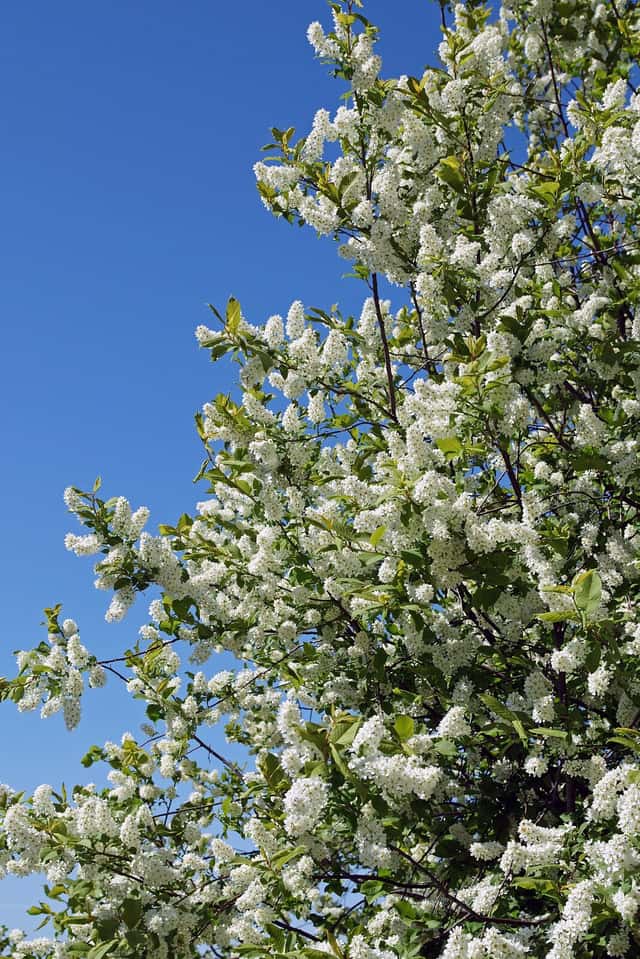
Bird Cherry (Prunus padus) is a easy-care plant from the Rosaceae family. Bird cherry (Prunus padus) is a fast-growing deciduous tree native to Northern Europe and Asia, belonging to the Rosaceae family. It can reach up to 15 meters tall, with a rounded crown and dark, strong-smelling bark. In spring it produces long, drooping clusters of fragrant white flowers, followed...
Bird Cherry grows up to 15.0m, spread of 900cm, watering every 10 days, -30°C – 30°C, 40–70% humidity. It is not suitable for indoor environments and not safe for pets.
Unlike many tropical plants, Bird Cherry tolerates watering mistakes. Best for beginners. Without precautions, ingestion can cause irritation in pets. Keep out of reach of cats and dogs.
How to Care for Bird Cherry?
TLDR: Bird Cherry needs Bright indirect, watering every 10 days, and temperatures between -30-30°C with 40-70% humidity.
How Often Should You Water Bird Cherry?
Water regularly during the first couple of years after planting, letting the soil dry slightly between waterings. Established trees rely mainly on rainfall except during prolonged drought.
How Much Light Does Bird Cherry Need?
Grows best in full sun to partial shade; at least 4-5 hours of direct sunlight a day encourages the best flowering and fruiting.
What Is the Best Soil for Bird Cherry?
Thrives in fertile, well-draining loam but tolerates clay, sandy, and chalky soils, with a pH from mildly acidic to alkaline.
What Pot Should You Use for Bird Cherry?
Not suited to permanent container growing due to its mature size; a large, deep pot can only be used temporarily for young saplings before planting out.
What Is Bird Cherry and Where Does It Come From?
Bird cherry (Prunus padus) is a fast-growing deciduous tree native to Northern Europe and Asia, belonging to the Rosaceae family. It can reach up to 15 meters tall, with a rounded crown and dark, strong-smelling bark. In spring it produces long, drooping clusters of fragrant white flowers, followed by small bitter black fruits favored by birds.
How to Propagate Bird Cherry?
Propagation from seed
Germination can be slow and uneven; be patient, as it may take up to 18 months.
- 1 Collect ripe fruits and remove the pulp from the seeds
- 2 Cold-stratify the seeds for 2-3 months in moist substrate in the fridge
- 3 Sow in well-draining substrate in early spring
- 4 Keep moist until germination
Materials needed:
Semi-hardwood stem cuttings
Keep cuttings in a shaded, humid spot until they root.
- 1 Take 15-20 cm cuttings from semi-hardwood growth in July or August
- 2 Remove leaves from the lower part of the cutting
- 3 Apply rooting hormone to the cut end
- 4 Plant in well-draining substrate and keep moist
Materials needed:
How Big Does Bird Cherry Grow?
TLDR: Bird Cherry can reach up to 15.0m tall with Fast growth rate.
Max height
15.0m
Spread
9.0m
Growth rate
Fast
Foliage
Deciduous
Warning: Toxic Plant
This plant can be toxic if ingested. Keep out of reach of:
Plant Uses
Ornamental
Great for decoration
Edible
Can be consumed
Medicinal
Medicinal properties
Aromatic
Pleasant fragrance
Medicinal Uses
- Bark traditionally used as a mild sedative and diuretic
- Bark infusion used in folk medicine for colds and fevers
Culinary Uses
- Fruits used to make jams and liqueurs
- Fragrant flowers used to flavor drinks
Is your plant showing symptoms?
Click on the symptom to discover possible causes:
What Diseases Commonly Affect Bird Cherry?
TLDR: Bird Cherry is susceptible to 7 known diseases. Monitor regularly for early detection.
Leaf Spot
Leaf spot is a common fungal disease caused by various pathogens including Alternaria, Ascochyta, Colletotrichum, Septoria, and Venturia. It primarily affects leaves, causing discolored spots that can lead to premature leaf drop if left untreated.
Canker
Canker is a disease caused by various fungi and bacteria that create necrotic, sunken areas on bark of branches, stems, and trunks. Pathogens enter through wounds and natural openings, especially when plants are stressed. Canker can gradually weaken or kill branches by disrupting water and nutrient flow.
Bacterial Canker
Serious bacterial disease affecting stone fruits and tomatoes caused by Pseudomonas syringae or Clavibacter michiganensis. Creates sunken lesions that ooze sap.
Brown Rot
Monilinia is a genus of ascomycete fungi that causes blossom blight and brown rot in fruit trees. It spreads most rapidly in cool, wet weather, particularly during the bloom period. Symptoms include flowers that turn brown and remain attached to the shoots, small tan spots on fruit that expand into gray-beige spore rings (sporodochia), twig dieback, and 'mummified' fruit that shrivels and often persists on the tree. It primarily affects stone fruits (peach, nectarine, apricot, plum, cherry) but can also infect pome fruits such as apple and pear.
Meaning & Symbolism
In Northern European folklore, bird cherry was regarded as a protective tree - branches were hung at doorways to ward off evil, and its fragrant spring blossom symbolized purification and renewal.
Fun Facts
Bird cherry bark has a strong, distinctive smell that helps identify the tree even without flowers.
Its dark fruits are an important late-summer food source for birds, giving the tree its common name.
In Scandinavia, the tree was traditionally linked to rituals protecting homes from evil spirits.
Frequently asked questions
Is bird cherry toxic to pets?
How often should I water bird cherry?
Can bird cherry be grown in a pot?
What diseases commonly affect bird cherry?
Compare with similar plants
| Attribute | Difficulty | Light | Watering | Pet Safe |
|---|---|---|---|---|
| Field Maple | Easy | Bright indirect | 14d | ✓ |
| Silver Birch | Easy | Direct sun | 14d | ✓ |
| Common Blanketflower | Easy | Direct sun | 10d | ✓ |
| Cushion Bush | Easy | Direct sun | 14d | ✓ |
Choose & Compare
Sources & References
- Bird Cherry Plant Care & Growing Basics | PlantIn
- Prunus padus (Bird Cherry) | BBC Gardeners World Magazine
- Prunus padus - Bird Cherry | PFAF Plant Database
- Prunus padus - Plant Finder | Missouri Botanical Garden
- European Birdcherry (Prunus padus) | Univ. of Illinois Extension
- Bird Cherry Tree Diseases: Identify and Treat (Prunus padus)





