Apiaceae
Ammi majus - Bishop's Flower Care Guide
Ammi majus
Easy to grow from seed in full sun to light shade. Keep soil evenly moist but never waterlogged; established plants tolerate short dry spells. Needs no routine feeding beyond an optional mid-season boost. Direct sow where it is to flower, since the taproot resents disturbance.
Every 3 days
Bright indirect
5° - 28°C
40% - 60%
Categories
What is Bishop's Flower?
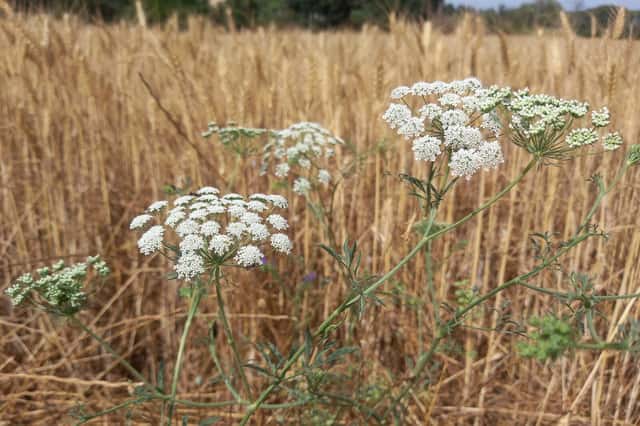
Bishop's Flower (Ammi majus) is a easy-care plant from the Apiaceae family. Ammi majus is an upright annual (occasionally biennial) herb in the carrot family (Apiaceae), native to the Nile Valley, North Africa and the Mediterranean basin. It produces finely divided, feathery foliage and 5-10cm lacy white umbels similar to Queen Anne's lace, held on branching stems up to 1.5...
Bishop's Flower grows up to 1.5m, spread of 45cm, watering every 3 days, 5°C – 28°C, 40–60% humidity. It is not suitable for indoor environments and not safe for pets.
Unlike many tropical plants, Bishop's Flower tolerates watering mistakes. Best for beginners. Without precautions, ingestion can cause irritation in pets. Keep out of reach of cats and dogs.
How to Care for Bishop's Flower?
TLDR: Bishop's Flower needs Bright indirect, watering every 3 days, and temperatures between 5-28°C with 40-60% humidity.
How Often Should You Water Bishop's Flower?
Water every 2-3 days while seedlings establish and during hot weather, letting the top of the soil dry slightly between waterings. Reduce frequency once flowering begins and never let the pot or bed sit in standing water.
How Much Light Does Bishop's Flower Need?
Give at least 6 hours of direct sun for the strongest stems and flowering; light afternoon shade is tolerated in hot climates but plants get leggier with sparser blooms.
What Is the Best Soil for Bishop's Flower?
Plant in fertile, well-draining soil (sandy loam with compost) at pH 6.0-7.5. Heavy, waterlogged clay leads to root rot.
What Pot Should You Use for Bishop's Flower?
Not well suited to pots long-term due to its deep taproot; if starting in containers, use deep (20cm+) biodegradable pots and transplant before the roots circle, or direct-sow into the garden.
What Is Bishop's Flower and Where Does It Come From?
Ammi majus is an upright annual (occasionally biennial) herb in the carrot family (Apiaceae), native to the Nile Valley, North Africa and the Mediterranean basin. It produces finely divided, feathery foliage and 5-10cm lacy white umbels similar to Queen Anne's lace, held on branching stems up to 1.5m tall. Popular with cut-flower growers and pollinators alike, the species carries an important caveat: its sap contains furanocoumarins (bergapten and xanthotoxin) that sensitize skin to UV light, so handle it with gloves and long sleeves.
How to Propagate Bishop's Flower?
Direct sowing from seed
Ammi majus dislikes root disturbance, so direct sowing is preferred over transplanting; a period of cold stratification (a few days in the fridge) can improve germination rates.
- 1 Sow seeds directly in the garden after the last frost, or 4-6 weeks earlier for a head start in trays.
- 2 Press seeds lightly into the soil surface; they need light to germinate, so avoid deep covering.
- 3 Keep soil consistently moist until germination, which takes 10-14 days at 6-8C (43-46F) soil temperature.
- 4 Thin seedlings to 30-45cm apart once they have their first true leaves.
- 5 If starting in trays, transplant carefully while still small to minimize taproot disturbance.
Materials needed:
How Big Does Bishop's Flower Grow?
TLDR: Bishop's Flower can reach up to 1.5m tall with Medium growth rate.
Max height
1.5m
Spread
45cm
Growth rate
Medium
Foliage
Deciduous
Warning: Toxic Plant
This plant can be toxic if ingested. Keep out of reach of:
Plant Uses
Ornamental
Great for decoration
Medicinal
Medicinal properties
Medicinal Uses
- Historical vitiligo treatment (source of the drug methoxsalen/Oxsoralen for PUVA phototherapy)
- Traditional treatment for psoriasis and other skin depigmentation disorders
Is your plant showing symptoms?
Click on the symptom to discover possible causes:
What Diseases Commonly Affect Bishop's Flower?
TLDR: Bishop's Flower is susceptible to 7 known diseases. Monitor regularly for early detection.
Aphids
Aphids are small, soft-bodied, pear-shaped insects (1/16 to 1/8 inch long) that feed by sucking nutrient-rich sap from plants. They reproduce rapidly and can quickly weaken plants, causing distorted growth and transmitting plant viruses. Aphids come in various colors including green, black, red, yellow, brown, and gray. They secrete honeydew, a sticky substance that attracts ants and encourages sooty mold growth.
Spider Mites
Spider mites are tiny arachnids (less than 1/20 inch long) related to spiders and ticks that feed on plant sap. They thrive in hot, dry conditions and can cause significant damage to ornamental and vegetable plants. During severe infestations, crop losses can reach 14% or higher as these pests disrupt vital plant processes including photosynthesis, carbon dioxide absorption, and transpiration.
Thrips
Thrips are tiny cigar-shaped insects (1/25-inch long) that damage plants by sucking plant juices and scraping at fruits, flowers, and leaves. With over 6,000 species and rapid reproduction (lifecycle as short as 14 days), they can quickly infest plants and transmit viruses like tomato spotted wilt virus.
Powdery Mildew
Powdery mildew is a common fungal disease caused by various fungi species including Erysiphe, Podosphaera, Oïdium, and Leveillula. It affects over 10,000 plant species worldwide. The disease thrives in warm, dry climates with high humidity and appears as a distinctive white powdery coating on plant surfaces.
Meaning & Symbolism
In ancient Egypt and later in Arabic medicine, Bishop's Flower was used to treat vitiligo, giving rise to the Arabic name hirz al-shayateen ("Devil's Amulet"). Today it symbolizes both delicate beauty - thanks to its lace-like blooms - and hidden danger, since its phototoxic sap can burn skin exposed to sunlight.
Fun Facts
Ancient Egyptians used Ammi majus juice combined with sun exposure to treat vitiligo as early as 2000 BC.
Its Arabic name, hirz al-shayateen, translates to "Devil's Amulet."
The plant's xanthotoxin compound is still used today in modern PUVA phototherapy for psoriasis and vitiligo.
Ammi majus earned the Royal Horticultural Society Award of Garden Merit for its reliable, trouble-free garden performance.
Frequently asked questions
Is Ammi majus toxic?
How much light does Bishop's Flower need?
Can I transplant Ammi majus seedlings?
How often should I water Ammi majus?
Does Ammi majus have many pests or diseases?
Compare with similar plants
| Attribute | Difficulty | Light | Watering | Pet Safe |
|---|---|---|---|---|
| Field Maple | Easy | Bright indirect | 14d | ✓ |
| Silver Birch | Easy | Direct sun | 14d | ✓ |
| Common Blanketflower | Easy | Direct sun | 10d | ✓ |
| Cushion Bush | Easy | Direct sun | 14d | ✓ |





