Phyllanthaceae
Bishopwood: Edible Plant
Bischofia javanica
Bishopwood thrives outdoors in full sun to partial shade with regular watering while establishing. Once mature, it tolerates short dry spells and a wide range of soils, from sandy to clay, as long as drainage is reasonable. It is a vigorous, low-maintenance tree but has brittle wood, so occasional structural pruning helps it withstand storms.
Every 10 days
Bright indirect
-1° - 35°C
50% - 80%
Categories
What is Bishopwood?
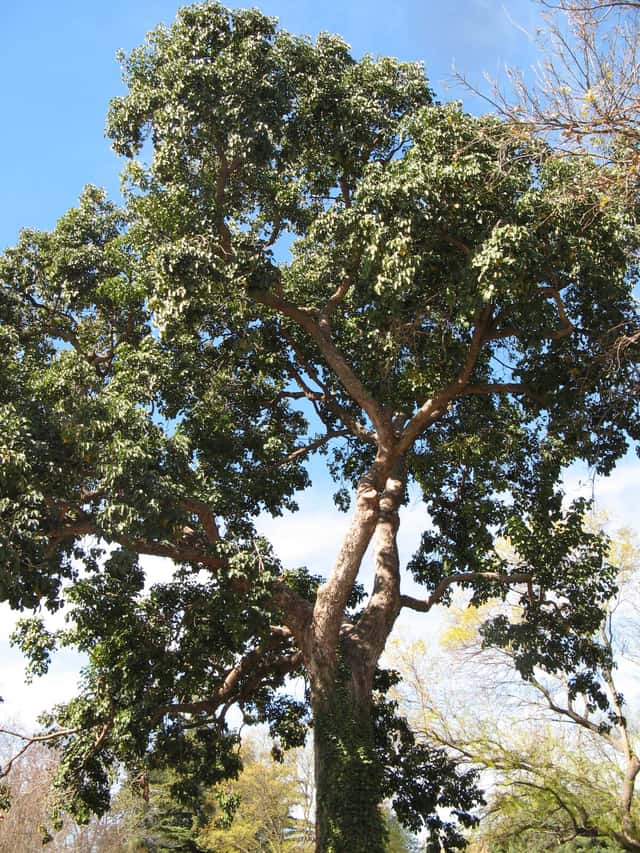
Bishopwood (Bischofia javanica) is a easy-care plant from the Phyllanthaceae family. Bischofia javanica, known as bishopwood, is a fast-growing evergreen tree native to tropical and subtropical Asia, Australia, and the Pacific. It features trifoliate leaves that emerge bronze-red and mature to glossy green, small greenish-yellow flowers in hanging clusters, and round berry-like frui...
Bishopwood grows up to 15.0m, spread of 1070cm, watering every 10 days, -1°C – 35°C, 50–80% humidity. It is not suitable for indoor environments and not safe for pets.
Unlike many tropical plants, Bishopwood tolerates watering mistakes. Best for beginners. Without precautions, ingestion can cause irritation in pets. Keep out of reach of cats and dogs.
How to Care for Bishopwood?
TLDR: Bishopwood needs Bright indirect, watering every 10 days, and temperatures between -1-35°C with 50-80% humidity.
How Often Should You Water Bishopwood?
Water young trees deeply and regularly until well established; mature bishopwood trees tolerate moderate drought but grow best with consistent moisture.
How Much Light Does Bishopwood Need?
Plant in full sun for the fastest, densest growth; it also tolerates partial shade, especially while young.
What Is the Best Soil for Bishopwood?
Adaptable to sandy, loamy, and clay soils and to acidic or alkaline pH, but performs best in well-draining soil enriched with organic matter.
What Pot Should You Use for Bishopwood?
Not suited to containers -- this is a large landscape tree that should be planted directly in the ground with ample space to spread.
Care Schedule
Fertilize
Every 35 days
What Is Bishopwood and Where Does It Come From?
Bischofia javanica, known as bishopwood, is a fast-growing evergreen tree native to tropical and subtropical Asia, Australia, and the Pacific. It features trifoliate leaves that emerge bronze-red and mature to glossy green, small greenish-yellow flowers in hanging clusters, and round berry-like fruits that turn brownish-orange. In its native range it can exceed 30 m in height, though cultivated specimens are usually smaller. It is valued as a fast shade tree but has become invasive in some regions such as Florida and Pacific islands.
How to Propagate Bishopwood?
Seed germination
Fresh seed germinates fastest; seeds stored longer than 6 months lose viability.
- 1 Soak seeds in water for 24 hours to soften the seed coat
- 2 Sow in moist, well-draining potting mix, barely covering the seed
- 3 Keep warm and consistently moist in partial shade until germination
- 4 Transplant seedlings once they have several true leaves
Materials needed:
Stem cutting
Use clean, sharp tools and maintain consistent moisture without waterlogging.
- 1 Take 15-20 cm (6-8 in) cuttings from healthy, semi-hardwood stems
- 2 Remove lower leaves and dip the cut end in rooting hormone
- 3 Insert into a moist, well-draining rooting medium
- 4 Keep humid and in bright, indirect light until roots form
Materials needed:
How Big Does Bishopwood Grow?
TLDR: Bishopwood can reach up to 15.0m tall with Fast growth rate.
Max height
15.0m
Spread
10.7m
Growth rate
Fast
Foliage
Evergreen
Warning: Toxic Plant
This plant can be toxic if ingested. Keep out of reach of:
Plant Uses
Ornamental
Great for decoration
Edible
Can be consumed
Medicinal
Medicinal properties
Medicinal Uses
- Bark and leaf extracts traditionally used for anti-ulcer and antidysenteric remedies
- Used in traditional medicine as an anthelmintic (to expel intestinal worms)
- Applied traditionally for sore throat, cough, and toothache
Culinary Uses
- Young leaves cooked and eaten as a vegetable in parts of its native range
- Ripe fruits eaten fresh or used to make preserves
- Seeds sometimes processed for oil
Is your plant showing symptoms?
Click on the symptom to discover possible causes:
What Diseases Commonly Affect Bishopwood?
TLDR: Bishopwood is susceptible to 6 known diseases. Monitor regularly for early detection.
Scale Insects
Scale insects are small sap-sucking pests that appear as brown, shell-like bumps on plant stems and leaves. There are over 25 species, divided into armored (hard) and unarmored (soft) scales. They feed by piercing plant tissue and extracting sap, which weakens the plant and can lead to yellowing, stunted growth, and even death if left untreated. They also excrete honeydew, which attracts ants and promotes sooty mold growth.
Sooty Mold
Sooty mold is a fungal disease that develops on surfaces coated with honeydew, a sticky sweet substance secreted by sap-sucking insects like aphids, scale insects, and whiteflies. While it does not directly infect plant tissue, it reduces photosynthetic capacity by blocking sunlight and diminishes the plant's aesthetic appearance.
Root Rot
Root rot is a serious fungal disease that affects the root system of plants, causing them to decay and die. It is primarily caused by overwatering, poor drainage, or soil-borne fungi such as Pythium, Phytophthora, Rhizoctonia, and Fusarium. The disease thrives in waterlogged conditions where roots are deprived of oxygen, making them susceptible to fungal infection.
Spider Mites
Spider mites are tiny arachnids (less than 1/20 inch long) related to spiders and ticks that feed on plant sap. They thrive in hot, dry conditions and can cause significant damage to ornamental and vegetable plants. During severe infestations, crop losses can reach 14% or higher as these pests disrupt vital plant processes including photosynthesis, carbon dioxide absorption, and transpiration.
Meaning & Symbolism
As a fast-growing shade tree that thrives even in disturbed and difficult ground, bishopwood is often associated with resilience and rapid renewal.
Compare with similar plants
| Attribute | Difficulty | Light | Watering | Pet Safe |
|---|---|---|---|---|
| Field Maple | Easy | Bright indirect | 14d | ✓ |
| Silver Birch | Easy | Direct sun | 14d | ✓ |
| Common Blanketflower | Easy | Direct sun | 10d | ✓ |
| Cushion Bush | Easy | Direct sun | 14d | ✓ |





