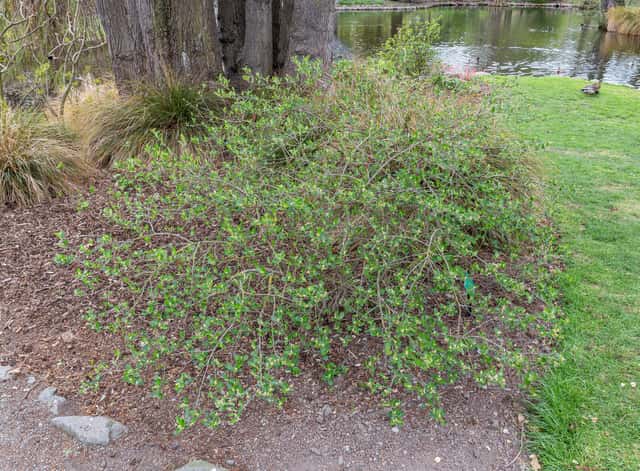
Rosaceae
Black chokeberry: Edible Plant
Aronia melanocarpa
An undemanding and hardy shrub suitable for gardens and public landscapes. It tolerates a wide range of soil and moisture conditions, from drier sandy soils to temporarily waterlogged areas. It produces the most flowers and fruit in a sunny location but also grows in partial shade. Regular watering is important mainly during the first year after planting; thereafter, the plant is drought-tolerant.
Every 7 days
Bright indirect
-34° - 35°C
% - %
Categories
What is Black chokeberry?
Black chokeberry (Aronia melanocarpa) is a easy-care plant from the Rosaceae family. Black chokeberry (Aronia melanocarpa) is a deciduous shrub in the rose family (Rosaceae), native to eastern North America. It grows to a height of approximately 1–3 m and a similar width, forming dense, multi-stemmed clumps. In spring, it produces small white to pinkish flowers in corymb-like cluste...
Black chokeberry grows up to 3.0m, spread of 180cm, watering every 7 days, -34°C – 35°C. It is not suitable for indoor environments and safe for pets.
Unlike many tropical plants, Black chokeberry tolerates watering mistakes. Best for beginners. Unlike many popular species, Black chokeberry is safe to keep around pets.
How to Care for Black chokeberry?
TLDR: Black chokeberry needs Bright indirect, watering every 7 days, and temperatures between -34-35°C with 40-70% humidity.
How Often Should You Water Black chokeberry?
Water regularly during the first year after planting to keep the soil slightly moist. For mature plants, watering is only necessary during periods of prolonged drought—chokeberry tolerates both temporary drought and short-term waterlogging.
How Much Light Does Black chokeberry Need?
It grows best in full sun, where it produces the most flowers and fruit, but it also tolerates partial shade well. At least 6 hours of direct sunlight per day will encourage a bountiful harvest.
What Is the Best Soil for Black chokeberry?
Prefers slightly acidic to neutral, humus-rich, well-drained soil, but tolerates clay, sandy, or temporarily wet soils. Mulching helps retain moisture and suppress weeds.
What Pot Should You Use for Black chokeberry?
When growing in a container, choose a large, frost-resistant pot (min. 40–50 l) with sufficient drainage holes and a drainage layer, as the shrub's root ball is quite extensive.
Care Schedule
Fertilize
Every 365 days
What Is Black chokeberry and Where Does It Come From?
Black chokeberry (Aronia melanocarpa) is a deciduous shrub in the rose family (Rosaceae), native to eastern North America. It grows to a height of approximately 1–3 m and a similar width, forming dense, multi-stemmed clumps. In spring, it produces small white to pinkish flowers in corymb-like clusters, followed by glossy dark purple to black fruits in autumn and vibrant red fall foliage. The fruits are edible, though quite astringent when raw, and are known for their high antioxidant (anthocyanin) content.
How to Propagate Black chokeberry?
How Big Does Black chokeberry Grow?
TLDR: Black chokeberry can reach up to 3.0m tall with Medium growth rate.
Max height
3.0m
Spread
1.8m
Growth rate
Medium
Foliage
Deciduous
Plant Uses
Ornamental
Great for decoration
Edible
Can be consumed
Medicinal
Medicinal properties
Medicinal Uses
- fruits are a rich source of antioxidants (anthocyanins) and vitamin C
- fruit juice is traditionally used to support immunity and cardiovascular health
- extracts are used as a dietary supplement with anti-inflammatory effects
Culinary Uses
- fruits are processed into jams, marmalades, and preserves
- pressed juice and syrups
- dried fruits for tea blends and muesli
- production of homemade wine and liqueurs
Is your plant showing symptoms?
Click on the symptom to discover possible causes:
What Diseases Commonly Affect Black chokeberry?
TLDR: Black chokeberry is susceptible to 4 known diseases. Monitor regularly for early detection.
Rust
Rust is a common fungal disease caused by fungi in the order Pucciniales that affects a wide variety of plants. The disease gets its name from the characteristic orange, yellow, or reddish-brown pustules that appear on leaves, resembling metal rust. This obligate fungal parasite requires living plants to survive and can cause significant economic losses in agricultural crops.
Fire Blight
Fire blight is a highly destructive and contagious bacterial disease caused by Erwinia amylovora. It primarily affects plants in the Rosaceae family, including apple, pear, quince trees, and various ornamental plants. The disease can destroy an entire orchard in a single growing season under ideal conditions, with the bacterium moving approximately 11 inches per week in new growth.
Leaf Spot
Leaf spot is a common fungal disease caused by various pathogens including Alternaria, Ascochyta, Colletotrichum, Septoria, and Venturia. It primarily affects leaves, causing discolored spots that can lead to premature leaf drop if left untreated.
Powdery Mildew
Powdery mildew is a common fungal disease caused by various fungi species including Erysiphe, Podosphaera, Oïdium, and Leveillula. It affects over 10,000 plant species worldwide. The disease thrives in warm, dry climates with high humidity and appears as a distinctive white powdery coating on plant surfaces.
Meaning & Symbolism
In folk tradition, it symbolizes health, vitality, and resilience—due to its high antioxidant content, it is often associated with longevity and natural healing power.
Compare with similar plants
| Attribute | Difficulty | Light | Watering | Pet Safe |
|---|---|---|---|---|
| Field Maple | Easy | Bright indirect | 14d | ✓ |
| Silver Birch | Easy | Direct sun | 14d | ✓ |
| Common Blanketflower | Easy | Direct sun | 10d | ✓ |
| Cushion Bush | Easy | Direct sun | 14d | ✓ |





