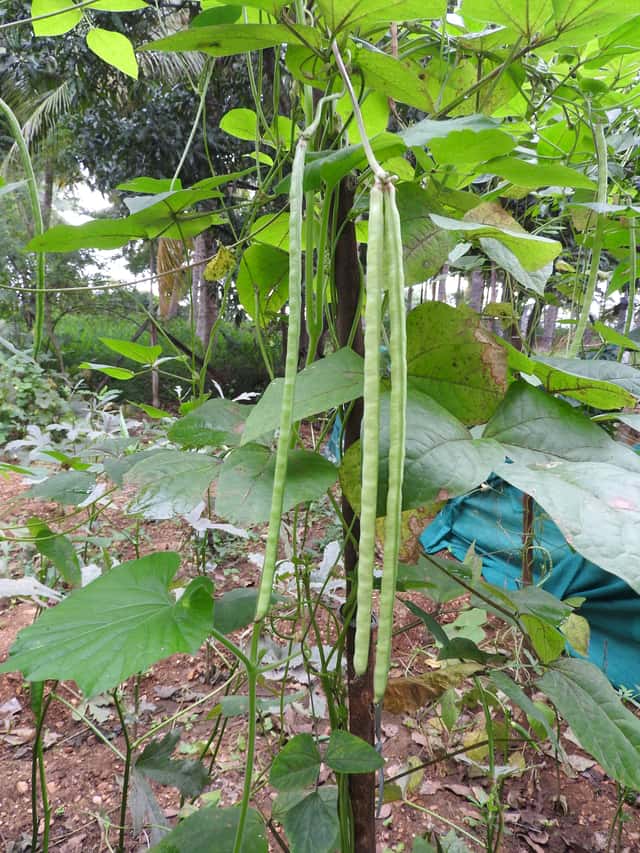
Fabaceae
Black-Eyed Pea (Vigna unguiculata): Complete Care & Growing Guide
Vigna unguiculata
Plant in full sun with well-draining soil. Water weekly, allowing soil to dry between waterings. Highly drought-tolerant once established. Fertilize every 30 days for maximum pod production. Grows fast and produces pods in about 60 days.
Every 7 days
Direct sun
18° - 38°C
40% - 80%
Categories
What is Black-eyed pea?
Black-eyed pea (Vigna unguiculata) is a easy-care plant from the Fabaceae family. The black-eyed pea (Vigna unguiculata) is an annual legume native to West Africa, widely grown across tropical and subtropical regions worldwide. Recognized by its distinctive black spot around the hilum, it is one of humanity's oldest and most nutritious food crops, rich in protein, fiber, and micr...
Black-eyed pea grows up to 80cm, spread of 60cm, watering every 7 days, 18°C – 38°C, 40–80% humidity. It is not suitable for indoor environments and safe for pets.
Unlike many tropical plants, Black-eyed pea tolerates watering mistakes. Best for beginners. Unlike many popular species, Black-eyed pea is safe to keep around pets.
How to Care for Black-eyed pea?
TLDR: Black-eyed pea needs Direct sun, watering every 7 days, and temperatures between 18-38°C with 40-80% humidity.
How Often Should You Water Black-eyed pea?
Water every 7 days, letting the soil dry out completely between waterings. Black-eyed peas are highly drought-tolerant — overwatering causes root rot. Reduce frequency after establishment.
How Much Light Does Black-eyed pea Need?
Requires full sun — at least 6-8 hours of direct sunlight per day. This is a tropical plant that does not adapt well to shade; insufficient light leads to fewer pods and increased susceptibility to fungal diseases.
What Is the Best Soil for Black-eyed pea?
Prefers well-draining sandy loam with pH 5.5–6.5. Avoid waterlogged or heavy clay soils. Tolerates nitrogen-poor soils thanks to biological nitrogen fixation by rhizobium bacteria in root nodules.
What Pot Should You Use for Black-eyed pea?
Clay or plastic pots with drainage holes. For container growing, use pots at least 30 cm deep and 30 cm wide.
Care Schedule
Fertilize
Every 30 days
What Is Black-eyed pea and Where Does It Come From?
The black-eyed pea (Vigna unguiculata) is an annual legume native to West Africa, widely grown across tropical and subtropical regions worldwide. Recognized by its distinctive black spot around the hilum, it is one of humanity's oldest and most nutritious food crops, rich in protein, fiber, and micronutrients. It also plays a vital role in soil health by fixing atmospheric nitrogen.
How to Propagate Black-eyed pea?
Direct sowing
Sow after the last frost, when soil temperature reaches 18°C (65°F). Inoculating seeds with Bradyrhizobium inoculant is optional but significantly boosts yield.
- 1 Select healthy, undamaged seeds
- 2 Sow directly in the ground 2-5 cm deep
- 3 Space plants 15-30 cm apart
- 4 Keep soil moist until germination
- 5 Thin weaker seedlings after emergence
Materials needed:
How Big Does Black-eyed pea Grow?
TLDR: Black-eyed pea can reach up to 80cm tall with Fast growth rate.
Max height
80cm
Spread
60cm
Growth rate
Fast
Foliage
Deciduous
Plant Uses
Edible
Can be consumed
Medicinal
Medicinal properties
Medicinal Uses
- Anti-inflammatory properties; used in traditional African medicine to treat infections and inflammation
Culinary Uses
- Fresh green pods cooked as a vegetable
- Dried seeds in soups, stews, salads and rice dishes
- Young leaves sautéed as greens
- Hoppin' John and black-eyed pea salad
Is your plant showing symptoms?
Click on the symptom to discover possible causes:
What Diseases Commonly Affect Black-eyed pea?
TLDR: Black-eyed pea is susceptible to 12 known diseases. Monitor regularly for early detection.
Anthracnose
Anthracnose is a fungal disease caused by fungi in the genus Colletotrichum that affects many plants, including vegetables, fruits, and trees. The disease thrives in cool, wet conditions, causing dark, sunken lesions on leaves, stems, flowers, and fruits.
Fusarium Wilt
Fusarium wilt is a serious fungal disease caused by the soil-borne fungus Fusarium oxysporum. The fungus invades roots and blocks the water-conducting vessels (xylem) of the plant, causing progressive wilting and eventual death. Host-specific forms of the pathogen exist that attack different plant species.
Powdery Mildew
Powdery mildew is a common fungal disease caused by various fungi species including Erysiphe, Podosphaera, Oïdium, and Leveillula. It affects over 10,000 plant species worldwide. The disease thrives in warm, dry climates with high humidity and appears as a distinctive white powdery coating on plant surfaces.
Bacterial Blight
Bacterial blight is a serious plant disease caused by pathogenic bacteria that enters plants through wounds or natural openings. It spreads rapidly in warm, wet conditions and can cause significant damage to leaves, stems, and flowers. The bacteria are transmitted by water splash, contaminated tools, and insects.
Meaning & Symbolism
In West African and African-American culture, black-eyed peas symbolize luck, prosperity, and resilience. Eating them on New Year's Day is a tradition believed to bring good fortune throughout the year.
Fun Facts
Black-eyed peas can fix up to 200 kg of nitrogen per hectare per year through symbiotic root bacteria
They have been cultivated for over 5,000 years, making them one of the world's oldest legumes
The characteristic black 'eye' is actually the hilum — the point where the seed attaches to the pod
Drought-tolerant enough to grow in soils where other legumes fail
Frequently asked questions
How often should I water black-eyed peas?
Do black-eyed peas need full sun?
How long until black-eyed peas produce pods?
Are black-eyed peas toxic to pets?
Compare with similar plants
| Attribute | Difficulty | Light | Watering | Pet Safe |
|---|---|---|---|---|
| Field Maple | Easy | Bright indirect | 14d | ✓ |
| Silver Birch | Easy | Direct sun | 14d | ✓ |
| Common Blanketflower | Easy | Direct sun | 10d | ✓ |
| Cushion Bush | Easy | Direct sun | 14d | ✓ |





