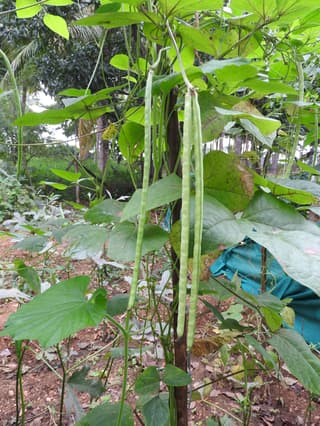
Black-eyed pea with Southern Blight: Prevention & Cure
Vigna unguiculata
Southern Blight on Black-eyed pea: What to Know?
Southern Blight on Black-eyed pea (Vigna unguiculata) is a fungal condition with high severity. Black-eyed pea has moderate susceptibility to this disease. Southern blight is a devastating soilborne fungal disease caused by Athelia rolfsii (formerly Sclerotium rolfsii), affecting over 500 plant species including vegetables, ornamentals, and fruit crops....
Black-eyed pea is a easy-care plant. Recovery from Southern Blight takes approximately 21 days with proper treatment.
Unlike bacterial infections, Southern Blight on Black-eyed pea can be managed with organic fungicides.
🔍 What Does Southern Blight Look Like on Black-eyed pea?
- • Brown to black lesions on stem near soil line
- • Water-soaked appearance on lower leaves
- • Sudden and permanent wilting of entire plant within days
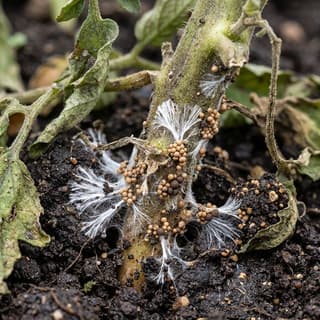
- • White mycelium radiating from plant base onto soil surface
- • Spherical tan to reddish-brown sclerotia (1-2mm)
- • Yellowing and necrosis of foliage
- • Crown and root rot
- • On fruits: sunken yellow lesions turning water-soaked
❓ What Causes Southern Blight on Black-eyed pea?
- → Soilborne fungus Athelia rolfsii surviving through sclerotia
- → High temperatures (25-30°C / 77-95°F)
- → High soil moisture and relative humidity above 90%
- → Acidic soil (pH below 7, especially pH 2-5)
- → Spread through infested soil and plant debris
- → Contaminated tools, irrigation water, and transplants
- → Contaminated mulch or compost
- → Plant stress and stem injuries
💊 How to Treat Southern Blight on Black-eyed pea?
TLDR: Treat Southern Blight on Black-eyed pea with quick treatment (~11 days) or organic (~21 days). Black-eyed pea has moderate susceptibility to this disease.
Quick Fixes
Step 1
Remove infected plants IMMEDIATELY with roots and soil
Step 2
Apply azoxystrobin drench to adjacent plants
Step 3
Spray mancozeb on base of all plants in area
Step 4
Drastically reduce irrigation
Step 5
Reapply fungicides every 7-10 days for 3 weeks
Organic Treatment
Step 1
Remove diseased plants and 3 inches of contaminated soil
Step 2
Solarize area with clear plastic for 6 weeks
Step 3
Incorporate compost rich in Trichoderma
Step 4
Adjust soil pH with lime
Step 5
Improve drainage and plant spacing
Step 6
Apply preventive bicarbonate spray biweekly
🛡️ How to Prevent Southern Blight on Black-eyed pea?
TLDR: Prevent Southern Blight on Black-eyed pea with 10 essential preventive care practices.
- ✓ Carefully inspect transplants for sclerotia before planting
- ✓ Avoid planting in fields with history of infestation
- ✓ Maintain soil pH above 7 (lime reduces sclerotial germination)
- ✓ Improve plant spacing to increase airflow
- ✓ Use high-quality mulches from reputable suppliers
- ✓ Rotate with non-host crops (corn, wheat, barley) for 2-3 years
- ✓ Avoid overwatering and excessive soil moisture
- ✓ Disinfect tools between plants
- ✓ Deep plow (8-12 inches) to bury sclerotia
- ✓ Remove symptomatic plants and weeds immediately
🌱 How to Care for Black-eyed pea to Prevent Southern Blight?
💧 How to Water
Water every 7 days, letting the soil dry out completely between waterings. Black-eyed peas are highly drought-tolerant — overwatering causes root rot. Reduce frequency after establishment.
☀️ Lighting
Requires full sun — at least 6-8 hours of direct sunlight per day. This is a tropical plant that does not adapt well to shade; insufficient light leads to fewer pods and increased susceptibility to fungal diseases.
🪴 Ideal Soil
Prefers well-draining sandy loam with pH 5.5–6.5. Avoid waterlogged or heavy clay soils. Tolerates nitrogen-poor soils thanks to biological nitrogen fixation by rhizobium bacteria in root nodules.