Araceae
Alocasia plumbea — Black Metallic Taro
Alocasia plumbea
Thrives in bright, filtered indirect light with rich, well-draining organic soil kept consistently and lightly moist. Highly sensitive to soggy soil, which can quickly cause root rot, yet also appreciates elevated humidity, though standing moisture on the leaves invites fungal issues.
Every 7 days
Bright indirect
16° - 30°C
60% - 80%
Categories
What is Black Metallic Taro?
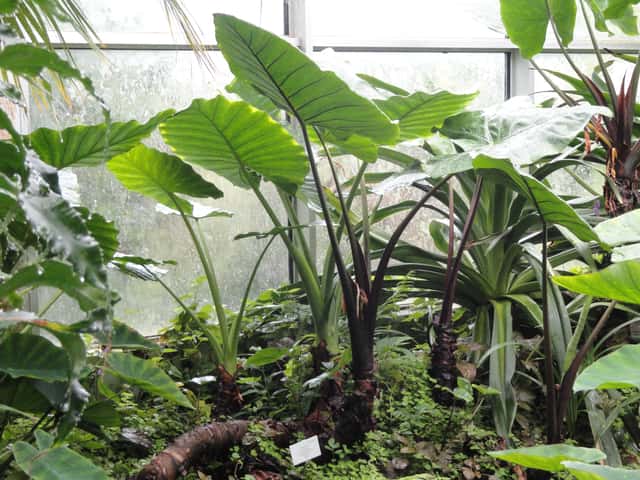
Black Metallic Taro (Alocasia plumbea) is a medium-care plant from the Araceae family. Alocasia plumbea, commonly known as the Black Metallic Taro, is a robust rhizomatous aroid native to tropical Southeast Asia. It is prized for its large, heart-shaped leaves with a striking metallic sheen ranging from olive-green to near-black purple, accented by contrasting veins and dark petioles....
Black Metallic Taro grows up to 1.5m, spread of 120cm, watering every 7 days, 16°C – 30°C, 60–80% humidity. It is suitable for indoor environments and not safe for pets.
Without precautions, ingestion can cause irritation in pets. Keep out of reach of cats and dogs. Without adequate drainage, root rot can develop within 14 days.
How to Care for Black Metallic Taro?
TLDR: Black Metallic Taro needs Bright indirect, watering every 7 days, and temperatures between 16-30°C with 60-80% humidity.
How Often Should You Water Black Metallic Taro?
Water when the top 2-3 cm (1 in) of soil feels dry, typically every 7 days; never let the pot sit in standing water.
How Much Light Does Black Metallic Taro Need?
Place near a bright window with filtered light; avoid harsh midday direct sun, which can scorch the dramatic foliage.
What Is the Best Soil for Black Metallic Taro?
Use a chunky, organic-rich mix (coco coir, sphagnum moss) amended with perlite for balanced moisture retention and drainage.
What Pot Should You Use for Black Metallic Taro?
A terracotta or ceramic pot with drainage holes helps excess moisture evaporate and reduces the risk of root rot.
Care Schedule
Fertilize
Every 30 days
Rotate
Every 14 days
Repot
Every 365 days
What Is Black Metallic Taro and Where Does It Come From?
Alocasia plumbea, commonly known as the Black Metallic Taro, is a robust rhizomatous aroid native to tropical Southeast Asia. It is prized for its large, heart-shaped leaves with a striking metallic sheen ranging from olive-green to near-black purple, accented by contrasting veins and dark petioles. In cultivation it can reach up to 1.5 m (5 ft) tall. Its inflorescence -- a typical aroid spathe and spadix -- is inconspicuous and rarely appears indoors.
How to Propagate Black Metallic Taro?
Rhizome/tuber division
Always use sterilized tools to prevent fungal contamination on the cuts.
- 1 Remove the plant from its pot and locate rhizomes with visible growth buds
- 2 Cut the rhizomes with a sterilized knife, ensuring each section has at least one bud
- 3 Let the cuts callous for 24 hours in a dry, airy spot
- 4 Plant each section in well-draining soil and keep lightly moist
Materials needed:
Pup (offset) separation
Pups with at least 2-3 leaves have a higher survival rate.
- 1 Identify lateral offsets (pups) with their own roots at the base of the mother plant
- 2 Carefully separate with a sterilized knife, keeping roots intact
- 3 Plant the pup in an individual pot with a light, well-draining mix
- 4 Keep in indirect light with moderate humidity until established
Materials needed:
How Big Does Black Metallic Taro Grow?
TLDR: Black Metallic Taro can reach up to 1.5m tall with Fast growth rate.
Max height
1.5m
Spread
1.2m
Growth rate
Fast
Foliage
Evergreen
Warning: Toxic Plant
This plant can be toxic if ingested. Keep out of reach of:
Plant Uses
Ornamental
Great for decoration
Air Purifying
Improves air quality
Is your plant showing symptoms?
Click on the symptom to discover possible causes:
What Diseases Commonly Affect Black Metallic Taro?
TLDR: Black Metallic Taro is susceptible to 7 known diseases. Monitor regularly for early detection.
Root Rot
Root rot is a serious fungal disease that affects the root system of plants, causing them to decay and die. It is primarily caused by overwatering, poor drainage, or soil-borne fungi such as Pythium, Phytophthora, Rhizoctonia, and Fusarium. The disease thrives in waterlogged conditions where roots are deprived of oxygen, making them susceptible to fungal infection.
Powdery Mildew
Powdery mildew is a common fungal disease caused by various fungi species including Erysiphe, Podosphaera, Oïdium, and Leveillula. It affects over 10,000 plant species worldwide. The disease thrives in warm, dry climates with high humidity and appears as a distinctive white powdery coating on plant surfaces.
Leaf Spot
Leaf spot is a common fungal disease caused by various pathogens including Alternaria, Ascochyta, Colletotrichum, Septoria, and Venturia. It primarily affects leaves, causing discolored spots that can lead to premature leaf drop if left untreated.
Spider Mites
Spider mites are tiny arachnids (less than 1/20 inch long) related to spiders and ticks that feed on plant sap. They thrive in hot, dry conditions and can cause significant damage to ornamental and vegetable plants. During severe infestations, crop losses can reach 14% or higher as these pests disrupt vital plant processes including photosynthesis, carbon dioxide absorption, and transpiration.
Meaning & Symbolism
In several Asian traditions, dark-leaved Alocasias symbolize protection, prosperity, and good fortune, often grown near entryways to ward off negative energy.
Fun Facts
The dark metallic-purple leaf color comes from anthocyanin pigments layered within the leaf epidermis structure.
It is a close relative of Alocasia macrorrhizos, whose rhizomes are eaten as food in some cultures after thorough cooking.
It belongs to the Araceae family, the same family as Monstera and Philodendron.
Frequently asked questions
Is Alocasia plumbea toxic to cats and dogs?
How often should I water my Black Metallic Taro?
Why is my Alocasia plumbea losing its dark leaf color?
Can Alocasia plumbea be grown outdoors?
Compare with similar plants
| Attribute | Difficulty | Light | Watering | Pet Safe |
|---|---|---|---|---|
| Dark Fieldcap | Medium | Low light | 2d | ⚠️ |
| Azalea | Medium | Partial shade | 3d | ⚠️ |
| Muriel's Bamboo | Medium | Partial shade | 3d | ✓ |
| Bougainvillea | Medium | Direct sun | 7d | ⚠️ |
Choose & Compare
Sources & References
- Alocasia plumbea - RHS
- Alocasia plumbea - Wikipedia
- Alocasia plumbea Black Metallic care - Greg
- Alocasia Care Guide - GrowTropicals
- Alocasia Care Guide - Blackwater Plants
- Alocasia Amazonica: Common Diseases and Pests - Houseplant Central
- Alocasia, Upright Elephant Ear - Dave's Garden
- Alocasia plumbea Metallica Black Taro - Chicago Botanic Garden