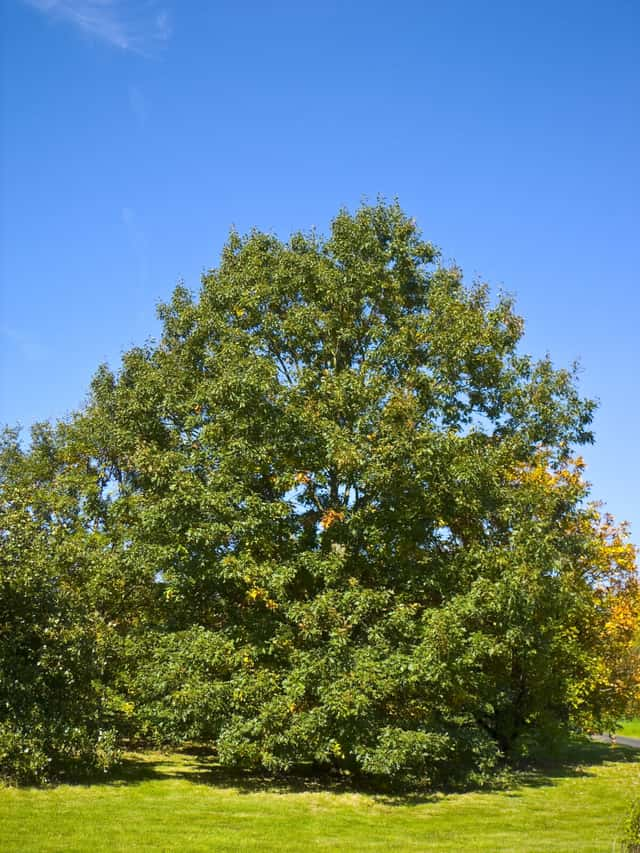
Fagaceae
Black Oak (Quercus velutina)
Quercus velutina
A large, tough tree for temperate climates (USDA zones 3 to 9). Plant it in full sun in well-drained soil, ideally slightly acid; it handles poor, rocky and dry soil and tolerates moderate drought once established. It has a deep taproot, so plant it young in its final spot. Prune only in winter so you do not attract the beetles that spread oak wilt. Gypsy moth caterpillars are the most serious pest.
Every 10 days
Bright indirect
-40° - °C
% - %
Categories
What is Black oak?
Black oak (Quercus velutina) is a medium-care plant from the Fagaceae family. Black oak (Quercus velutina) is a deciduous tree of eastern and central North America, from Maine and Ontario to Florida and eastern Texas, common on dry upland slopes and ridges. It usually grows 20-25 m tall in the north and can exceed 40 m in the south. The outer bark is dark and furrowed, but th...
Black oak grows up to 30.0m, spread of 2400cm, watering every 10 days. It is not suitable for indoor environments and safe for pets.
Unlike many popular species, Black oak is safe to keep around pets.
How to Care for Black oak?
TLDR: Black oak needs Bright indirect, watering every 10 days, and temperatures between -40-30°C with 40-70% humidity.
How Often Should You Water Black oak?
Water deeply every 7-10 days for the first two years. Once established it only needs water during long droughts. It does not like soggy soil.
How Much Light Does Black oak Need?
Full sun, 6 or more hours a day, for good growth. It tolerates part shade when young.
What Is the Best Soil for Black oak?
Well-drained loam, sand or rocky soil, ideally slightly acid. It tolerates poor, dry and even alkaline soil, but in soil that is not acid enough it may show chlorosis (yellow leaves with green veins).
What Pot Should You Use for Black oak?
Not a container tree. Plant it in the ground in a spacious spot; the deep taproot does not adapt to containers.
What Is Black oak and Where Does It Come From?
Black oak (Quercus velutina) is a deciduous tree of eastern and central North America, from Maine and Ontario to Florida and eastern Texas, common on dry upland slopes and ridges. It usually grows 20-25 m tall in the north and can exceed 40 m in the south. The outer bark is dark and furrowed, but the inner bark is yellow-orange: it was the source of quercitron, a textile dye exported to Europe. The 10-20 cm leaves have five to seven bristle-tipped lobes, are glossy dark green above and turn yellow or brown in fall. The buds are velvety, which gives the species its name velutina. The acorns take two years to ripen and feed many animals.
How to Propagate Black oak?
Seed (acorn)
Move the seedling to its final spot while small, because the taproot makes transplanting hard. Protect the acorns from squirrels.
- 1 Collect ripe acorns in fall as soon as they drop
- 2 Discard any that float in water or have weevil holes
- 3 Sow in fall 2-3 cm deep, or store in moist sand in the fridge for 1-3 months and sow in spring
- 4 Use deep pots or sow in place: the taproot grows fast
Materials needed:
How Big Does Black oak Grow?
TLDR: Black oak can reach up to 30.0m tall with Medium growth rate.
Max height
30.0m
Spread
24.0m
Growth rate
Medium
Foliage
Deciduous
Warning: Toxic Plant
This plant can be toxic if ingested. Keep out of reach of:
Plant Uses
Ornamental
Great for decoration
Is your plant showing symptoms?
Click on the symptom to discover possible causes:
What Diseases Commonly Affect Black oak?
TLDR: Black oak is susceptible to 7 known diseases. Monitor regularly for early detection.
Caterpillars
Caterpillars are the larval stage of moths and butterflies that feed voraciously on plant foliage, stems, flowers, and fruits. Common species include cabbage loopers, tomato hornworms, armyworms, and cutworms. These pests can cause extensive damage by consuming large amounts of plant tissue in a short time. They vary in size from small (1/4 inch) to large (5 inches), with colors ranging from green to brown, often featuring stripes or spots. Caterpillars are highly mobile and can quickly spread throughout gardens, making them one of the most destructive common pests.
Canker
Canker is a disease caused by various fungi and bacteria that create necrotic, sunken areas on bark of branches, stems, and trunks. Pathogens enter through wounds and natural openings, especially when plants are stressed. Canker can gradually weaken or kill branches by disrupting water and nutrient flow.
Iron Deficiency
Iron deficiency, commonly known as iron chlorosis, is a nutrient deficiency disorder where plants cannot access sufficient iron from the soil. While iron is typically abundant in soil, various soil conditions can limit plant uptake, resulting in characteristic yellowing of leaves while veins remain green.
Root Rot
Root rot is a serious fungal disease that affects the root system of plants, causing them to decay and die. It is primarily caused by overwatering, poor drainage, or soil-borne fungi such as Pythium, Phytophthora, Rhizoctonia, and Fusarium. The disease thrives in waterlogged conditions where roots are deprived of oxygen, making them susceptible to fungal infection.
Fun Facts
Its yellow inner bark was the source of quercitron, a dye exported to Europe.
Its acorns take two years to ripen.
It hybridizes easily with other red oaks and has at least a dozen named hybrids.
Frequently asked questions
Is black oak drought tolerant?
Can you transplant a black oak?
When should I prune black oak?
Why is the inner bark yellow?
Compare with similar plants
| Attribute | Difficulty | Light | Watering | Pet Safe |
|---|---|---|---|---|
| Dark Fieldcap | Medium | Low light | 2d | ⚠️ |
| Azalea | Medium | Partial shade | 3d | ⚠️ |
| Muriel's Bamboo | Medium | Partial shade | 3d | ✓ |
| Bougainvillea | Medium | Direct sun | 7d | ⚠️ |




