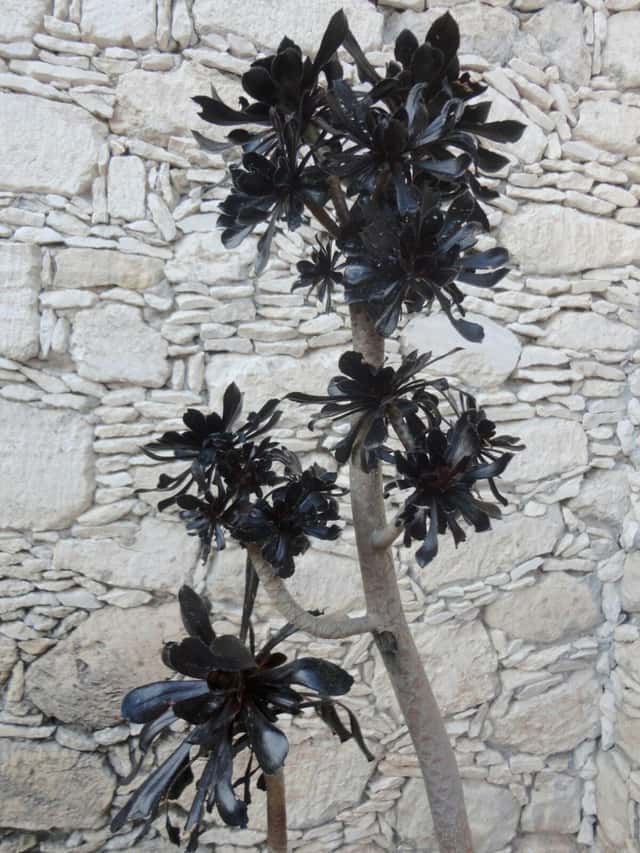
Crassulaceae
Aeonium 'Zwartkop' (Black Rose) Care Guide
Aeonium 'Zwartkop'
Give Aeonium 'Zwartkop' bright light, well-draining soil, and infrequent deep watering. It grows actively in cool, moist winters and rests during hot, dry summers, the opposite pattern of most succulents. Protect it from frost and prolonged overwatering, its two biggest threats.
Every 10 days
Bright indirect
7° - 29°C
30% - 50%
Categories
What is Black Rose?
Black Rose (Aeonium 'Zwartkop') is a easy-care plant from the Crassulaceae family. Aeonium 'Zwartkop' is a striking succulent shrub prized for its near-black, burgundy-purple rosettes that sit atop slender, woody stems. A cultivar of Aeonium arboreum, native to the Canary Islands, it forms an architectural, sculptural silhouette in gardens and containers alike. The dark foliage de...
Black Rose grows up to 90cm, spread of 60cm, watering every 10 days, 7°C – 29°C, 30–50% humidity. It is suitable for indoor environments and safe for pets.
Unlike many tropical plants, Black Rose tolerates watering mistakes. Best for beginners. Unlike many popular species, Black Rose is safe to keep around pets. Without adequate drainage, root rot can develop within 20 days.
How to Care for Black Rose?
TLDR: Black Rose needs Bright indirect, watering every 10 days, and temperatures between 7-29°C with 30-50% humidity.
How Often Should You Water Black Rose?
Water deeply only when the soil has dried out completely, roughly every 10-14 days in active growth and much less in summer dormancy or winter cold spells. Always let excess water drain away and never let the pot sit in standing water.
How Much Light Does Black Rose Need?
Provide at least 5-6 hours of bright light daily to keep the rosettes deep black-purple; too little light causes the leaves to fade to green. In very hot climates, give some afternoon shade to prevent leaf scorch.
What Is the Best Soil for Black Rose?
Use a gritty, fast-draining succulent or cactus mix, ideally cut with extra perlite or coarse sand (about 1:1), to prevent waterlogged roots.
What Pot Should You Use for Black Rose?
A terracotta or unglazed clay pot with a drainage hole is ideal, since porous walls help excess moisture evaporate and reduce root rot risk.
Care Schedule
Fertilize
Every 60 days
Rotate
Every 14 days
Repot
Every 730 days
What Is Black Rose and Where Does It Come From?
Aeonium 'Zwartkop' is a striking succulent shrub prized for its near-black, burgundy-purple rosettes that sit atop slender, woody stems. A cultivar of Aeonium arboreum, native to the Canary Islands, it forms an architectural, sculptural silhouette in gardens and containers alike. The dark foliage deepens to almost jet black in full sun and softens to green-purple in shade, making it a dramatic focal point in succulent arrangements. In spring, mature rosettes can send up conical clusters of bright yellow star-shaped flowers, though the flowering rosette dies back afterward while the rest of the plant continues to grow.
How to Propagate Black Rose?
Stem Cutting
Avoid watering immediately after cutting to prevent rot; wait until the cutting is callused and roots have started to establish.
- 1 Cut a healthy stem section 8-10 cm long using clean, sharp scissors or a knife
- 2 Remove the lower leaves and let the cut end callous over for 2-3 days in a dry, shaded spot
- 3 Insert the callused end into a well-draining succulent mix
- 4 Water lightly once roots begin to form, then follow the normal watering schedule
Materials needed:
How Big Does Black Rose Grow?
TLDR: Black Rose can reach up to 90cm tall with Medium growth rate.
Max height
90cm
Spread
60cm
Growth rate
Medium
Foliage
Evergreen
Plant Uses
Ornamental
Great for decoration
Is your plant showing symptoms?
Click on the symptom to discover possible causes:
What Diseases Commonly Affect Black Rose?
TLDR: Black Rose is susceptible to 5 known diseases. Monitor regularly for early detection.
Root Rot
Root rot is a serious fungal disease that affects the root system of plants, causing them to decay and die. It is primarily caused by overwatering, poor drainage, or soil-borne fungi such as Pythium, Phytophthora, Rhizoctonia, and Fusarium. The disease thrives in waterlogged conditions where roots are deprived of oxygen, making them susceptible to fungal infection.
Overwatering
Overwatering occurs when plants receive too much water, depriving roots of oxygen and causing root rot. This environmental stress is one of the most common causes of houseplant death, as waterlogged soil prevents roots from breathing and functioning properly.
Mealybugs
Mealybugs are small, soft-bodied insects covered with a white, waxy, cottony material. They are common pests of houseplants and outdoor plants in mild climates. These sap-sucking insects feed on plant tissue, causing damage, stunted growth, and can lead to plant death if left untreated. They produce sticky honeydew which attracts sooty mold.
Aphids
Aphids are small, soft-bodied, pear-shaped insects (1/16 to 1/8 inch long) that feed by sucking nutrient-rich sap from plants. They reproduce rapidly and can quickly weaken plants, causing distorted growth and transmitting plant viruses. Aphids come in various colors including green, black, red, yellow, brown, and gray. They secrete honeydew, a sticky substance that attracts ants and encourages sooty mold growth.
Meaning & Symbolism
In succulent-collector culture, the near-black rosettes of Aeonium 'Zwartkop' represent drama, mystery, and individuality, standing out boldly against typical green foliage.
Fun Facts
Unlike most succulents, Aeonium Zwartkop grows actively in cool winters and rests during hot summers.
Individual rosettes are monocarpic and die after flowering, but the plant survives through its many side branches.
The deep black-purple color comes from anthocyanin pigments and intensifies with more sun exposure.
It is native only to the western Canary Islands, though as a garden plant it is now grown worldwide.
Frequently asked questions
Why is my Aeonium 'Zwartkop' turning green instead of black?
Is Aeonium 'Zwartkop' toxic to pets?
How often should I water Aeonium 'Zwartkop'?
Why did my Aeonium rosette die after flowering?
What is the best way to propagate Aeonium 'Zwartkop'?
Compare with similar plants
| Attribute | Difficulty | Light | Watering | Pet Safe |
|---|---|---|---|---|
| Field Maple | Easy | Bright indirect | 14d | ✓ |
| Silver Birch | Easy | Direct sun | 14d | ✓ |
| Common Blanketflower | Easy | Direct sun | 10d | ✓ |
| Cushion Bush | Easy | Direct sun | 14d | ✓ |





