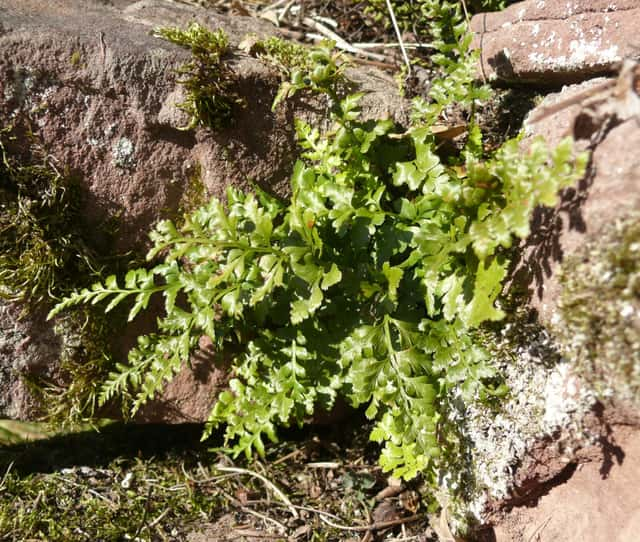
Aspleniaceae
Black Spleenwort (Asplenium adiantum-nigrum)
Asplenium adiantum-nigrum
Slow-growing, fairly easy fern for cool, shaded spots. Give it part to full shade, a well-drained, humus-rich mix with some lime or grit, steady moisture without waterlogging, and good humidity. Ideal for rock gardens, shady walls and terrariums.
Every 5 days
Low light
5° - 24°C
50% - 80%
Categories
What is Black Spleenwort?
Black Spleenwort (Asplenium adiantum-nigrum) is a medium-care plant from the Aspleniaceae family. Asplenium adiantum-nigrum, known as black spleenwort, is a small evergreen fern in the Aspleniaceae family. It forms a loose tuft of glossy, triangular, finely divided fronds on dark, almost black stems, growing from a short creeping rhizome. It is native to Europe, northern and southern Africa, wes...
Black Spleenwort grows up to 40cm, spread of 50cm, watering every 5 days, 5°C – 24°C, 50–80% humidity. It is suitable for indoor environments and safe for pets.
Unlike many popular species, Black Spleenwort is safe to keep around pets. Without adequate drainage, root rot can develop within 10 days.
How to Care for Black Spleenwort?
TLDR: Black Spleenwort needs Low light, watering every 5 days, and temperatures between 5-24°C with 50-80% humidity.
How Often Should You Water Black Spleenwort?
Keep the soil evenly moist but never soggy; water when the surface starts to dry, roughly every 5 days in warm weather and less in winter. Good drainage is essential to avoid root rot.
How Much Light Does Black Spleenwort Need?
Prefers part to full shade with less than about 3 hours of sun a day. Strong direct sun scorches the fronds.
What Is the Best Soil for Black Spleenwort?
Use a well-drained, humus-rich fern mix with grit; in the wild it favors slightly base-rich rock, so a little limestone chippings or old mortar suits it.
What Pot Should You Use for Black Spleenwort?
Shallow terracotta pot or trough with drainage holes; it also grows well in wall crevices or a terrarium.
Care Schedule
Misting
Every 3 days
What Is Black Spleenwort and Where Does It Come From?
Asplenium adiantum-nigrum, known as black spleenwort, is a small evergreen fern in the Aspleniaceae family. It forms a loose tuft of glossy, triangular, finely divided fronds on dark, almost black stems, growing from a short creeping rhizome. It is native to Europe, northern and southern Africa, western Asia, Macaronesia, southwestern North America and Hawaii, where it grows in rock crevices, old walls, hedgebanks and shady rocky woods. Fronds usually reach 15-40 cm, longer in deep shade and much shorter on exposed rock.
How to Propagate Black Spleenwort?
Spore propagation
Sterile soil and equipment keep mould from overrunning the slow-growing spores. Never let the surface dry out.
- 1 Collect ripe spores from the sori on the underside of mature fronds.
- 2 Sow them thinly on the surface of sterilized, humus-rich soil.
- 3 Cover with plastic or glass to keep humidity high and place in bright shade at about 15°C.
- 4 Keep moist until small plantlets form, then pot them on and plant out in late spring or summer.
Materials needed:
Division
Only divide large, established clumps; small sections from a rock crevice establish poorly.
- 1 In spring, lift a mature clump carefully.
- 2 Separate the short rhizome into sections, each with roots and some fronds.
- 3 Replant at once in moist, well-drained fern mix.
- 4 Keep shaded and evenly moist until new fronds appear.
Materials needed:
How Big Does Black Spleenwort Grow?
TLDR: Black Spleenwort can reach up to 40cm tall with Slow growth rate.
Max height
40cm
Spread
50cm
Growth rate
Slow
Foliage
Evergreen
Plant Uses
Ornamental
Great for decoration
Medicinal
Medicinal properties
Medicinal Uses
- Traditionally used in folk medicine for spleen complaints, jaundice and coughs
- Historically used as a hair wash
Is your plant showing symptoms?
Click on the symptom to discover possible causes:
What Diseases Commonly Affect Black Spleenwort?
TLDR: Black Spleenwort is susceptible to 5 known diseases. Monitor regularly for early detection.
Slugs and Snails
Slugs and snails are mollusks that feed on plant tissue, causing irregular holes in leaves and damage to young seedlings. They are most active at night and in moist conditions, leaving characteristic silvery slime trails. These pests can quickly devastate gardens, especially during wet seasons.
Root Rot
Root rot is a serious fungal disease that affects the root system of plants, causing them to decay and die. It is primarily caused by overwatering, poor drainage, or soil-borne fungi such as Pythium, Phytophthora, Rhizoctonia, and Fusarium. The disease thrives in waterlogged conditions where roots are deprived of oxygen, making them susceptible to fungal infection.
Low Humidity Stress
Low humidity stress occurs when indoor air becomes too dry, causing plants to lose moisture faster than they can absorb it through their roots. This is especially common during winter heating periods, near radiators and heating vents, or in air-conditioned spaces. Tropical plants are particularly susceptible to low humidity damage.
Sunburn (Sun Scorch)
Sunburn or sun scorch is an environmental condition that occurs when plants are exposed to intense, direct sunlight beyond their tolerance level. This causes the breakdown of chlorophyll in the leaves, resulting in bleached, dried, and damaged foliage. The damage can happen rapidly, sometimes within just a few hours of exposure.
Fun Facts
Its name comes from the dark, almost black stems, which contrast with the bright green fronds.
It is a hybrid-origin species: its genome combines those of Asplenium onopteris and Asplenium cuneifolium.
It was described by Linnaeus in 1753 and grows from Europe and Africa to Hawaii, where it lives on lava flows.
Frequently asked questions
Is black spleenwort toxic to pets?
How much light does black spleenwort need?
How often should I water it?
Can I grow it indoors?
Compare with similar plants
| Attribute | Difficulty | Light | Watering | Pet Safe |
|---|---|---|---|---|
| Dark Fieldcap | Medium | Low light | 2d | ⚠️ |
| Azalea | Medium | Partial shade | 3d | ⚠️ |
| Muriel's Bamboo | Medium | Partial shade | 3d | ✓ |
| Bougainvillea | Medium | Direct sun | 7d | ⚠️ |