Myrtaceae
Blepharocalyx (genus)
Blepharocalyx
A native South American tree for large gardens, parks and forest restoration. It wants sun and regular watering while young. Birds come for the berries.
Every 7 days
Bright indirect
° - °C
% - %
Categories
What is Blepharocalyx?
Blepharocalyx (Blepharocalyx) is a medium-care plant from the Myrtaceae family. Blepharocalyx is a small genus in the myrtle family, Myrtaceae, with four species from South America and the West Indies. The best known is Blepharocalyx salicifolius, called arrayán or anacahuita in Argentina and Uruguay and murta in Brazil, where it grows from Ceará down to Rio Grande do Sul. It i...
Blepharocalyx grows up to 30.0m, watering every 7 days. It is not suitable for indoor environments and safe for pets.
Unlike many popular species, Blepharocalyx is safe to keep around pets.
How to Care for Blepharocalyx?
TLDR: Blepharocalyx needs Bright indirect, watering every 7 days, and temperatures between 15-30°C with 40-70% humidity.
How Often Should You Water Blepharocalyx?
Water once a week in the first year, more in hot weather. Once established, rain is usually enough; water during long dry spells.
How Much Light Does Blepharocalyx Need?
Full sun. This tree needs plenty of light to grow well.
What Is the Best Soil for Blepharocalyx?
Garden soil with organic matter. In the wild it is common along rivers, so it accepts moist ground.
What Is Blepharocalyx and Where Does It Come From?
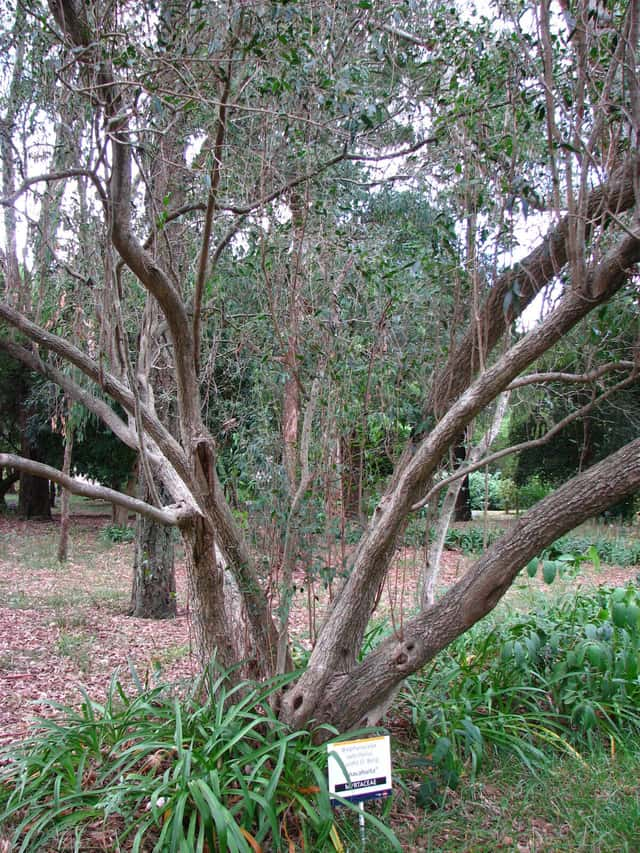
Blepharocalyx is a small genus in the myrtle family, Myrtaceae, with four species from South America and the West Indies. The best known is Blepharocalyx salicifolius, called arrayán or anacahuita in Argentina and Uruguay and murta in Brazil, where it grows from Ceará down to Rio Grande do Sul. It is an evergreen tree that can pass 20 metres in forest, though on its own it usually stays lower and branches into several trunks. The leaves are opposite, long and narrow like willow leaves, glossy dark green and fragrant when crushed. In spring it opens small white to cream flowers, about 1 cm across, in groups of two or three. The round berries ripen slowly from yellow to reddish purple, so the tree carries fruit of several colours at once.
How to Propagate Blepharocalyx?
Seed
Seeds germinate best at 20 to 25 °C and cope with a very moist substrate.
- 1 Pick fully ripe reddish-purple berries
- 2 Mash and rinse to remove the pulp
- 3 Sow promptly and shallowly in moist sand or seed mix
- 4 Keep moist in a mild spot until they sprout
Materials needed:
How Big Does Blepharocalyx Grow?
TLDR: Blepharocalyx can reach up to 30.0m tall with Medium growth rate.
Max height
30.0m
Foliage
Evergreen
Plant Uses
Ornamental
Great for decoration
Medicinal
Medicinal properties
Aromatic
Pleasant fragrance
Medicinal Uses
- Leaves, stems and fruit are used in Argentine folk medicine
Is your plant showing symptoms?
Click on the symptom to discover possible causes:
What Diseases Commonly Affect Blepharocalyx?
TLDR: Blepharocalyx is susceptible to 2 known diseases. Monitor regularly for early detection.
Rust
Rust is a common fungal disease caused by fungi in the order Pucciniales that affects a wide variety of plants. The disease gets its name from the characteristic orange, yellow, or reddish-brown pustules that appear on leaves, resembling metal rust. This obligate fungal parasite requires living plants to survive and can cause significant economic losses in agricultural crops.
Alternaria Leaf Spot
Alternaria leaf spot is a common fungal disease caused by Alternaria solani and Alternaria alternata that affects a wide range of plants including tomatoes, potatoes, brassicas, and ornamentals. The disease thrives in warm, humid conditions and can cause significant crop damage if left untreated. Spores overwinter on plant debris and can attach to seeds, making complete elimination difficult.
Fun Facts
The name comes from Greek for eyelash calyx, after the hairy edge of the flower.
salicifolius means willow-leaved.
The tree holds yellow, red and purple berries at the same time because they ripen gradually.
Frequently asked questions
How do I recognise Blepharocalyx salicifolius?
Is it the same as common myrtle?
Are the berries edible?
Can I grow it in cold climates?
Compare with similar plants
| Attribute | Difficulty | Light | Watering | Pet Safe |
|---|---|---|---|---|
| Dark Fieldcap | Medium | Low light | 2d | ⚠️ |
| Azalea | Medium | Partial shade | 3d | ⚠️ |
| Muriel's Bamboo | Medium | Partial shade | 3d | ✓ |
| Bougainvillea | Medium | Direct sun | 7d | ⚠️ |
Choose & Compare
Sources & References
- Wikipedia - Blepharocalyx
- Wikipedia ES - Blepharocalyx salicifolius (arrayán, anacahuita, horco molle)
- Embrapa Florestas (2008) - Mudas de regeneração natural: Murta (Blepharocalyx salicifolius)
- Embrapa - Germinação de sementes de Blepharocalyx salicifolius
- Buenos Aires Arbopedia - Anacahuita/Arrayán
- Boletín de la Sociedad Argentina de Botánica - Fungi on leaves of native Myrtaceae (Tucumán)




