Ranunculaceae
Corsican hellebore: Perfect Plant for Beginners
Helleborus argutifolius
An easy, low-maintenance winter-flowering perennial. Grows in full sun to partial shade in moist, well-drained soil. Drought-tolerant once established. All parts are toxic and the sap can irritate skin, so wear gloves when handling. Cut back tatty old stems after flowering.
Every 7 days
Partial shade
-15° - 30°C
40% - 60%
Categories
What is Corsican hellebore?
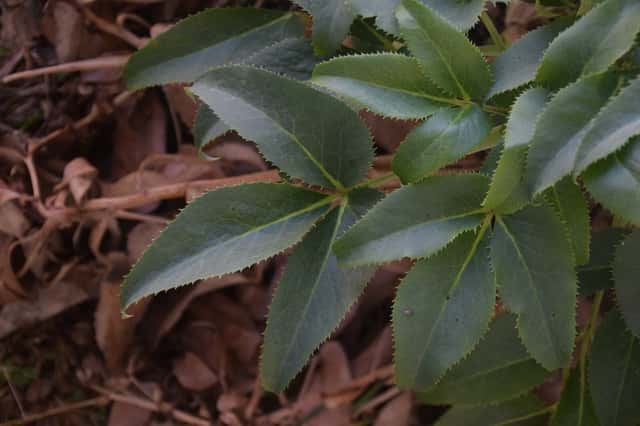
Corsican hellebore (Helleborus argutifolius) is a easy-care plant from the Ranunculaceae family. The Corsican hellebore (Helleborus argutifolius) is a robust evergreen perennial in the buttercup family (Ranunculaceae), native to Corsica and Sardinia. It forms a bold clump 90-120 cm tall of leathery, spiny-toothed, holly-like grey-green leaves and bears large clusters of cup-shaped, pale apple-g...
Corsican hellebore grows up to 1.2m, spread of 90cm, watering every 7 days, -15°C – 30°C, 40–60% humidity. It is not suitable for indoor environments and not safe for pets.
Unlike many tropical plants, Corsican hellebore tolerates watering mistakes. Best for beginners. Without precautions, ingestion can cause irritation in pets. Keep out of reach of cats and dogs.
How to Care for Corsican hellebore?
TLDR: Corsican hellebore needs Partial shade, watering every 7 days, and temperatures between -15-30°C with 40-60% humidity.
How Often Should You Water Corsican hellebore?
Water regularly during dry spells to keep foliage lush, but let the soil surface dry slightly between waterings. Avoid wetting the leaves, which can encourage fungal leaf spot. Established plants tolerate short droughts well.
How Much Light Does Corsican hellebore Need?
Thrives from full sun to partial shade. Full sun encourages more prolific flowering and a compact, sturdy habit, while dappled shade suits hotter climates.
What Is the Best Soil for Corsican hellebore?
Prefers moist, humus-rich, well-drained soil and tolerates neutral to alkaline (chalky) conditions. Improve heavy soils with organic matter to sharpen drainage.
What Pot Should You Use for Corsican hellebore?
Grows well in a large, deep container with excellent drainage; use a terracotta or frost-proof pot to accommodate its substantial root system and evergreen clump.
Care Schedule
Fertilize
Every 60 days
Repot
Every 1095 days
What Is Corsican hellebore and Where Does It Come From?
The Corsican hellebore (Helleborus argutifolius) is a robust evergreen perennial in the buttercup family (Ranunculaceae), native to Corsica and Sardinia. It forms a bold clump 90-120 cm tall of leathery, spiny-toothed, holly-like grey-green leaves and bears large clusters of cup-shaped, pale apple-green flowers from late winter into spring, when little else is in bloom. It is one of the most architectural and drought-tolerant of the hellebores.
How to Propagate Corsican hellebore?
Seed
Sow fresh seed; it germinates erratically and often needs a warm then cold period. Self-sown seedlings appear readily around the parent plant.
- 1 Collect seed as pods ripen in early summer.
- 2 Sow fresh onto gritty, free-draining compost and cover lightly.
- 3 Leave outdoors through summer warmth and winter cold to break dormancy.
- 4 Prick out seedlings once they have two true leaves.
Materials needed:
Division
Corsican hellebore resents root disturbance more than stemless species; divide only when necessary.
- 1 Lift an established clump in autumn or early spring.
- 2 Cut the crown into sections, each with roots and growth buds.
- 3 Replant immediately at the same depth and water in well.
- 4 Keep shaded and moist until re-established.
Materials needed:
How Big Does Corsican hellebore Grow?
TLDR: Corsican hellebore can reach up to 1.2m tall with Medium growth rate.
Max height
1.2m
Spread
90cm
Growth rate
Medium
Foliage
Evergreen
Warning: Toxic Plant
This plant can be toxic if ingested. Keep out of reach of:
Plant Uses
Ornamental
Great for decoration
Is your plant showing symptoms?
Click on the symptom to discover possible causes:
What Diseases Commonly Affect Corsican hellebore?
TLDR: Corsican hellebore is susceptible to 6 known diseases. Monitor regularly for early detection.
Crown Rot
Crown rot is a serious fungal disease that attacks the crown (base) of the plant where the stem meets the soil. It is caused by various fungal pathogens including Phytophthora, Fusarium, and Rhizoctonia. The disease thrives in waterlogged conditions and can quickly spread to kill the entire plant if not addressed promptly.
Leaf Spot
Leaf spot is a common fungal disease caused by various pathogens including Alternaria, Ascochyta, Colletotrichum, Septoria, and Venturia. It primarily affects leaves, causing discolored spots that can lead to premature leaf drop if left untreated.
Slugs and Snails
Slugs and snails are mollusks that feed on plant tissue, causing irregular holes in leaves and damage to young seedlings. They are most active at night and in moist conditions, leaving characteristic silvery slime trails. These pests can quickly devastate gardens, especially during wet seasons.
Aphids
Aphids are small, soft-bodied, pear-shaped insects (1/16 to 1/8 inch long) that feed by sucking nutrient-rich sap from plants. They reproduce rapidly and can quickly weaken plants, causing distorted growth and transmitting plant viruses. Aphids come in various colors including green, black, red, yellow, brown, and gray. They secrete honeydew, a sticky substance that attracts ants and encourages sooty mold growth.
Meaning & Symbolism
Hellebores symbolise serenity and relief from anxiety; blooming in the depths of winter they stand for hope and resilience.
Compare with similar plants
| Attribute | Difficulty | Light | Watering | Pet Safe |
|---|---|---|---|---|
| Field Maple | Easy | Bright indirect | 14d | ✓ |
| Silver Birch | Easy | Direct sun | 14d | ✓ |
| Common Blanketflower | Easy | Direct sun | 10d | ✓ |
| Cushion Bush | Easy | Direct sun | 14d | ✓ |





