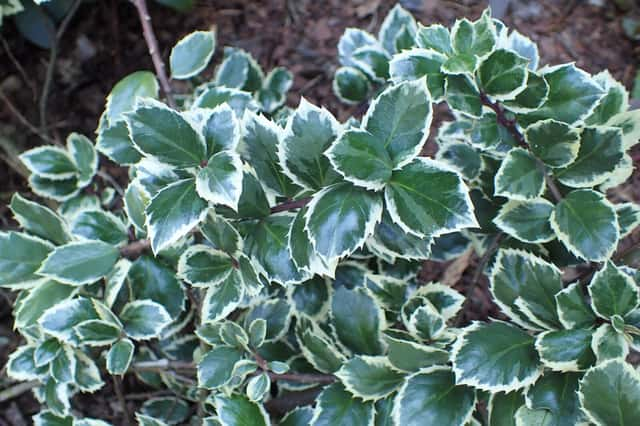
Aquifoliaceae
Blue Holly (Ilex × meserveae): Care Guide
Ilex × meserveae
Grow outdoors in full sun to part shade in slightly acidic, fertile, moist, well-drained soil. Water regularly until established and during dry spells. Shelter from cold winter winds and give afternoon shade where summers are hot. Prune in winter as needed.
Every 7 days
Bright indirect
-29° - °C
% - %
Categories
What is Blue Holly?
Blue Holly (Ilex × meserveae) is a medium-care plant from the Aquifoliaceae family. Blue holly (Ilex × meserveae) is a dense, cold-hardy broadleaf evergreen shrub in the holly family (Aquifoliaceae). It is an artificial hybrid between English holly (Ilex aquifolium) and East Asian Ilex rugosa, bred by Kathleen Meserve of St. James, New York. Its leathery, glossy leaves are dark gre...
Blue Holly grows up to 2.6m, spread of 245cm, watering every 7 days. It is not suitable for indoor environments and not safe for pets.
Without precautions, ingestion can cause irritation in pets. Keep out of reach of cats and dogs.
How to Care for Blue Holly?
TLDR: Blue Holly needs Bright indirect, watering every 7 days, and temperatures between -29-30°C with 40-70% humidity.
How Often Should You Water Blue Holly?
Water deeply about once a week during the first year and in dry spells. Once established, keep the soil evenly moist but not waterlogged.
How Much Light Does Blue Holly Need?
Full sun to part shade. In hot-summer regions, choose a spot with afternoon shade and protection from cold winter winds.
What Is the Best Soil for Blue Holly?
Average, organically rich, slightly acidic, moist and well-drained soil. High-pH soils can cause leaf yellowing (chlorosis).
What Pot Should You Use for Blue Holly?
This is a landscape shrub. If grown in a container, use a large, heavy pot with drainage holes and an acidic, organically rich mix.
What Is Blue Holly and Where Does It Come From?
Blue holly (Ilex × meserveae) is a dense, cold-hardy broadleaf evergreen shrub in the holly family (Aquifoliaceae). It is an artificial hybrid between English holly (Ilex aquifolium) and East Asian Ilex rugosa, bred by Kathleen Meserve of St. James, New York. Its leathery, glossy leaves are dark green to blue-green with spiny margins. Plants are either male or female, and only females bear red berries in fall and winter, provided a male grows nearby.
How to Propagate Blue Holly?
Stem cutting
Take cuttings from female plants if you want berries, and keep at least one male for every 3 to 5 females.
- 1 Take 10-15 cm semi-hardwood cuttings
- 2 Strip the lower leaves
- 3 Wound the base lightly and apply rooting hormone
- 4 Insert into moist peat and perlite
- 5 Keep humid in indirect light until rooted
Materials needed:
How Big Does Blue Holly Grow?
TLDR: Blue Holly can reach up to 2.6m tall with Slow growth rate.
Max height
2.6m
Spread
2.5m
Growth rate
Slow
Foliage
Evergreen
Warning: Toxic Plant
This plant can be toxic if ingested. Keep out of reach of:
Plant Uses
Ornamental
Great for decoration
Is your plant showing symptoms?
Click on the symptom to discover possible causes:
What Diseases Commonly Affect Blue Holly?
TLDR: Blue Holly is susceptible to 8 known diseases. Monitor regularly for early detection.
Leafminers
Leafminers are the larvae of various insects including flies, moths, sawflies, and beetles that tunnel between leaf surfaces, creating distinctive serpentine trails or blotchy patches. While primarily cosmetic, severe infestations can weaken plants by reducing photosynthesis capacity and making them susceptible to secondary infections.
Spider Mites
Spider mites are tiny arachnids (less than 1/20 inch long) related to spiders and ticks that feed on plant sap. They thrive in hot, dry conditions and can cause significant damage to ornamental and vegetable plants. During severe infestations, crop losses can reach 14% or higher as these pests disrupt vital plant processes including photosynthesis, carbon dioxide absorption, and transpiration.
Scale Insects
Scale insects are small sap-sucking pests that appear as brown, shell-like bumps on plant stems and leaves. There are over 25 species, divided into armored (hard) and unarmored (soft) scales. They feed by piercing plant tissue and extracting sap, which weakens the plant and can lead to yellowing, stunted growth, and even death if left untreated. They also excrete honeydew, which attracts ants and promotes sooty mold growth.
Whiteflies
Whiteflies are small, soft-bodied, winged insects closely related to aphids and mealybugs. They are moth-like in appearance, about 1/16 inch long, triangular in shape, and gray-white in color. These sap-sucking pests feed on plant tissue, causing yellowing, stunted growth, and wilting. They also excrete honeydew, which attracts ants and promotes sooty mold growth. Whiteflies can transmit serious plant viruses.
Fun Facts
It is named after Kathleen Meserve, an amateur breeder from Long Island who created the hybrid.
It is a cross between English holly and East Asian Ilex rugosa.
The red berries can persist on the plant from fall until spring.
Frequently asked questions
Why doesn't my blue holly have berries?
Is blue holly toxic?
When should I prune blue holly?
Compare with similar plants
| Attribute | Difficulty | Light | Watering | Pet Safe |
|---|---|---|---|---|
| Dark Fieldcap | Medium | Low light | 2d | ⚠️ |
| Azalea | Medium | Partial shade | 3d | ⚠️ |
| Muriel's Bamboo | Medium | Partial shade | 3d | ✓ |
| Bougainvillea | Medium | Direct sun | 7d | ⚠️ |




