Lamiaceae
Bluebeard: Aromatic Plant
Caryopteris × clandonensis
Bluebeard is an undemanding, drought-tolerant shrub whose most important requirements are a sunny location and well-drained, permeable soil. It only needs watering during prolonged dry periods, fertilization is minimal, and it's worth pruning it back vigorously in spring, as it flowers on new growth.
Every 10 days
Direct sun
-20° - 35°C
30% - 60%
Categories
What is Bluebeard?
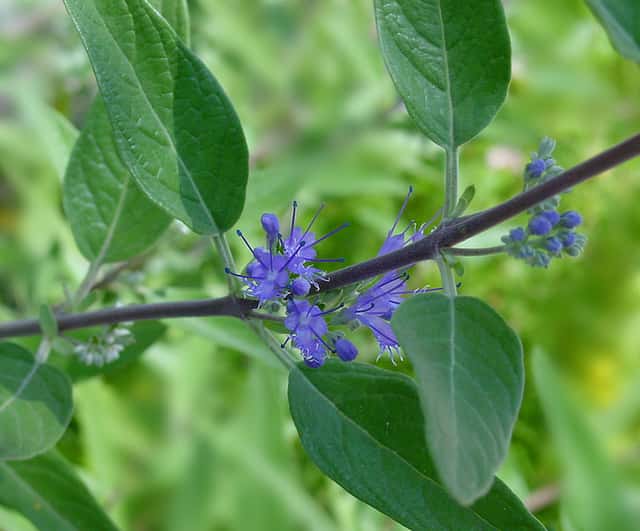
Bluebeard (Caryopteris × clandonensis) is a easy-care plant from the Lamiaceae family. Bluebeard (Caryopteris × clandonensis) is a low-growing, deciduous ornamental shrub from the mint family (Lamiaceae), which covers itself with vibrant blue, fragrant flowers from late summer to autumn. Its grayish-green, aromatic leaves when crushed, and compact size of 60-120 cm, make it a popular...
Bluebeard grows up to 1.2m, spread of 120cm, watering every 10 days, -20°C – 35°C, 30–60% humidity. It is not suitable for indoor environments and safe for pets.
Unlike many tropical plants, Bluebeard tolerates watering mistakes. Best for beginners. Unlike many popular species, Bluebeard is safe to keep around pets.
How to Care for Bluebeard?
TLDR: Bluebeard needs Direct sun, watering every 10 days, and temperatures between -20-35°C with 30-60% humidity.
How Often Should You Water Bluebeard?
Water moderately: allow the top layer of soil to dry out between waterings, and avoid standing water, as it can lead to root and crown rot. In summer heat, one thorough watering per week is usually sufficient; during rainier periods, it can even be omitted.
How Much Light Does Bluebeard Need?
Choose a full sun location where the plant receives at least 6 hours of direct sunlight daily – this ensures abundant, blue blooms. It can survive in partial shade, but will flower less densely and in a more leggy form.
What Is the Best Soil for Bluebeard?
Bluebeard thrives in well-drained, even nutrient-poor soil, and tolerates neutral to alkaline pH. Heavy, clayey, or waterlogged soil should be avoided, as it can easily cause crown rot.
What Pot Should You Use for Bluebeard?
If growing in a pot, choose a container with good drainage, equipped with a layer of gravel or terracotta shards at the bottom, as standing water is the greatest danger. It is more frost-sensitive than plants in the ground, so it is advisable to move it to a sheltered location or mulch it during colder winters.
Care Schedule
Fertilize
Every 365 days
What Is Bluebeard and Where Does It Come From?
Bluebeard (Caryopteris × clandonensis) is a low-growing, deciduous ornamental shrub from the mint family (Lamiaceae), which covers itself with vibrant blue, fragrant flowers from late summer to autumn. Its grayish-green, aromatic leaves when crushed, and compact size of 60-120 cm, make it a popular choice for sunny gardens, as a bee pasture, and for low hedges.
How Big Does Bluebeard Grow?
TLDR: Bluebeard can reach up to 1.2m tall with Medium growth rate.
Max height
1.2m
Spread
1.2m
Growth rate
Medium
Foliage
Deciduous
Plant Uses
Ornamental
Great for decoration
Aromatic
Pleasant fragrance
Is your plant showing symptoms?
Click on the symptom to discover possible causes:
What Diseases Commonly Affect Bluebeard?
TLDR: Bluebeard is susceptible to 6 known diseases. Monitor regularly for early detection.
Crown Rot
Crown rot is a serious fungal disease that attacks the crown (base) of the plant where the stem meets the soil. It is caused by various fungal pathogens including Phytophthora, Fusarium, and Rhizoctonia. The disease thrives in waterlogged conditions and can quickly spread to kill the entire plant if not addressed promptly.
Root Rot
Root rot is a serious fungal disease that affects the root system of plants, causing them to decay and die. It is primarily caused by overwatering, poor drainage, or soil-borne fungi such as Pythium, Phytophthora, Rhizoctonia, and Fusarium. The disease thrives in waterlogged conditions where roots are deprived of oxygen, making them susceptible to fungal infection.
Powdery Mildew
Powdery mildew is a common fungal disease caused by various fungi species including Erysiphe, Podosphaera, Oïdium, and Leveillula. It affects over 10,000 plant species worldwide. The disease thrives in warm, dry climates with high humidity and appears as a distinctive white powdery coating on plant surfaces.
Aphids
Aphids are small, soft-bodied, pear-shaped insects (1/16 to 1/8 inch long) that feed by sucking nutrient-rich sap from plants. They reproduce rapidly and can quickly weaken plants, causing distorted growth and transmitting plant viruses. Aphids come in various colors including green, black, red, yellow, brown, and gray. They secrete honeydew, a sticky substance that attracts ants and encourages sooty mold growth.
Compare with similar plants
| Attribute | Difficulty | Light | Watering | Pet Safe |
|---|---|---|---|---|
| Field Maple | Easy | Bright indirect | 14d | ✓ |
| Silver Birch | Easy | Direct sun | 14d | ✓ |
| Common Blanketflower | Easy | Direct sun | 10d | ✓ |
| Cushion Bush | Easy | Direct sun | 14d | ✓ |





