Oleaceae
Border Forsythia: Ground Cover Plant
Forsythia x intermedia
Forsythia is an exceptionally hardy and low-maintenance shrub. It thrives in sunny or partially shaded locations, though full sun is required for the most spectacular bloom. It tolerates urban pollution, drought, and extreme soil conditions well, but does not favor permanently wet, poorly drained soil. It is advisable to prune immediately after flowering, as next year's buds develop on the current season's growth.
Every 10 days
Bright indirect
-23° - 35°C
30% - 70%
Categories
What is Border Forsythia?
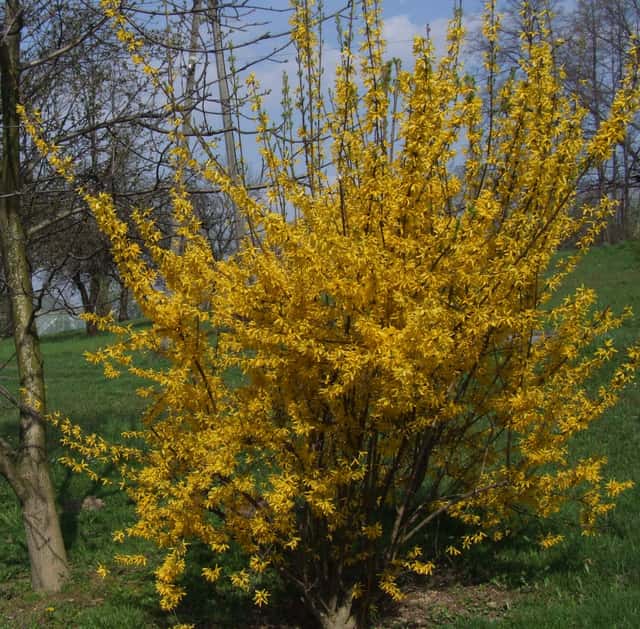
Border Forsythia (Forsythia x intermedia) is a easy-care plant from the Oleaceae family. Forsythia x intermedia (Border Forsythia) is a fast-growing, deciduous ornamental shrub in the olive family (Oleaceae), a hybrid cross between Forsythia viridissima and Forsythia suspensa. In early spring, before the leaves emerge, its slender, arching branches are covered in dense, golden-yellow, b...
Border Forsythia grows up to 3.0m, spread of 365cm, watering every 10 days, -23°C – 35°C, 30–70% humidity. It is not suitable for indoor environments and safe for pets.
Unlike many tropical plants, Border Forsythia tolerates watering mistakes. Best for beginners. Unlike many popular species, Border Forsythia is safe to keep around pets.
How to Care for Border Forsythia?
TLDR: Border Forsythia needs Bright indirect, watering every 10 days, and temperatures between -23-35°C with 30-70% humidity.
How Often Should You Water Border Forsythia?
Water moderately: keep the soil consistently moist during the first year after planting; once established, it can tolerate short periods of drought. Avoid waterlogging, as this can lead to root rot.
How Much Light Does Border Forsythia Need?
It blooms most profusely in full sun, but also grows well in partial shade—though you can expect fewer flowers.
What Is the Best Soil for Border Forsythia?
It is not picky about soil: it thrives in clay, sandy, or nutrient-rich soils as long as they are well-draining. It tolerates neutral, slightly acidic, or alkaline pH levels (pH 6-8) equally well.
What Pot Should You Use for Border Forsythia?
While primarily a garden shrub, young plants can be grown in large, well-drained pots at least 16-20 inches (40-50 cm) in diameter, with a layer of gravel at the bottom and well-aerated soil.
Care Schedule
Fertilize
Every 180 days
What Is Border Forsythia and Where Does It Come From?
Forsythia x intermedia (Border Forsythia) is a fast-growing, deciduous ornamental shrub in the olive family (Oleaceae), a hybrid cross between Forsythia viridissima and Forsythia suspensa. In early spring, before the leaves emerge, its slender, arching branches are covered in dense, golden-yellow, bell-shaped flowers, making it one of the earliest and most striking indicators of spring in gardens. At maturity, it can reach 8 to 10 feet (2.5-3 meters) in height and 10 to 12 feet (3-3.5 meters) in width, and is frequently planted as a standalone specimen or as a hedge.
How to Propagate Border Forsythia?
How Big Does Border Forsythia Grow?
TLDR: Border Forsythia can reach up to 3.0m tall with Fast growth rate.
Max height
3.0m
Spread
3.6m
Growth rate
Fast
Foliage
Deciduous
Plant Uses
Ornamental
Great for decoration
Ground Cover
Soil coverage
Is your plant showing symptoms?
Click on the symptom to discover possible causes:
What Diseases Commonly Affect Border Forsythia?
TLDR: Border Forsythia is susceptible to 6 known diseases. Monitor regularly for early detection.
Leaf Spot
Leaf spot is a common fungal disease caused by various pathogens including Alternaria, Ascochyta, Colletotrichum, Septoria, and Venturia. It primarily affects leaves, causing discolored spots that can lead to premature leaf drop if left untreated.
Crown Gall
Crown gall is a bacterial disease caused by Agrobacterium tumefaciens that affects over 140 species of plants. The bacteria insert DNA into plant cells, causing them to divide uncontrollably and form large tumor-like growths (galls) primarily on roots, stems, and at the soil line. These galls restrict water and nutrient flow, severely impacting plant health and potentially killing the plant.
Southern Blight
Southern blight is a devastating soilborne fungal disease caused by Athelia rolfsii (formerly Sclerotium rolfsii), affecting over 500 plant species including vegetables, ornamentals, and fruit crops. The fungus survives in soil through resting structures called sclerotia that resemble mustard seeds and can remain viable for years.
Aphids
Aphids are small, soft-bodied, pear-shaped insects (1/16 to 1/8 inch long) that feed by sucking nutrient-rich sap from plants. They reproduce rapidly and can quickly weaken plants, causing distorted growth and transmitting plant viruses. Aphids come in various colors including green, black, red, yellow, brown, and gray. They secrete honeydew, a sticky substance that attracts ants and encourages sooty mold growth.
Meaning & Symbolism
As one of the first harbingers of spring, it is a symbol of rebirth, hope, and renewal; in many places, it is regarded as the plant that signals the end of winter and the awakening of nature.
Compare with similar plants
| Attribute | Difficulty | Light | Watering | Pet Safe |
|---|---|---|---|---|
| Field Maple | Easy | Bright indirect | 14d | ✓ |
| Silver Birch | Easy | Direct sun | 14d | ✓ |
| Common Blanketflower | Easy | Direct sun | 10d | ✓ |
| Cushion Bush | Easy | Direct sun | 14d | ✓ |
Choose & Compare
Sources & References
- Forsythia x intermedia (Border Forsythia) - Gardenia.net
- Forsythia x intermedia (Border Forsythia, Golden Bells) - NC State Extension
- How to Grow and Care for Forsythia Shrubs - Gardener's Path
- Forsythia: Pests and Diseases to Watch Out For - Gardenia.net
- Aranycserje - Forsythia x intermedia gondozása - Kertia.hu





