Fabaceae
Boreal Sweet-vetch: Ground Cover Plant
Hedysarum boreale
A tough, drought-tolerant prairie legume that thrives on neglect once established. Needs full sun and sharply drained soil; struggles in shade or waterlogged ground. Best sown directly where it will grow, since the deep taproot resents transplanting. Takes a few seasons to mature and flower, but then needs very little upkeep.
Every 14 days
Bright indirect
-34° - 35°C
20% - 50%
Categories
What is Boreal Sweet-vetch?
Boreal Sweet-vetch (Hedysarum boreale) is a medium-care plant from the Fabaceae family. Boreal sweet-vetch (Hedysarum boreale) is a hardy perennial legume wildflower native to the cold, dry rangelands and open slopes of northern and western North America, from the Canadian Arctic south through the Intermountain West. Growing from a deep, woody taproot to about 30-70 cm tall, it produce...
Boreal Sweet-vetch grows up to 70cm, spread of 50cm, watering every 14 days, -34°C – 35°C, 20–50% humidity. It is not suitable for indoor environments and safe for pets.
Unlike many popular species, Boreal Sweet-vetch is safe to keep around pets.
How to Care for Boreal Sweet-vetch?
TLDR: Boreal Sweet-vetch needs Bright indirect, watering every 14 days, and temperatures between -34-35°C with 20-50% humidity.
How Often Should You Water Boreal Sweet-vetch?
Water sparingly. Established plants are highly drought tolerant thanks to their deep taproot; only water during prolonged dry spells and always let soil dry between waterings, since soggy soil invites root rot.
How Much Light Does Boreal Sweet-vetch Need?
Give it full sun. Boreal sweet-vetch cannot grow in the shade and flowers best with at least 6 hours of direct sunlight per day.
What Is the Best Soil for Boreal Sweet-vetch?
Plant in well-drained sandy, loamy, or rocky soil with neutral to alkaline pH. It tolerates poor, saline, and low-fertility soils but will not tolerate standing water.
What Pot Should You Use for Boreal Sweet-vetch?
Not well suited to pots. Its deep taproot and dislike of root disturbance make it best grown directly in open ground; if container growing is necessary, use a very deep, well-draining planter and avoid transplanting seedlings afterward.
What Is Boreal Sweet-vetch and Where Does It Come From?
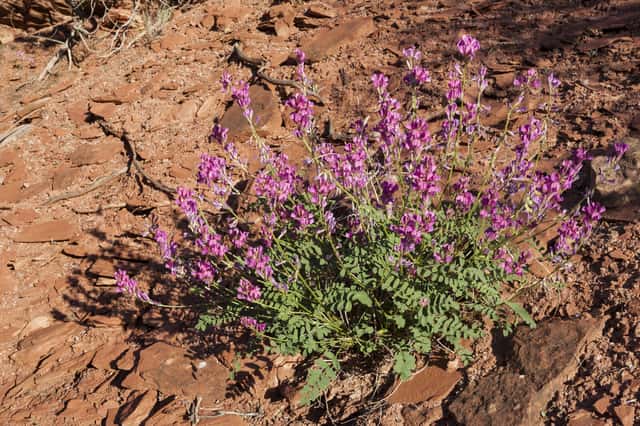
Boreal sweet-vetch (Hedysarum boreale) is a hardy perennial legume wildflower native to the cold, dry rangelands and open slopes of northern and western North America, from the Canadian Arctic south through the Intermountain West. Growing from a deep, woody taproot to about 30-70 cm tall, it produces racemes of pink-to-purple, pea-like flowers from late spring into summer, followed by segmented seed pods. As a nitrogen-fixer it improves the soil around it and is prized for erosion control, pollinator meadows, and rangeland restoration. Its sweet, licorice-carrot-flavored roots were traditionally eaten and used medicinally by Indigenous peoples of the region.
How Big Does Boreal Sweet-vetch Grow?
TLDR: Boreal Sweet-vetch can reach up to 70cm tall with Slow growth rate.
Max height
70cm
Spread
50cm
Growth rate
Slow
Foliage
Deciduous
Plant Uses
Edible
Can be consumed
Medicinal
Medicinal properties
Ornamental
Great for decoration
Ground Cover
Soil coverage
Medicinal Uses
- Roots used traditionally by Indigenous peoples of North America for various medicinal remedies
Culinary Uses
- Young roots eaten raw, boiled, baked, or added to soups
- Roots have a sweet, carrot- or licorice-like flavor
Is your plant showing symptoms?
Click on the symptom to discover possible causes:
What Diseases Commonly Affect Boreal Sweet-vetch?
TLDR: Boreal Sweet-vetch is susceptible to 3 known diseases. Monitor regularly for early detection.
Root Rot
Root rot is a serious fungal disease that affects the root system of plants, causing them to decay and die. It is primarily caused by overwatering, poor drainage, or soil-borne fungi such as Pythium, Phytophthora, Rhizoctonia, and Fusarium. The disease thrives in waterlogged conditions where roots are deprived of oxygen, making them susceptible to fungal infection.
Rust
Rust is a common fungal disease caused by fungi in the order Pucciniales that affects a wide variety of plants. The disease gets its name from the characteristic orange, yellow, or reddish-brown pustules that appear on leaves, resembling metal rust. This obligate fungal parasite requires living plants to survive and can cause significant economic losses in agricultural crops.
Fusarium Wilt
Fusarium wilt is a serious fungal disease caused by the soil-borne fungus Fusarium oxysporum. The fungus invades roots and blocks the water-conducting vessels (xylem) of the plant, causing progressive wilting and eventual death. Host-specific forms of the pathogen exist that attack different plant species.
Meaning & Symbolism
A symbol of resilience and hidden sweetness, thriving where little else will grow across the harsh, arid landscapes of the North American West.
Compare with similar plants
| Attribute | Difficulty | Light | Watering | Pet Safe |
|---|---|---|---|---|
| Dark Fieldcap | Medium | Low light | 2d | ⚠️ |
| Azalea | Medium | Partial shade | 3d | ⚠️ |
| Muriel's Bamboo | Medium | Partial shade | 3d | ✓ |
| Bougainvillea | Medium | Direct sun | 7d | ⚠️ |




