Orchidaceae
Spider Orchid: Pet-Safe Plant
Brassia arachnoidea
Like most orchids in the Brassia genus, this species requires bright but filtered light, a well-draining bark substrate, high humidity (60-80%), and a watering schedule that alternates between wet periods and partial drying of the substrate. It is a slow-growing orchid, relatively easy to cultivate for an amateur with minimal experience.
Every 4 days
Bright indirect
10° - 27°C
60% - 80%
Categories
What is Spider Orchid?
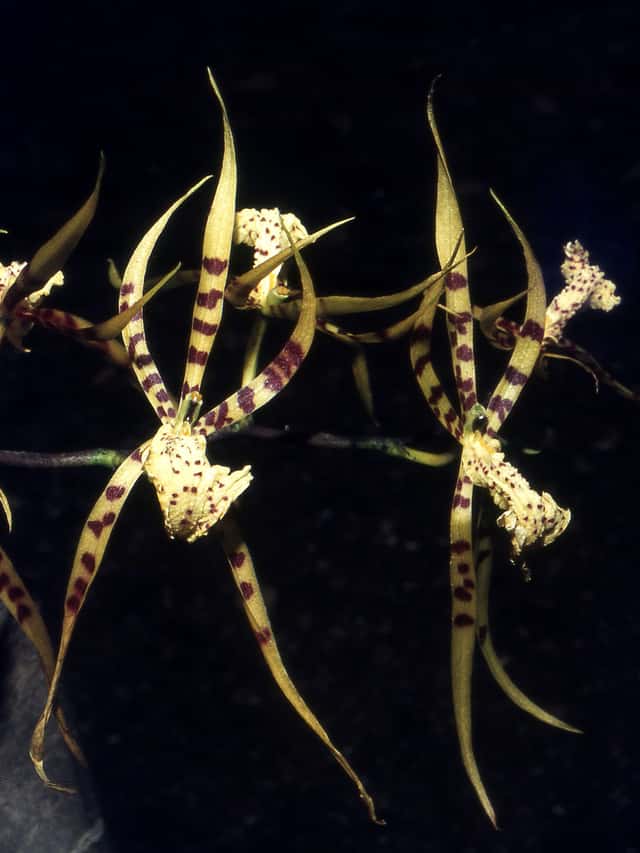
Spider Orchid (Brassia arachnoidea) is a medium-care plant from the Orchidaceae family. Brassia arachnoidea, known as the spider orchid, is an epiphytic orchid native to the humid tropical forests of Central and South America, including Ecuador. It is named after the shape of its flowers—long, thread-like, greenish-yellow sepals and petals spotted with chocolate brown, reminiscent of a...
Spider Orchid grows up to 75cm, spread of 50cm, watering every 4 days, 10°C – 27°C, 60–80% humidity. It is suitable for indoor environments and safe for pets.
Unlike many popular species, Spider Orchid is safe to keep around pets. Without adequate drainage, root rot can develop within 8 days.
How to Care for Spider Orchid?
TLDR: Spider Orchid needs Bright indirect, watering every 4 days, and temperatures between 10-27°C with 60-80% humidity.
How Often Should You Water Spider Orchid?
Water every 3-5 days in summer, when the plant is actively growing and blooming, and reduce to every 7-10 days in winter. Allow the substrate to dry almost completely between waterings, but not entirely, to prevent root rot.
How Much Light Does Spider Orchid Need?
Place the plant in a bright spot with strong indirect light—near an east or west-facing window, filtered through a sheer curtain at south-facing windows. Avoid direct midday sun, which burns the leaves, as well as shaded spots, which reduce blooming.
What Is the Best Soil for Spider Orchid?
Use a specialized orchid mix based on small-grade pine bark, combined with sphagnum moss, coconut husks, and perlite for excellent drainage. Repot approximately every 2 years when the substrate begins to degrade.
What Pot Should You Use for Spider Orchid?
A clear plastic pot with many drainage holes or a mesh orchid basket, which allows for root aeration and monitoring of the substrate's moisture level.
Care Schedule
Fertilize
Every 14 days
Misting
Every 3 days
Rotate
Every 7 days
Repot
Every 730 days
What Is Spider Orchid and Where Does It Come From?
Brassia arachnoidea, known as the spider orchid, is an epiphytic orchid native to the humid tropical forests of Central and South America, including Ecuador. It is named after the shape of its flowers—long, thread-like, greenish-yellow sepals and petals spotted with chocolate brown, reminiscent of a spider's legs. The leaves are broad and pleated, attached to ovoid pseudobulbs, and the flowering stems can bear up to 8 fragrant flowers, each with a diameter of 10-12 cm.
How to Propagate Spider Orchid?
How Big Does Spider Orchid Grow?
TLDR: Spider Orchid can reach up to 75cm tall with Slow growth rate.
Max height
75cm
Spread
50cm
Growth rate
Slow
Foliage
Evergreen
Plant Uses
Ornamental
Great for decoration
Is your plant showing symptoms?
Click on the symptom to discover possible causes:
What Diseases Commonly Affect Spider Orchid?
TLDR: Spider Orchid is susceptible to 9 known diseases. Monitor regularly for early detection.
Root Rot
Root rot is a serious fungal disease that affects the root system of plants, causing them to decay and die. It is primarily caused by overwatering, poor drainage, or soil-borne fungi such as Pythium, Phytophthora, Rhizoctonia, and Fusarium. The disease thrives in waterlogged conditions where roots are deprived of oxygen, making them susceptible to fungal infection.
Grey Mould
Mealybugs
Mealybugs are small, soft-bodied insects covered with a white, waxy, cottony material. They are common pests of houseplants and outdoor plants in mild climates. These sap-sucking insects feed on plant tissue, causing damage, stunted growth, and can lead to plant death if left untreated. They produce sticky honeydew which attracts sooty mold.
Spider Mites
Spider mites are tiny arachnids (less than 1/20 inch long) related to spiders and ticks that feed on plant sap. They thrive in hot, dry conditions and can cause significant damage to ornamental and vegetable plants. During severe infestations, crop losses can reach 14% or higher as these pests disrupt vital plant processes including photosynthesis, carbon dioxide absorption, and transpiration.
Meaning & Symbolism
Exotic elegance and refined beauty—its spider-like flowers symbolize discreet resilience and unconventional charm.
Compare with similar plants
| Attribute | Difficulty | Light | Watering | Pet Safe |
|---|---|---|---|---|
| Dark Fieldcap | Medium | Low light | 2d | ⚠️ |
| Azalea | Medium | Partial shade | 3d | ⚠️ |
| Muriel's Bamboo | Medium | Partial shade | 3d | ✓ |
| Bougainvillea | Medium | Direct sun | 7d | ⚠️ |




