Cactaceae
Brazilian Cactus - Pilosocereus chrysostele
Pilosocereus chrysostele
An easy-care cactus that needs full sun, infrequent watering, and an extremely well-draining substrate. Highly drought tolerant but very sensitive to overwatering, which can cause root rot.
Every 18 days
Direct sun
8° - 40°C
10% - 40%
Categories
What is Brazilian Cactus?
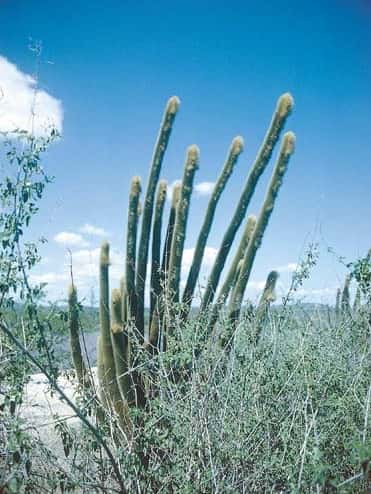
Brazilian Cactus (Pilosocereus chrysostele) is a easy-care plant from the Cactaceae family. Pilosocereus chrysostele is a columnar cactus native to the Caatinga, a seasonally dry tropical forest in northeastern Brazil (Ceará, Paraíba, Pernambuco and Rio Grande do Norte). It grows in clumps that branch only near the base, forming upright columns with a blue-green epidermis and pale yellow s...
Brazilian Cactus grows up to 3.0m, spread of 150cm, watering every 18 days, 8°C – 40°C, 10–40% humidity. It is suitable for indoor environments and safe for pets.
Unlike many tropical plants, Brazilian Cactus tolerates watering mistakes. Best for beginners. Unlike many popular species, Brazilian Cactus is safe to keep around pets. Without adequate drainage, root rot can develop within 36 days.
How to Care for Brazilian Cactus?
TLDR: Brazilian Cactus needs Direct sun, watering every 18 days, and temperatures between 8-40°C with 10-40% humidity.
How Often Should You Water Brazilian Cactus?
Water only once the substrate is completely dry, roughly every 2-3 weeks in summer, cutting back significantly in winter.
How Much Light Does Brazilian Cactus Need?
Needs at least 6 hours of direct full sun daily; indoors, place it within a foot of a bright, south-facing window.
What Is the Best Soil for Brazilian Cactus?
Use a sandy, extremely well-draining cactus mix with added coarse sand or perlite; avoid any moisture retention.
What Pot Should You Use for Brazilian Cactus?
Unglazed terracotta pot with generous drainage holes to help excess moisture evaporate.
Care Schedule
Fertilize
Every 60 days
Repot
Every 730 days
What Is Brazilian Cactus and Where Does It Come From?
Pilosocereus chrysostele is a columnar cactus native to the Caatinga, a seasonally dry tropical forest in northeastern Brazil (Ceará, Paraíba, Pernambuco and Rio Grande do Norte). It grows in clumps that branch only near the base, forming upright columns with a blue-green epidermis and pale yellow spines, reaching up to 3 m tall in the wild. Its flowers emerge at night from a woolly lateral structure called a cephalium and are pollinated mainly by bats.
How to Propagate Brazilian Cactus?
Stem segment cutting
Use sterilized tools to avoid contamination and never water the cut before it calluses, to prevent rot.
- 1 Cut a healthy stem segment with a clean, sharp tool
- 2 Let the cut callus over in a dry, shaded spot for 5-7 days
- 3 Plant the callused segment in dry, well-draining substrate without watering immediately
- 4 Water lightly only after 1-2 weeks, once signs of rooting appear
Materials needed:
How Big Does Brazilian Cactus Grow?
TLDR: Brazilian Cactus can reach up to 3.0m tall with Slow growth rate.
Max height
3.0m
Spread
1.5m
Growth rate
Slow
Foliage
Evergreen
Plant Uses
Ornamental
Great for decoration
Is your plant showing symptoms?
Click on the symptom to discover possible causes:
What Diseases Commonly Affect Brazilian Cactus?
TLDR: Brazilian Cactus is susceptible to 4 known diseases. Monitor regularly for early detection.
Root Rot
Root rot is a serious fungal disease that affects the root system of plants, causing them to decay and die. It is primarily caused by overwatering, poor drainage, or soil-borne fungi such as Pythium, Phytophthora, Rhizoctonia, and Fusarium. The disease thrives in waterlogged conditions where roots are deprived of oxygen, making them susceptible to fungal infection.
Overwatering
Overwatering occurs when plants receive too much water, depriving roots of oxygen and causing root rot. This environmental stress is one of the most common causes of houseplant death, as waterlogged soil prevents roots from breathing and functioning properly.
Mealybugs
Mealybugs are small, soft-bodied insects covered with a white, waxy, cottony material. They are common pests of houseplants and outdoor plants in mild climates. These sap-sucking insects feed on plant tissue, causing damage, stunted growth, and can lead to plant death if left untreated. They produce sticky honeydew which attracts sooty mold.
Scale Insects
Scale insects are small sap-sucking pests that appear as brown, shell-like bumps on plant stems and leaves. There are over 25 species, divided into armored (hard) and unarmored (soft) scales. They feed by piercing plant tissue and extracting sap, which weakens the plant and can lead to yellowing, stunted growth, and even death if left untreated. They also excrete honeydew, which attracts ants and promotes sooty mold growth.
Meaning & Symbolism
Resilience and endurance through harsh, arid conditions.
Fun Facts
Its flowers open at night from a woolly lateral structure called a cephalium, adapted to reflect the sonar calls of pollinating bats.
It is endemic to the Caatinga, a semi-arid biome unique to northeastern Brazil.
It branches only near the base, forming clumps of upright columns.
Frequently asked questions
How often should I water the Brazilian Cactus?
Does Pilosocereus chrysostele need direct sun?
Is this cactus toxic to cats and dogs?
How do I propagate the Brazilian Cactus?
Compare with similar plants
| Attribute | Difficulty | Light | Watering | Pet Safe |
|---|---|---|---|---|
| Field Maple | Easy | Bright indirect | 14d | ✓ |
| Silver Birch | Easy | Direct sun | 14d | ✓ |
| Common Blanketflower | Easy | Direct sun | 10d | ✓ |
| Cushion Bush | Easy | Direct sun | 14d | ✓ |
Choose & Compare
Sources & References
- Keep Your Brazilian Cactus Alive: Light, Water & Care Instructions
- Pilosocereus chrysostele | Brazilian Cactus | PRICKandMIX
- Pilosocereus chrysostele - Wikipedia
- Pilosocereus chrysostele (Vaupel) Byles & G.D.Rowley | Plants of the World Online | Kew Science
- Reproductive biology of columnar cacti: are bats the only protagonists in the pollination of Pilosocereus?





